
A practical carry-on sleep accessories checklist is defined as the curated set of items that directly reduce neck strain, sensory disruption, and poor circulation during flights. 2026 travel industry guidelines identify four core components as non-negotiable: a supportive neck pillow, a contoured blackout eye mask, high-quality noise-muffling devices, and compression socks. Each item targets a specific barrier to in-flight rest. Together, they form the foundation of any serious travel sleep kit. Somnastudioshop builds its entire product range around these four pillars, integrating technology such as Bluetooth audio, white noise, and thermal support to address what standard accessories miss.
Sleep science coach Alex Savy confirms that minimising sensory input is the single most effective strategy for sleeping on a plane. Small distractions like bright screens or ambient engine noise are enough to prevent deep sleep entirely. Getting your kit right before you board is the difference between arriving rested and arriving wrecked.
1. What are the best neck pillows for carry-on sleep comfort?
The neck pillow is the most personal item on any airplane sleep essentials list. The wrong choice causes more disruption than no pillow at all.
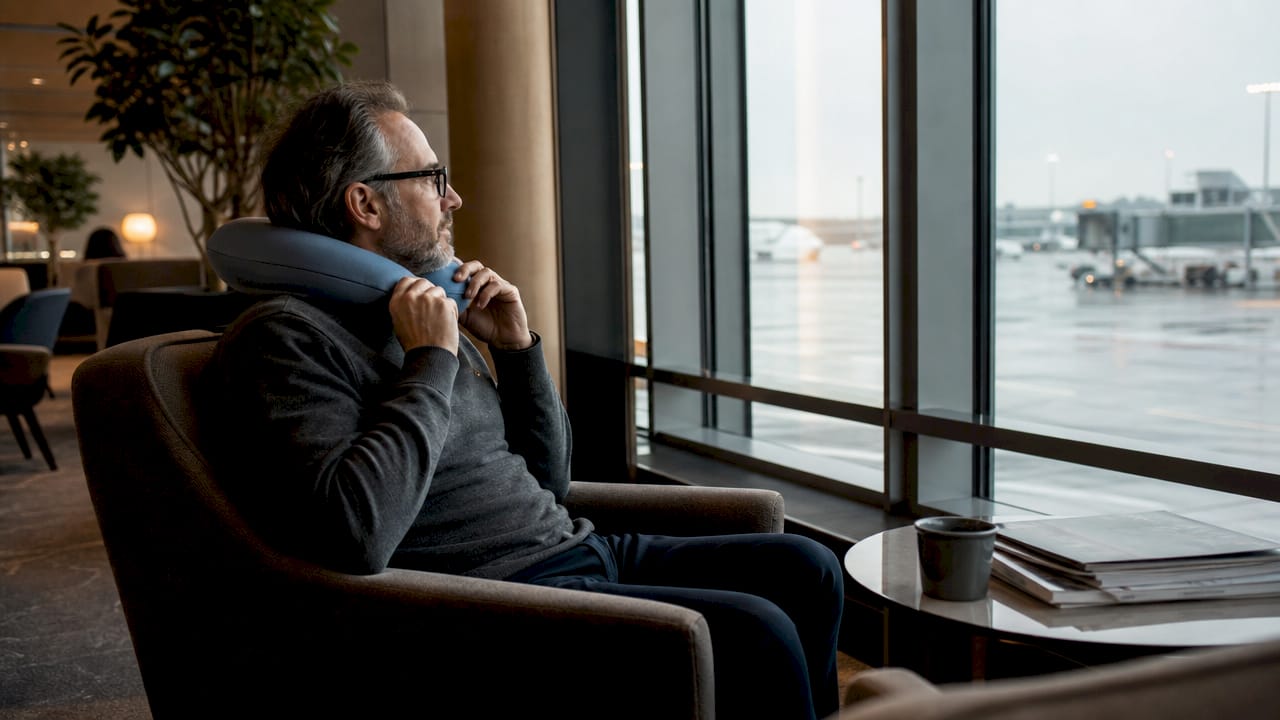
Wrap-style vs U-shaped pillows
Wrap-style neck supports outperform U-shaped pillows for side sleepers by stabilising the head and reducing micro-awakenings. Traditional U-shaped pillows push the head forward when you lean to one side, which strains the cervical spine and wakes you repeatedly. Wrap-style designs hold the head in a neutral position regardless of which direction you tilt.
Memory foam pillows compress well for packing but regain their shape slowly in cold cabin air. Structured wrap designs with adjustable closures give you consistent support without waiting for foam to recover. For travellers who sleep upright or against a window, a pillow with a raised back panel prevents the head from rolling backward.
Seat positioning and lumbar support reduce micro-awakenings caused by subtle body movements, which disrupt in-flight sleep more than noise or light. Pairing your neck pillow with a small lumbar roll addresses both the upper and lower spine simultaneously.
Pro Tip: Clip your neck pillow to the outside of your bag for instant access at boarding. Retrieving it from a packed overhead bin mid-flight wakes you and your neighbours.
2. How do blackout eye masks improve in-flight sleep quality?
Light is the primary trigger for circadian disruption, the misalignment of your internal body clock caused by irregular light exposure. A well-fitted eye mask blocks cabin lighting, screen glare from neighbouring seats, and the sudden brightness of window shades opened mid-flight.
What to look for in a travel eye mask
Contoured, sealed designs with 3D eye cups create a cavity that prevents pressure on the eyelids. Flat masks press directly against the eyes, which causes discomfort during REM sleep and leaves marks on the skin. The 3D cup design also allows you to blink freely, which matters on flights longer than six hours.
Material choice affects temperature regulation. Bamboo silk and natural silk are breathable and do not trap heat against the face the way synthetic fabrics do. The SomnaSilk pure silk sleep mask uses natural silk for exactly this reason, keeping the skin cool while maintaining a full blackout seal.
| Mask style | Best for | Key limitation |
|---|---|---|
| Flat foam mask | Short naps, budget travel | Presses on eyelids, poor seal |
| Contoured 3D mask | Long-haul flights, side sleepers | Bulkier to pack |
| Silk wrap mask | Sensitive skin, temperature comfort | Less structured seal |
| Sound mask (integrated audio) | Noise and light combined | Requires charging |
Pro Tip: Use your eye mask as a pre-sleep cue. Put it on at the same point in every flight, such as after the meal service, and your body will begin associating it with sleep time.
3. What noise-muffling options best facilitate restful sleep on planes?
Noise management is the second pillar of sensory minimisation. The cabin produces a constant low-frequency roar from engines, plus irregular sounds from crew, passengers, and announcements. No single device handles all of these equally well.
Earplugs: foam vs silicone
Foam earplugs are the most affordable option and provide strong passive noise reduction when inserted correctly. Silicone earplugs mould to the ear canal and are reusable, making them better value for frequent travellers. Both types are permitted in carry-on bags without quantity restrictions under current screening policies.
- Foam earplugs: single-use, high noise reduction rating, very lightweight
- Silicone earplugs: reusable, mouldable fit, washable
- Sleep earbuds: compact, designed for side sleeping, often include white noise playback
- Noise-cancelling headphones: best for active noise reduction during takeoff and loud phases
“Experienced travellers switch from noise-cancelling headphones during noisy phases to lightweight earplugs or sleep earbuds when resting, to balance pressure and comfort.” — Long Haul Flight Essentials
Switching audio devices mid-flight is a tactic that experienced flyers use to maintain both noise control and physical comfort. Headphones press against the seat headrest and cause ear fatigue after an hour. Earplugs or compact sleep earbuds take over once you are settled and ready to sleep.
Travel sleep gear pricing ranges from budget reusable earplugs at around £20 to premium noise-cancelling headphones at over £400. A combined kit with earplugs and a basic sleep mask sits comfortably in the £30–£40 range. The SomnaShield noise-reduction earplugs from Somnastudioshop are engineered specifically for sleep environments, with a low-profile design that does not press against the headrest.
4. Why are compression socks and comfort clothing essential carry-on items?
Comfort is cumulative. Combining soft breathable layers, compression socks, and a supportive pillow creates an environment that signals the body to shift into rest mode. No single item achieves this alone.
Compression socks and circulation
On flights over four hours, reduced movement causes blood to pool in the lower legs. Compression socks apply graduated pressure from the ankle upward, keeping circulation active and reducing swelling. This matters for sleep quality because physical discomfort from swollen feet and ankles causes repeated waking.
- Choose socks with graduated compression, tighter at the ankle and looser at the calf.
- Put them on before boarding, not mid-flight, for maximum benefit.
- Pair them with regular ankle rotations every 90 minutes.
- Remove them before sleeping if they feel restrictive, but keep them on for the first half of any flight over eight hours.
Clothing and layering
Cabin temperature varies unpredictably. Wearing a lightweight base layer with a breathable mid-layer gives you control without relying on airline blankets, which are often thin and cold. Natural fabrics like cotton and merino wool regulate temperature better than synthetics. A large scarf or travel wrap doubles as a blanket and a pillow cover.
Pro Tip: A simple pre-sleep routine of a facial wipe, lip balm, and pulling on compression socks acts as a reliable sleep cue even in a noisy cabin. Keep these three items in your seat pocket, not your overhead bag.
5. How to build your carry-on sleep accessories checklist by flight type
Not every flight needs the same kit. A two-hour hop requires far less than a 14-hour overnight. Tailoring your packing list by flight duration and seat class saves weight and bag space.
Core checklist for all flights
- Neck pillow (wrap-style preferred)
- Contoured blackout eye mask
- Earplugs or sleep earbuds
- Compression socks
- Lip balm and facial wipe
Additional items for long-haul flights (8+ hours)
- Noise-cancelling headphones for takeoff
- Lightweight travel wrap or scarf
- Lumbar support cushion
- White noise device or app
- Moisturising hand cream
| Flight type | Priority items | Optional upgrades |
|---|---|---|
| Short-haul (under 4 hours) | Eye mask, earplugs | Neck pillow |
| Medium-haul (4–8 hours) | Full core kit | Travel wrap, lumbar support |
| Long-haul (8+ hours) | Full core kit plus wrap | Noise-cancelling headphones, white noise device |
| Business/first class | Eye mask, earplugs | Tech accessories, silk mask |
Packing tips for carry-on compliance
All standard sleep accessories pass through security without issue. Earplug liquids, such as wax-based plugs, follow the standard liquids rule. Pack your sleep kit in a small pouch at the top of your bag or in the seat pocket for immediate access. The SomnaAura Smart Bluetooth Sleep Sound Mask combines eye mask and audio in one device, cutting two items from your checklist and saving space.
Pro Tip: Test every item on a short domestic flight before committing to it on a long-haul route. Personal preference in pillow type and ear protection matters more than price.
Key takeaways
The most effective carry-on sleep kit combines sensory minimisation, physical support, and circulation management across four core item categories.
| Point | Details |
|---|---|
| Four core items | Neck pillow, blackout eye mask, noise-muffling device, and compression socks form the non-negotiable base. |
| Sensory minimisation first | Blocking light and noise delivers the greatest improvement to in-flight sleep quality. |
| Wrap-style beats U-shaped | Wrap-style neck pillows reduce micro-awakenings for side sleepers better than traditional U-shaped designs. |
| Switch audio devices mid-flight | Use noise-cancelling headphones at takeoff, then switch to earplugs or sleep earbuds when resting. |
| Tailor by flight length | Short-haul needs only the core five items; long-haul benefits from a wrap, lumbar support, and a white noise device. |
What I have learned from years of packing for long-haul flights
The most common mistake I see frequent travellers make is buying expensive accessories and then not using them consistently. A £400 pair of noise-cancelling headphones left in the overhead bin does nothing. The accessories that actually improve your sleep are the ones you reach for without thinking, because they are already in your seat pocket.
I stopped chasing the latest travel gadget years ago. What I use now is simple: a wrap-style neck pillow, a contoured silk eye mask, silicone earplugs, and compression socks. That kit fits in a small pouch and has not changed in three years. The wellness devices that genuinely improve sleep are the ones built around a specific problem, not a general promise.
The insight that changed how I pack was understanding that comfort is cumulative. No single item solves in-flight sleep. But the right combination of sensory blocking, physical support, and circulation management stacks up quickly. Once I treated my sleep kit as a system rather than a collection of individual items, the quality of my rest on flights improved noticeably.
My honest advice: start with the four core items, test them on a short flight, and only add technology when you have identified a specific gap. The SomnaAura Pro contour sound mask solved my remaining problem, which was residual noise after switching off headphones. It was a targeted addition, not an impulse buy.
— Hadi
Somnastudioshop’s travel sleep range for your carry-on kit
Somnastudioshop builds products that address the specific gaps standard accessories leave open.
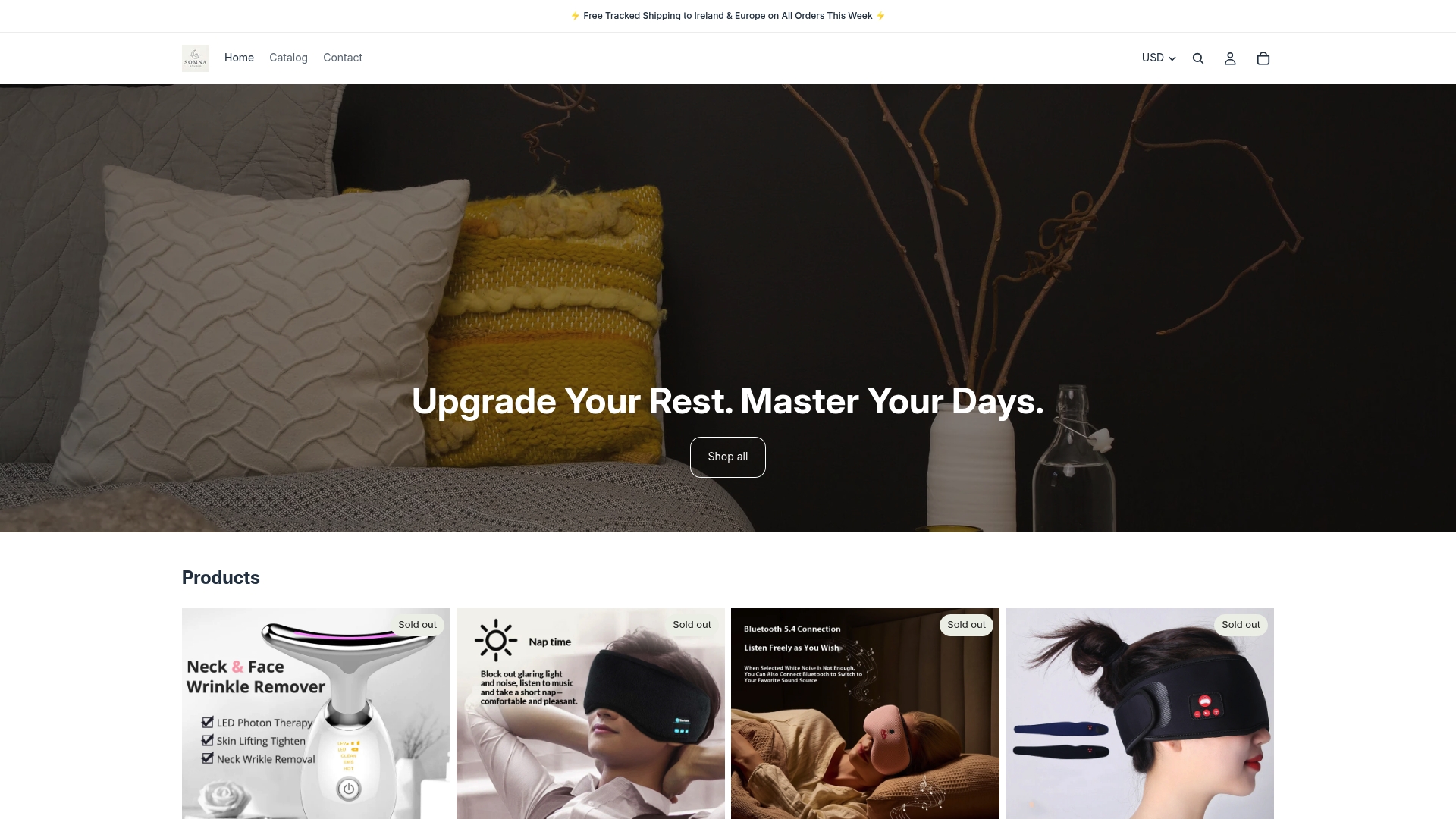
The SomnaPulse microcurrent sleep aid uses gentle microcurrent technology to reduce stress and ease the body into rest, which is particularly useful on overnight flights when anxiety or time zone changes make switching off difficult. The SomnaShield noise-reduction earplugs are engineered for prolonged wear, with a low-profile fit that does not press against the headrest. Both items are carry-on compliant and compact enough to sit in your seat pocket. Browse the full Somnastudioshop collection to build a sleep kit matched to your travel schedule.
FAQ
What are the four must-have items in a carry-on sleep kit?
A supportive neck pillow, a contoured blackout eye mask, noise-muffling earplugs or headphones, and compression socks are the four core items. These address neck strain, light disruption, noise, and circulation on long flights.
Are sleep accessories allowed in carry-on bags?
All standard sleep accessories are permitted in carry-on bags without quantity restrictions. Wax or liquid-based earplugs follow the standard liquids rule.
Is a wrap-style or U-shaped neck pillow better for sleeping on planes?
Wrap-style neck pillows are better for side sleepers because they stabilise the head and reduce micro-awakenings. U-shaped pillows push the head forward when you lean sideways, which strains the neck.
When should I switch from headphones to earplugs on a flight?
Use noise-cancelling headphones during takeoff and loud phases, then switch to earplugs or sleep earbuds when you are ready to sleep. Headphones press against the headrest and cause ear fatigue during prolonged rest.
Do I need different sleep accessories for short and long-haul flights?
Short-haul flights need only the core five items: eye mask, earplugs, neck pillow, compression socks, and a facial wipe. Long-haul flights benefit from adding a travel wrap, lumbar support, and a white noise device.