
How reusable sleep aids physically improve your sleep
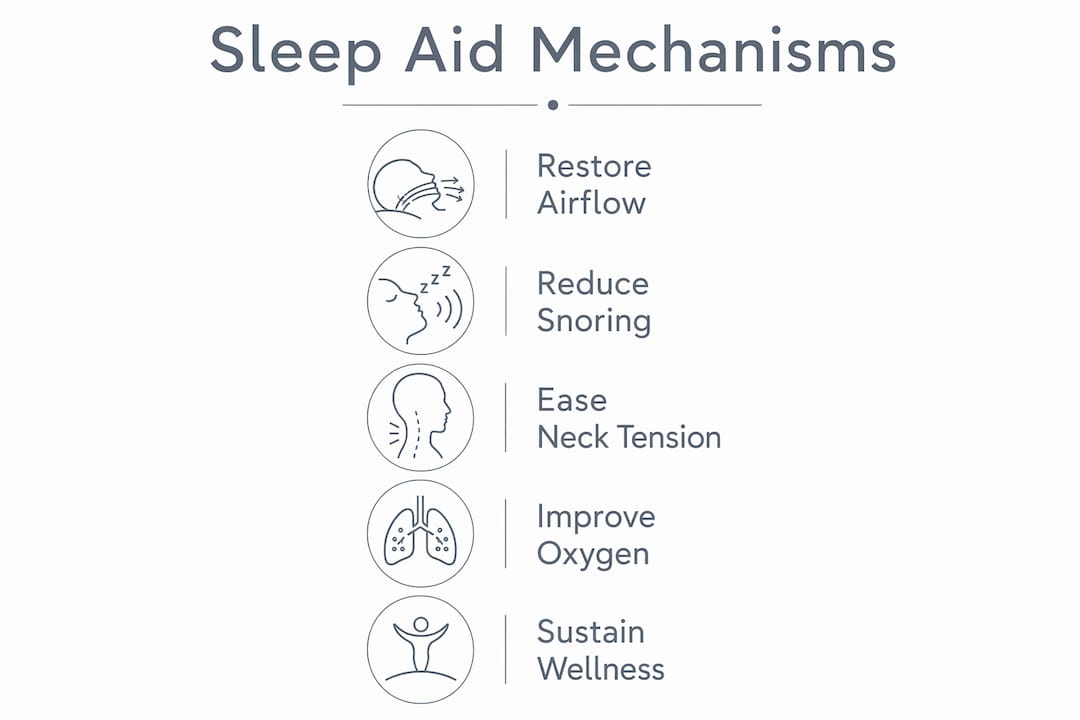
Reusable sleep aids work by changing the physical conditions around you, not your brain chemistry. Rather than sedating you, they address the actual causes of disrupted sleep: blocked nasal passages, ambient noise, or poor airway support. The result is more natural, unmedicated rest.
The core mechanisms fall into two categories:
-
Nasal airflow support: Devices like nasal dilators physically expand the nasal valve, increasing airflow and reducing snoring without any systemic effect on the body.
-
Sound attenuation: Reusable silicone earplugs form a custom seal in the ear canal, reducing ambient noise to promote deeper, uninterrupted sleep.
-
Airway scaffolding: Nasal stents extend deeper than dilators, reaching the soft palate to prevent tissue collapse during sleep.
-
External nasal lift: Reusable nose strips apply gentle upward pressure on the outside of the nose, widening the nasal passage without insertion.
-
No sedation, no dependency: Unlike chemical sleep aids, these devices produce no drowsiness, carry no tolerance risk, and can be used every night indefinitely.
The practical benefits include reduced snoring, easier nasal breathing, and fewer night-time awakenings, all achieved by correcting the physical conditions that disrupt sleep in the first place.
What are the main types of reusable sleep aids?
Each category of reusable aid targets a different disruption, and understanding the distinction helps you choose the right one.
- Internal nasal dilators: Small, flexible devices inserted into the nostrils. They exert outward pressure on the nasal walls, widening the nasal valve and increasing the cross-sectional area available for airflow. Suitable for mild-to-moderate snoring and nasal congestion. With proper care, they typically last 2–6 months.
- Nasal stents: These extend further than dilators, reaching the soft palate to act as an internal scaffold. Clinical studies show improvements in Respiratory Event Index and blood oxygen saturation with stent use. They suit mild-to-moderate obstructive sleep apnoea but are not a substitute for CPAP in severe cases.
- Reusable silicone earplugs: Made from medical-grade silicone, these mould to the ear’s shape and attenuate mid and high frequencies while preserving enough low-frequency sound to keep alarms audible. They are durable with proper care.
- Reusable nose strips: External adhesive strips that lift the nasal passages from outside. High-quality versions maintain adhesion across multiple nights, reduce skin irritation compared to disposables, and cut plastic waste considerably over time.
- Material and design: Medical-grade silicone is softer and more flexible than hard plastic, which matters for nightly comfort. Most devices come in multiple sizes; fit affects both comfort and effectiveness directly.
Pro Tip: If you snore primarily through your nose, start with a nasal dilator. If you share a room with a noisy sleeper, silicone earplugs are the faster fix. The two can be used together without conflict.
How do reusable aids differ from over-the-counter sleep medications?
The difference is not just about preference. It is about mechanism, safety profile, and long-term suitability.
- OTC medications sedate; reusable aids do not: Most over-the-counter sleep medications contain antihistamines such as diphenhydramine, which chemically induce drowsiness by suppressing histamine activity in the brain. Reusable aids produce no systemic effect whatsoever.
- Tolerance builds quickly with OTC drugs: Diphenhydramine develops tolerance rapidly, reducing its efficacy over time and bringing side effects including daytime drowsiness, dry mouth, and constipation. Reusable aids do not lose effectiveness with repeated use.
- Short-term versus long-term use: OTC sleep medications are recommended for short-term use only. Reusable mechanical aids can be used nightly without restriction.
- Different targets: OTC medications act on the central nervous system. Reusable aids target physical causes: airway obstruction, nasal resistance, or environmental noise. If your sleep problem is structural, a pill does not fix it.
- Safety profile: Antihistamine-based sleep aids carry risks for people over 65, those who are pregnant, and those with conditions such as closed-angle glaucoma or urinary retention. Reusable mechanical aids carry none of these contraindications for most people.
The choice between them is not always either/or, but for anyone whose sleep disruption has a physical cause, a reusable aid addresses the root problem rather than masking it.
How to use and maintain reusable sleep aids effectively
Getting the most from any reusable aid comes down to fit, technique, and consistency.
- Match the aid to your problem: A nasal dilator will not help someone whose sleep is disrupted by a noisy partner. Identify your primary disruption first, then choose accordingly.
- Insertion technique matters: For silicone earplugs, a gentle twist-and-push seats the plug correctly. Discomfort almost always signals the wrong size or incorrect positioning, not a product fault. For nasal dilators, insert slowly and try the device during the day before using it overnight.
- Clean after every use: Wash with mild soap and warm water, then air dry thoroughly before storing. This prevents skin irritation and reduces infection risk. Silicone earplugs can last up to 12 months with this routine; nasal dilators typically need replacing after 2–6 months.
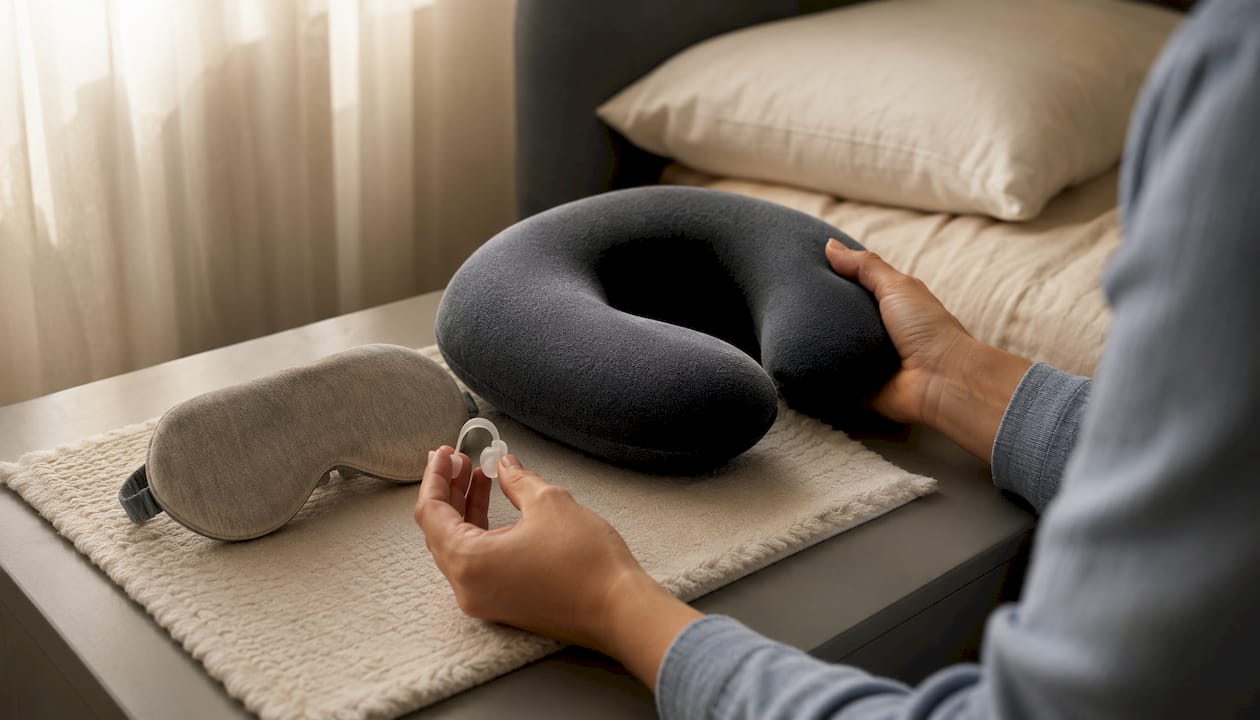
- Build it into your routine: Keeping your aids in a fixed spot on the bedside table and inserting them as part of a consistent pre-sleep sequence builds the habit. Sporadic use produces sporadic results.
- Monitor your response: If symptoms persist or worsen after consistent use, seek specialist evaluation. Mechanical aids manage physical conditions but do not diagnose or treat underlying sleep disorders.
For a broader view of how physical aids fit within a well-designed sleep environment, Somnastudioshop’s guide to sleep environment improvements covers ten evidence-backed changes worth reading alongside this.
Somnastudioshop’s approach to sleep improvement with reusable aids
Somnastudioshop sits at the point where technology and physical sleep support meet. Their product range is built on the same principle that underlies reusable mechanical aids: address the physical conditions that disrupt sleep, rather than chemically overriding the body’s natural processes.
Consistent use of mechanical sleep aids, integrated into a habitual evening routine, produces measurably better outcomes than sporadic use when problems arise. The future of sleep improvement lies in personalised, technology-enabled interventions that adapt to the individual, not one-size-fits-all sedation.
The Somna Lift addresses neck tension and discomfort, a factor that disrupts sleep independently of nasal obstruction or noise. The SomnaAura Pro combines ergonomic design with white noise to mask disruptive ambient sound, complementing what reusable earplugs do passively. Together, these products extend the logic of reusable mechanical aids into areas that silicone and adhesive strips cannot reach.
Emerging research points toward real-time adaptive sleep technology as the next step, with devices that respond to the individual’s environment and physiology rather than applying a fixed intervention. Somnastudioshop’s design philosophy already moves in that direction. For anyone exploring sleep tech for professionals, the combination of passive mechanical aids and active technology-driven devices represents the most complete approach currently available.
Key takeaways
Reusable sleep aids work by correcting physical causes of disrupted sleep, making them a sustainable, dependency-free alternative to OTC sedative medications.
| Point | Details |
|---|---|
| Mechanical, not chemical | Reusable aids improve sleep by supporting airflow or blocking noise, with no sedative effect on the body. |
| Types suit different problems | Nasal dilators, stents, earplugs, and nose strips each target a distinct physical disruption. |
| OTC meds carry tolerance risk | Diphenhydramine builds tolerance quickly and is recommended for short-term use only. |
| Fit and technique determine results | Discomfort from earplugs or dilators usually signals a size or insertion issue, not a product fault. |
| Routine use outperforms sporadic use | Integrating aids into a consistent bedtime routine produces better long-term adherence and effectiveness. |