
A sleep mask is defined as a wearable eye covering designed to create complete darkness by physically preventing ambient light from reaching the eyes. Understanding how sleep masks block light matters because light is the single most powerful signal your brain uses to regulate sleep and wakefulness. Even low levels of bedroom light, from a streetlamp through thin curtains or a phone screen left on standby, can suppress melatonin production and fragment your sleep. Somnastudioshop builds its entire product philosophy around this principle: remove the light signal, and the body’s natural sleep chemistry takes over.
How does light exposure disrupt sleep?
Light is the primary driver of your circadian rhythm, the internal 24-hour clock that tells your body when to sleep and when to wake. Circadian rhythms are set by light; even small amounts of bedroom light inhibit melatonin production. That means a bedside lamp left on dim, or the glow from a television on standby, is enough to delay sleep onset.
The numbers are striking. Ordinary room light at around 200 lux can suppress melatonin production by more than 50%. That is not a marginal effect. It means your body is operating in a half-awake hormonal state even when you feel tired.
Common light sources that disturb sleep include:
- Streetlights and car headlights through windows
- Electronic device standby indicators and notification flashes
- Digital alarm clock displays
- Light from under doors in shared flats or student halls
- Early morning sunlight, which arrives before most people need to wake
The final point is particularly underappreciated. Morning light suppresses melatonin through closed eyelids, cutting short the final REM-rich sleep cycle before your alarm sounds. That last cycle is where much of your emotional processing and memory consolidation happens. Losing it consistently has real consequences for mood and cognitive performance.
Complete darkness removes this disruptive signal entirely. When the brain receives no light input, it maintains melatonin levels through the full sleep period, allowing uninterrupted progression through light sleep, deep sleep, and REM stages.
What materials and design features make masks most effective?
The material a sleep mask is made from affects comfort, breathability, and how well it sits against the face. The design, however, determines whether it actually blocks light.
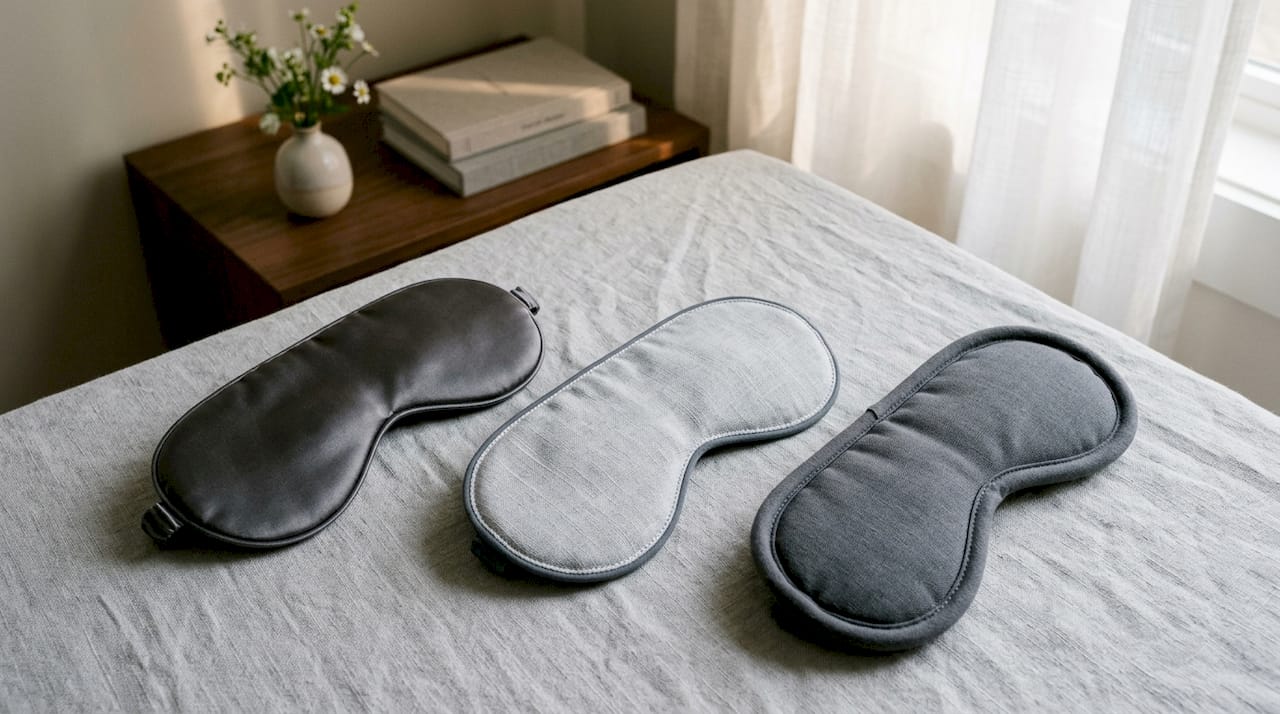
Material comparison
| Material | Light blocking | Breathability | Skin comfort | Best for |
|---|---|---|---|---|
| Mulberry silk (22 momme) | High, with good fit | Moderate | Excellent, low friction | Sensitive skin, dry climates |
| Cotton | Moderate | High | Good | Warm sleepers |
| Synthetic memory foam | High | Low to moderate | Good with lining | Side sleepers needing contour |
| Polyester blends | Variable | Moderate | Fair | Budget options |
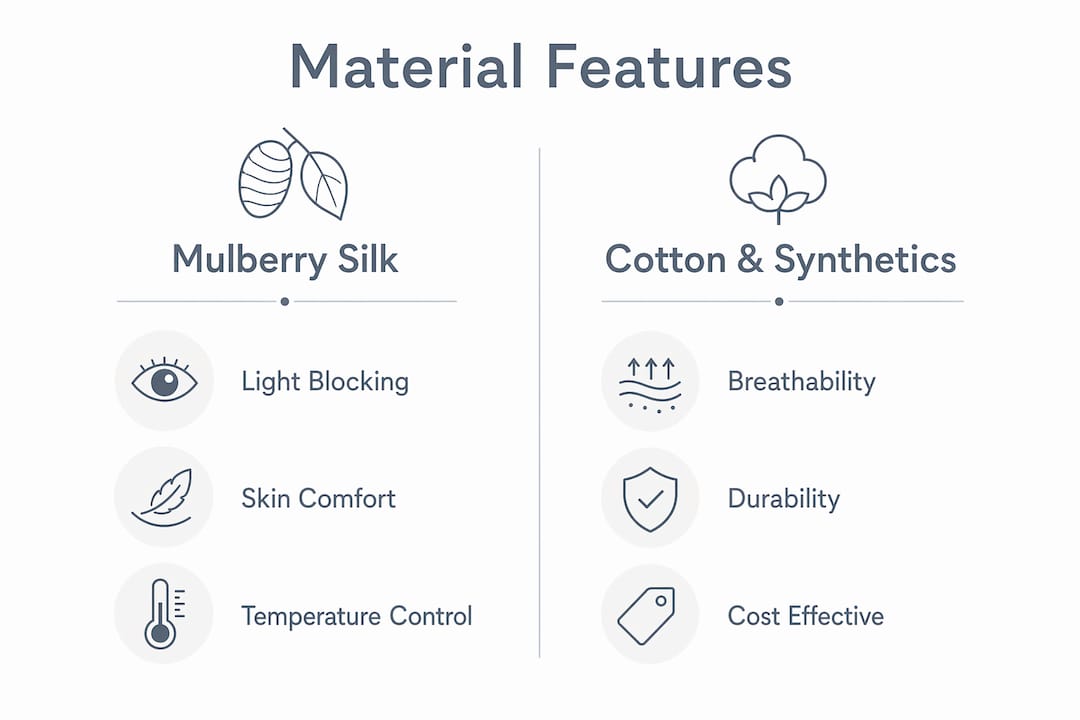
22 momme Grade 6A mulberry silk offers low friction, moisture retention, and temperature regulation alongside light blocking. That combination makes it the preferred choice for people with sensitive skin or those prone to waking from discomfort.
Fit matters more than fabric, though. Light leakage at the nose bridge dramatically reduces mask effectiveness, regardless of how premium the material is. A contoured nose bridge that moulds to the face without gaps is the single most important design feature to check before buying.
Other design features worth prioritising:
- Adjustable elastic or velcro straps to accommodate different head sizes
- A contoured or 3D cup shape that avoids pressure on the eyelids
- Hypoallergenic materials for people with skin sensitivities
- Sufficient padding depth to prevent light from entering at the cheeks
Pro Tip: Before committing to a mask, press it gently to your face in a lit room and check for any light visible around the edges. If you see light, the fit is wrong, and no amount of quality fabric will compensate.
Do sleep masks actually improve sleep quality?
The evidence is clear. Wearing a sleep mask is associated with a 2% increase in REM sleep, based on wearable technology data tracking sleep architecture. A 2% REM gain sounds modest, but across a week it represents a meaningful addition to the sleep stage most responsible for emotional regulation and memory.
Clinical research goes further. A meta-analysis of intensive care patients confirmed that sleep masks improve deep N3 sleep and sleep continuity. The intensive care setting is significant because it represents an extreme light-disruption environment. If masks produce measurable benefits there, the effect in a typical bedroom is at least as strong.
“Light entering the eyes signals the brain to reduce melatonin. Masks reduce visual stimulation, promoting parasympathetic nervous system activity and preparing the body for restorative sleep stages.”
The parasympathetic nervous system is the body’s rest-and-digest mode. The gentle pressure of a well-designed mask may stimulate a shift from the stress response toward this rest state, which is why many people report feeling calmer the moment they put a mask on, even before sleep begins.
This connects to a less obvious benefit. Sleep masks function as psychological cues, conditioning the brain to associate the sensation of wearing one with safety and restfulness. Over time, putting on a mask becomes part of the bedtime ritual that signals sleep is imminent. You can read more about how wellness devices improve sleep through similar conditioning mechanisms.
The benefits extend across specific groups. Students in shared accommodation deal with corridor light, flatmates’ schedules, and inconsistent sleep times. Shift workers face daylight during sleep hours. Frequent travellers contend with hotel rooms, aircraft cabins, and time zone changes. For all three groups, a well-fitted mask is one of the most cost-effective light blocking solutions for sleep health available.
How to choose, fit, and use a sleep mask properly
Getting the most from a sleep mask requires more than buying one and hoping for the best. Fit, routine, and environment all determine whether you see real results.
-
Test for light leakage before you buy. Put the mask on in a lit room and look for any glow around the edges. Pay particular attention to the nose bridge area, where most masks fail.
-
Choose adjustable straps. A strap that is too tight causes pressure headaches. One that is too loose lets the mask shift during the night. Adjustable straps let you find the right tension without compromising the seal.
-
Opt for a contoured or 3D shape if you are a side sleeper. Flat masks press against the eyelids when you lie on your side, which is uncomfortable and can disrupt sleep. A contoured design maintains a small cavity over the eyes regardless of sleeping position.
-
Build the mask into a consistent bedtime ritual. Masks condition the brain for sleep beyond their physical light-blocking function. Wearing one at the same point each night, after brushing teeth and before reading, reinforces the sleep signal.
-
Address the full sleep environment, not just light. Noise is the second most common sleep disruptor after light. Pairing a mask with a white noise source addresses both. You can explore the science behind ambient noise for sleep to understand why this combination works so well.
Pro Tip: For travel, pack a mask with a firm contoured shape rather than a flat one. Aircraft cabins and hotel rooms have unpredictable light sources, and a contoured mask maintains its seal even when you shift position in a seat or unfamiliar bed.
For people with migraine sensitivity, the benefits go beyond sleep. Light acts as a physiological stressor that prevents the brain from entering restful states. Blocking it during rest periods reduces this input and can lower the frequency of light-triggered episodes.
Key takeaways
Sleep masks block light by creating a physical barrier that prevents ambient light from reaching the eyes, which preserves melatonin production and supports complete, uninterrupted sleep cycles.
| Point | Details |
|---|---|
| Light suppresses melatonin fast | Room light at 200 lux cuts melatonin by over 50%, delaying sleep onset significantly. |
| Fit determines effectiveness | Light leakage at the nose bridge makes even premium masks ineffective; always test the seal. |
| REM and deep sleep both improve | Mask use is linked to a 2% REM increase and better N3 sleep continuity in clinical studies. |
| Masks work as behavioural cues | Consistent use conditions the brain to associate the mask with sleep, speeding relaxation. |
| Combine with sound control | Pairing a mask with white noise addresses both major environmental sleep disruptors at once. |
Why I think most people underestimate what a sleep mask actually does
Most people treat a sleep mask as a last resort, something you grab for a long-haul flight or when a partner insists on a bedside lamp. That framing undersells it considerably.
What I have observed, both from the research and from speaking with people who use masks consistently, is that the psychological conditioning effect is often more powerful than the light blocking itself. The brain is remarkably trainable. Give it a consistent sensory cue at the same point each night, and it begins to anticipate sleep before you have even closed your eyes. The mask becomes a trigger, not just a barrier.
The other thing most articles miss is the morning problem. People focus on falling asleep and ignore the fact that early light is cutting their final REM cycle short every single morning. Fixing that one issue, by wearing a mask through to the alarm, can change how you feel for the entire day. It is not about sleeping longer. It is about protecting the sleep you already have.
My honest recommendation is to treat mask selection with the same seriousness you would give a pillow or a mattress. Test the fit. Check the nose bridge. Wear it consistently for two weeks before judging the results. The people who dismiss masks as ineffective are almost always the ones who bought a flat, poorly fitted version and wore it twice.
— Hadi
Somnastudioshop’s sleep solutions worth knowing about
Somnastudioshop designs products specifically for people who take sleep seriously. The SomnaAura Pro Contour White Noise Sound Mask combines a contoured light-blocking design with built-in white noise, addressing both major sleep disruptors in a single device. It is built for light-sensitive sleepers, shift workers, students, and frequent travellers.
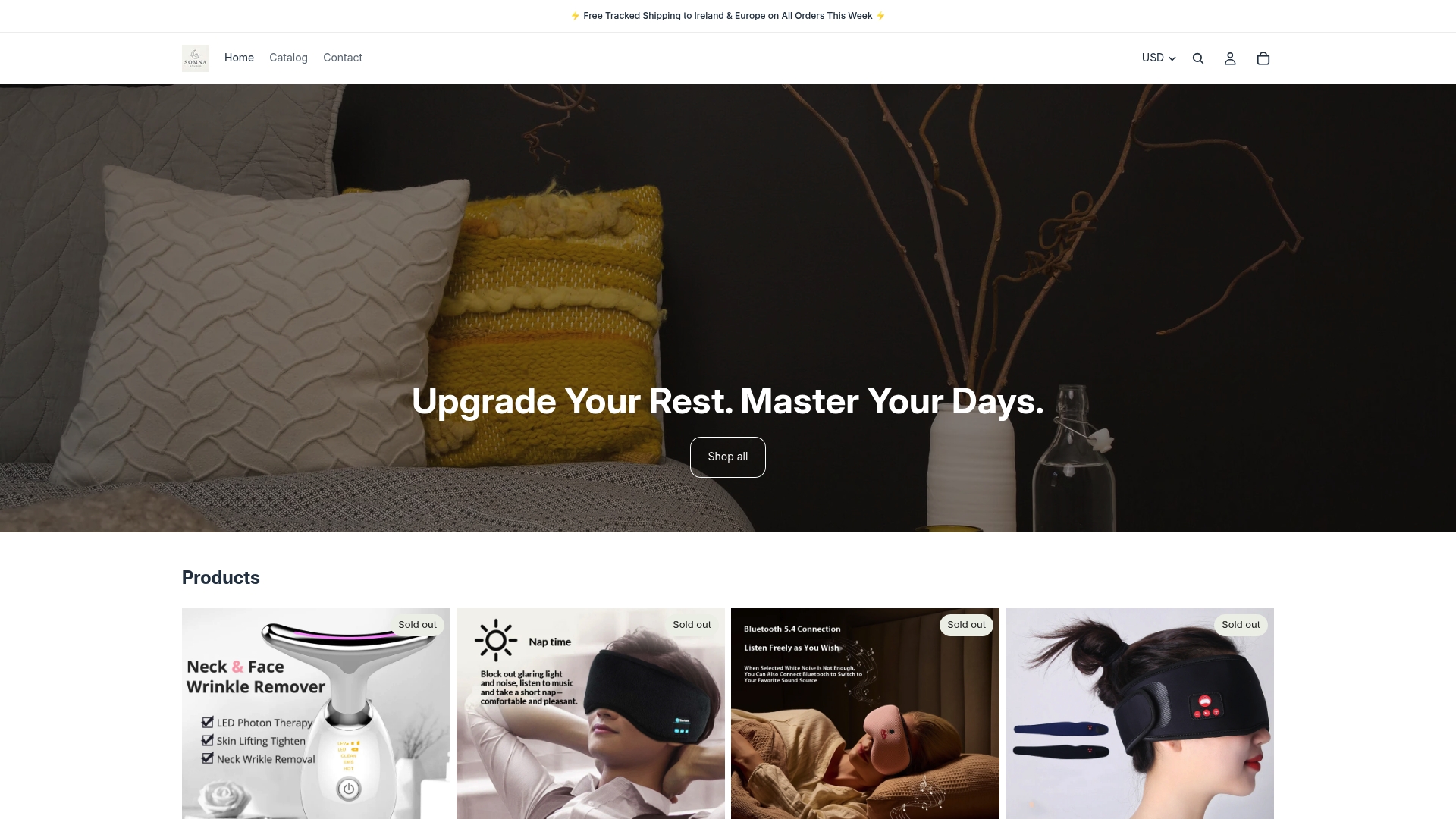
For those dealing with neck tension that disrupts sleep, the Somna Lift EMS Thermal Neck Contour Device targets physical discomfort before bed, helping the body reach the relaxed state that deeper sleep requires. Somnastudioshop’s range is built around one idea: remove every barrier between you and restorative sleep, whether that barrier is light, noise, or physical tension.
FAQ
How do sleep masks block light physically?
A sleep mask sits over the eyes and creates a physical seal against the face, preventing ambient light from reaching the eyelids. The effectiveness depends primarily on fit, particularly at the nose bridge, rather than the material alone.
Can wearing a sleep mask improve REM sleep?
Wearable technology data shows that mask use increases REM sleep by around 2%. Clinical studies in high-light environments confirm improvements in both deep N3 sleep and overall sleep continuity.
What is the best material for a light-blocking sleep mask?
22 momme Grade 6A mulberry silk offers the best combination of light blocking, skin comfort, and temperature regulation. However, fit matters more than material; a silk mask with poor nose bridge coverage will leak more light than a well-fitted cotton one.
Are sleep masks useful for travel and shift work?
Sleep masks are one of the most effective tools for the role of light blocking during travel and shift work. They block daylight during daytime sleep and eliminate unpredictable light sources in hotel rooms and aircraft cabins.
How long does it take for a sleep mask to make a difference?
Most people notice improved sleep onset within the first few nights. The full conditioning benefit, where the mask acts as a psychological cue for sleep, typically develops after two weeks of consistent use.