
Sound masking is defined as the deliberate introduction of a steady, neutral background sound to reduce the brain’s perception of disruptive environmental noises during sleep. Clinical trials show it improves sleep efficiency, total sleep time, and perceived restfulness, with some hospital studies recording doubled sleep quality scores after just three nights of white noise. Understanding how sound masking improves rest is the first step towards using it well, whether you are a busy professional in a city flat, a light sleeper in shared housing, or a frequent traveller staying in noisy hotels. The technique works not by cancelling noise, but by filling the acoustic gaps that make sudden sounds so jarring to a sleeping brain.
How does sound masking physiologically improve sleep?
Sound masking works by filling what researchers call “spectral gaps,” the quiet spaces in the acoustic environment where sudden noises stand out most sharply. When a siren, a door slam, or hallway traffic breaks through silence, your brain registers the contrast and triggers a startle response. Spectral gap filling blends those intrusions into a continuous acoustic blanket, lowering the physiological stress response that would otherwise fragment your sleep.
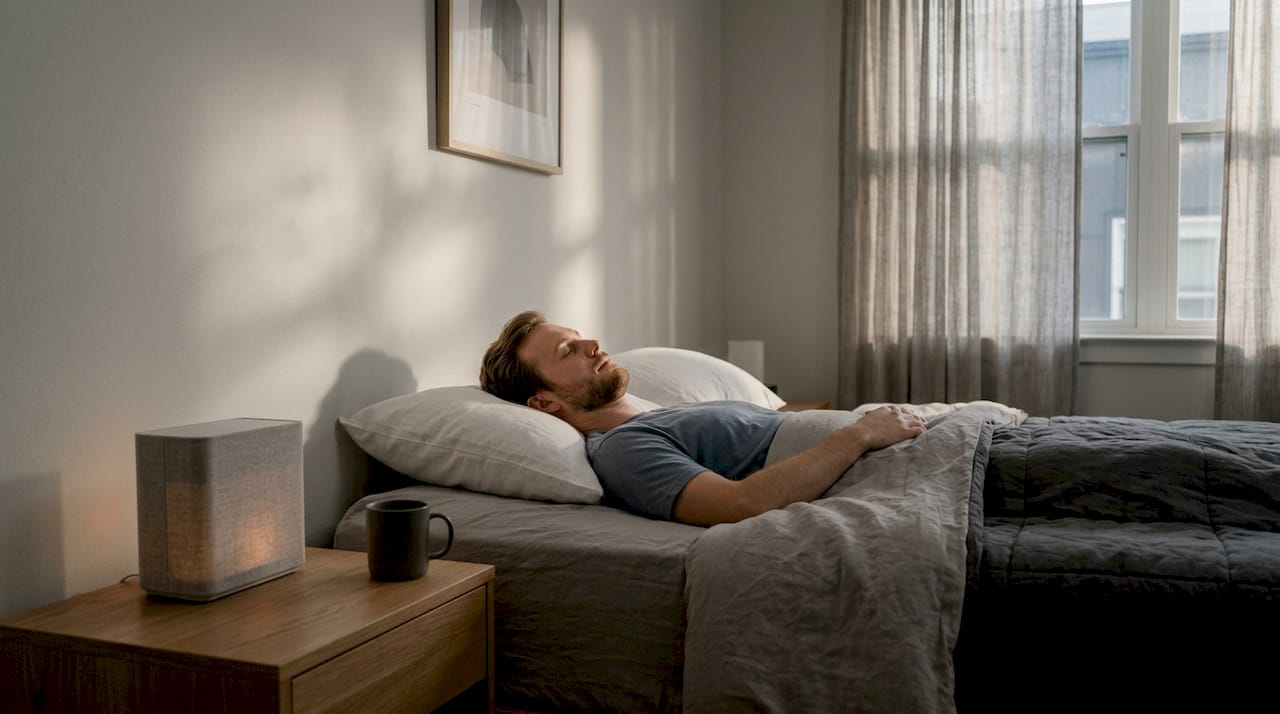
The brain does not switch off its auditory processing during sleep. It continues monitoring sound for threats, which is why a single sharp noise can pull you from deep sleep into a lighter stage or full wakefulness. Sound masking reduces the contrast between background and intrusion, so the brain’s threat-detection system stays quiet. This directly protects sleep architecture, the cycling through light, deep, and REM stages that determines how restored you feel in the morning.
Polysomnography studies, which measure brain activity, eye movement, and muscle tone during sleep, confirm these effects at a measurable level. Pink noise at 45 dB neutralises the sleep-disturbing effects of intermittent traffic noise, reducing sleep fragmentation without itself becoming a disturbance. That finding matters because it shows the mechanism is not simply about drowning out noise with volume. It is about acoustic consistency.
- Sound masking lowers the startle reflex by reducing acoustic contrast between silence and sudden noise.
- It protects sleep architecture by keeping the brain’s auditory threat-detection system calm.
- Polysomnography evidence confirms reduced sleep fragmentation at controlled masking volumes.
- The effect is neurobiological, not psychological. You do not need to believe it works for it to work.
Pro Tip: If you wake frequently to sounds you barely remember hearing, your brain’s auditory system is likely triggering micro-arousals. A consistent masking sound addresses this at the source, not just the symptom.
What types of sound are most effective for sleep?
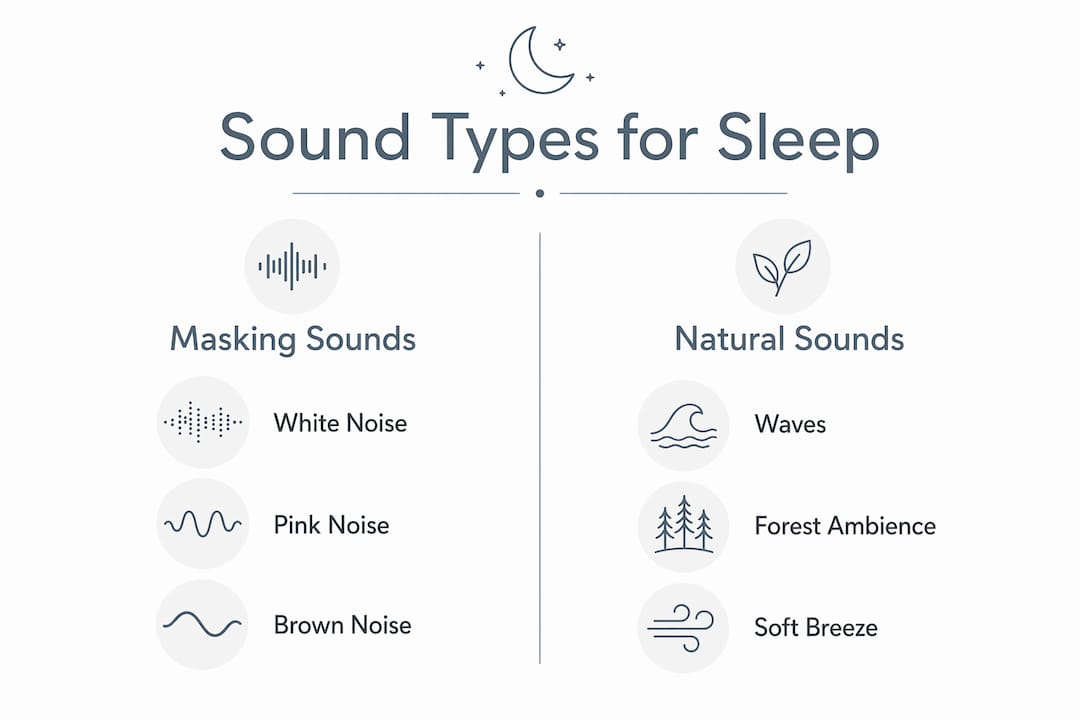
The three most widely used sound types in masking are white noise, pink noise, and brown noise. Each has a distinct frequency profile, and each suits different people for neurobiological reasons.
| Sound type | Frequency profile | Best suited for |
|---|---|---|
| White noise | Equal energy across all frequencies | Blocking sharp, high-pitched intrusions |
| Pink noise | More energy in lower frequencies | General sleep maintenance; feels softer |
| Brown noise | Concentrated in very low frequencies | Deep, rumbling quality; preferred by many with anxiety |
| Naturalistic sounds | Variable; mimics nature | Psychological comfort; high user acceptability |
White noise is the most studied, but it is not universally preferred. Some people find white noise irritating, particularly those sensitive to high-frequency hiss. Pink noise, which sounds closer to rainfall or a gentle fan, tends to feel less fatiguing over a full night. Brown noise, resembling distant thunder or a river, suits people who find white noise too sharp.
Naturalistic sounds, such as soft breeze, distant waves, or forest ambience, carry an additional psychological benefit. Naturalistic sounds are often preferred over artificial white noise for psychological comfort, which matters for long-term adherence. A sound you find pleasant is one you will actually keep running all night.
Sound interventions including pink noise and binaural beats have been shown to reduce stress and improve subjective sleep quality, particularly among younger adults, with effects that strengthen over repeated nights. Musical elements within soundscapes also increase how acceptable people find the experience, which directly affects consistency of use.
Pro Tip: Start with pink noise if you are unsure which type suits you. It is the most broadly tolerated and has the strongest clinical evidence base for reducing sleep fragmentation.
Who benefits most from sound masking, and in which settings?
Sound masking delivers the greatest benefit to people whose sleep is regularly disrupted by unpredictable environmental noise. The effect is most pronounced in three groups: people with noise-sensitive sleep, busy professionals in urban environments, and patients in clinical or hospital settings.
Urban dwellers face a particular challenge. Traffic, neighbours, and nighttime deliveries create an acoustic environment that is both loud and unpredictable. Unpredictability is the key problem. A steady hum of traffic is far less disruptive than a single car horn at 2:00 AM, because the brain habituates to consistent sound but cannot habituate to random intrusions. Sound masking addresses this by making the acoustic environment consistent rather than silent.
Hospital patients represent the most studied population. Randomised clinical trials with 500 adults show that white noise in hospital environments improves sleep efficiency, total sleep time, and perceived restfulness, with sleep quality scores doubling after three nights. Hospitals are acoustically hostile environments, with alarms, trolleys, and staff conversations occurring at all hours. Masking gives patients a degree of acoustic control they would otherwise lack entirely.
The role of sound masking in hotel rooms is also well established. Hotels with poor acoustic insulation rely on masking as a supplementary layer, but sound masking works best alongside structural soundproofing rather than as a replacement for it. A room with thin walls and a white noise machine will still transmit low-frequency structural noise that masking cannot address.
- Urban professionals benefit from masking’s ability to neutralise unpredictable nighttime noise spikes.
- Hospital patients show measurable improvements in sleep continuity with white noise interventions.
- Shared housing residents gain acoustic privacy without requiring structural renovation.
- Hotel guests in rooms with adequate STC-rated walls get the best results when masking is also present.
How to implement sound masking for better sleep
Getting the setup right matters as much as choosing the right sound. Poor implementation reduces effectiveness and can introduce new disruptions.
-
Set the volume correctly. The most common mistake is setting masking too loud. Consistency at a low, stable volume is what matters, not intensity. Higher volumes do not improve masking and can cause overstimulation or hearing fatigue over time. Aim for a level that covers intrusive sounds without being audible as a distinct foreground noise.
-
Position the device thoughtfully. Place your sound source at a distance from your head, not directly beside your ear. A device on a bedside table or across the room creates a more diffuse acoustic field, which feels more natural and is less likely to become a distraction.
-
Run it continuously through the night. Turning off masking mid-sleep causes a jarring acoustic transition that risks waking you. Avoid timers. The transition from sound to silence is itself a disruption, particularly during lighter sleep stages in the early morning hours.
-
Combine masking with good sleep hygiene. Sound masking is a tool, not a complete solution. Pairing it with consistent sleep and wake times, a dark room, and a cool temperature produces far better results than masking alone. Somnastudioshop’s sleep hygiene guide covers the full range of environmental and behavioural factors that work alongside acoustic management.
-
Do not rely on masking to compensate for severe structural noise. If you can feel vibrations through the floor or walls, or if low-frequency mechanical noise is the primary problem, masking will not solve it. Treat masking as a tuning layer on top of proper acoustic insulation, not a substitute for it.
Pro Tip: Use a dedicated device rather than a phone app where possible. Phones introduce notification sounds, screen light, and variable audio quality. A purpose-built white noise machine delivers a cleaner, more consistent acoustic output.
Key takeaways
Sound masking improves rest by creating a consistent acoustic environment that reduces the brain’s detection of disruptive noises, protecting sleep architecture and reducing fragmentation throughout the night.
| Point | Details |
|---|---|
| Mechanism is neurobiological | Masking fills spectral gaps to lower the brain’s startle response, not just mask volume. |
| Sound type is personal | Pink noise suits most people, but naturalistic sounds improve long-term adherence for many. |
| Continuous use is non-negotiable | Timers that cut sound mid-sleep cause acoustic transitions that risk waking you. |
| Masking complements, not replaces, soundproofing | Structural noise requires structural solutions; masking is a tuning layer, not a fix. |
| Clinical evidence is strong | Trials with 500 adults confirm improvements in sleep efficiency, total sleep time, and perceived restfulness. |
What I have learnt from years of watching people sleep better (and worse)
The single most consistent mistake I see is treating sound masking as a volume problem. People turn their devices up, assume louder means better coverage, and end up with a new disturbance rather than a solution. The research is clear: consistency at a low level is the mechanism. Volume is almost irrelevant beyond a modest threshold.
What surprises most people is how personal the choice of sound type turns out to be. I have spoken with professionals who swear by brown noise and find white noise physically uncomfortable. I have also met people who find naturalistic sounds too mentally engaging, because their brain starts processing the “story” of the sound rather than habituating to it. There is no universal answer, and any article that tells you otherwise is oversimplifying.
The limitation I find most underappreciated is the structural noise problem. Sound masking cannot address low-frequency vibrations from traffic, trains, or mechanical plant. I have seen people invest in excellent audio equipment and still sleep badly because the real problem was a poorly insulated floor. Acoustic management is a layered discipline. Masking is one layer, and it is a genuinely effective one, but it belongs in a system, not in isolation.
The direction I find most interesting right now is adaptive sound masking: devices that monitor the acoustic environment in real time and adjust their output accordingly. Somnastudioshop’s approach to wellness devices for sleep reflects this shift towards responsive, personalised tools rather than static background noise. That is where the real gains will come from over the next few years.
— Hadi
Somnastudioshop’s sound masking tools for better rest
Sound masking works best when the device delivering it is purpose-built for sleep. Somnastudioshop offers a range of products designed specifically for this.
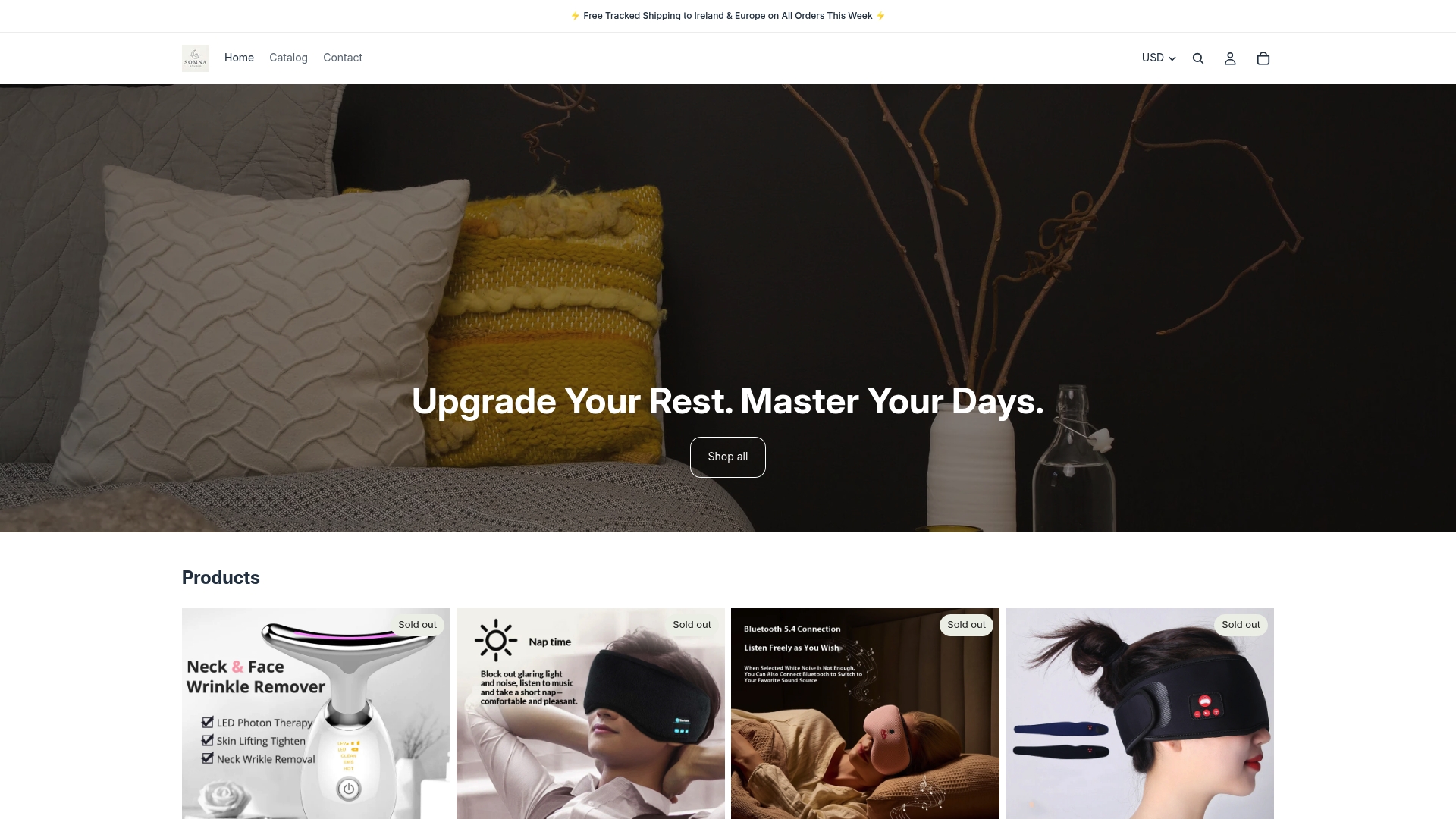
The SomnaSound portable white noise machine delivers consistent, low-volume acoustic output across white, pink, and brown noise profiles, making it straightforward to find the sound type that suits you. For a more personalised experience, the SomnaAura smart sleep sound mask combines Bluetooth audio with light-blocking design, placing sound directly at the ear for precise acoustic control. If you need a complementary physical barrier alongside audio masking, the SomnaShield noise-reduction earplugs reduce incoming sound before it reaches the ear, giving masking less work to do.
FAQ
What is sound masking and how does it differ from noise cancellation?
Sound masking adds a steady background sound to reduce the brain’s detection of sudden noises. Noise cancellation uses electronics to generate opposing sound waves, which is unreliable for unpredictable or low-frequency sounds.
What volume should I use for sound masking during sleep?
A low, stable volume that covers intrusive sounds without becoming a foreground noise is correct. Higher volumes do not improve masking effectiveness and can cause overstimulation over a full night.
Can sound masking improve sleep in hotel rooms?
Sound masking improves rest in hotel rooms, but works best when the room also has adequate structural soundproofing. Audio masking alone cannot compensate for thin walls or low-frequency mechanical noise.
Is pink noise better than white noise for sleep?
Pink noise is more broadly tolerated than white noise because its lower-frequency profile feels softer and less fatiguing. Clinical evidence supports pink noise at 45 dB for reducing sleep fragmentation caused by traffic noise.
Should I use a timer on my sound masking device?
No. Turning off masking mid-sleep creates an acoustic transition that risks waking you, particularly during lighter sleep stages in the early morning. Run your device continuously until you wake.