
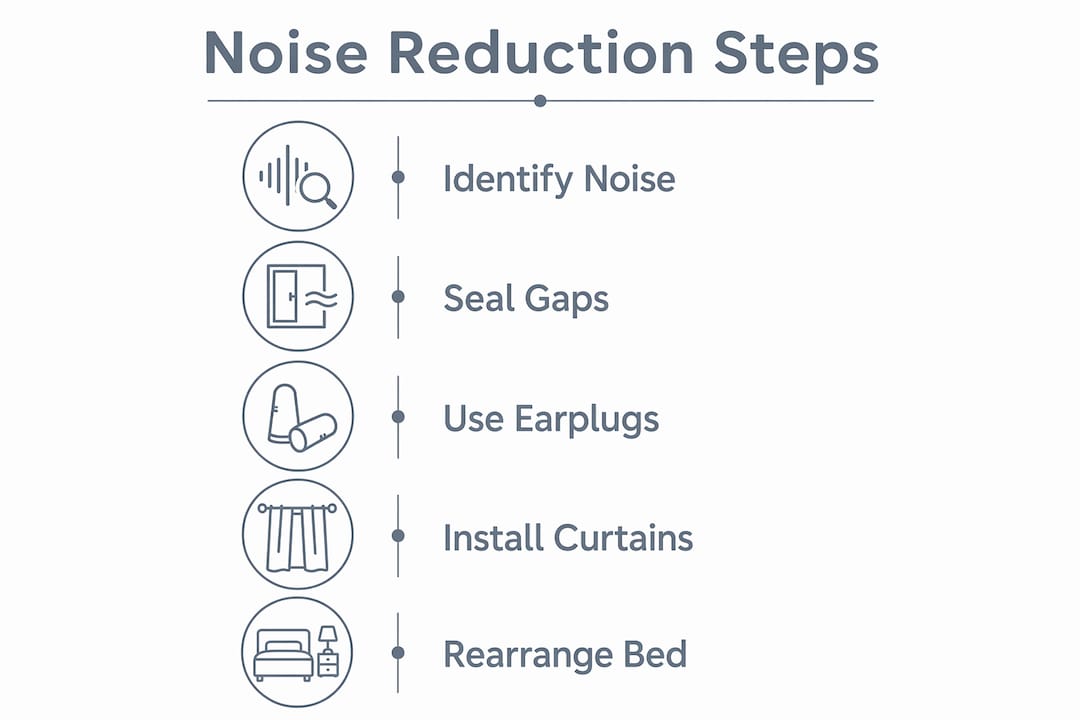
The most effective way to reduce noise disturbances while sleeping is to combine physical barriers with environmental adjustments. Earplugs are the single strongest intervention available, outperforming sound masking in a 2026 polysomnographic study involving 25 adults exposed to 93 noise events. Acoustic curtains with a Sound Transmission Class (STC) rating of 20 or higher block a meaningful share of external noise through windows, and soft furnishings absorb what gets through. White noise machines help, but they carry a trade-off: pink noise at 50 dB reduced REM sleep duration compared to a quiet control night, which matters for memory and emotional regulation.
Quick-reference summary of the top approaches:
- Earplugs (NRR 33 dB): most effective physical barrier; recovered more than 70% of deep sleep lost to noise
- Acoustic curtains (STC 20+): block external noise at the window before it enters the room
- White noise machines: useful for masking distant or low-level noise, but use with care around REM sleep
- Gap sealing: draft excluders and weatherstripping on doors and windows stop sound travelling through air gaps
- Furniture repositioning: heavy wardrobes and bookshelves against shared walls add mass and dampen vibration
- Behavioural techniques: pre-sleep relaxation rituals and mindfulness reduce sensitivity to residual noise
Sleep fragmentation matters. Environmental noise reduced N3 deep sleep by a mean of 23.4 minutes per night in controlled laboratory conditions, largely replaced by lighter N2 sleep. Wearing earplugs recovered more than 70% of that loss.
How to reduce noise disturbances while sleeping: practical solutions
Start with the noise source, not the masking device. Experts consistently recommend identifying and eliminating noise at its origin before reaching for a white noise machine or earplug.
Earplugs vs. pink noise. Foam earplugs with an NRR of 33 dB reduce noise exposure by roughly 13 dB at the eardrum, enough to bring typical urban noise levels of 45–55 dB down to a manageable range. Pink noise reduces some arousals in a dose-dependent way but worsened overall sleep structure in the 2026 study, particularly REM sleep. Earplugs, by contrast, showed no significant difference in sleep structure compared to a quiet control night.
Acoustic curtains. Heavy, tightly woven fabrics trap and dissipate sound energy. Laboratory-tested acoustic curtains can reduce sound by up to 13 dB while also absorbing echo within the room. Extend them beyond the window frame on all sides for the best result.
White noise machines and sleep headphones. A dedicated white noise machine that generates sound electronically rather than playing a recording avoids the looping patterns that can snap you out of light sleep. Sleep headphones, designed with flat speakers for side-sleepers, let you combine noise isolation with calming audio. The SomnaSound portable white noise machine offers adjustable soundscapes without the loop problem.
Fixing noise at its source. Squeaky doors, rattling appliances, and loose window frames are worth addressing directly. A refrigerator making abnormal sounds can be repaired; a hollow-core bedroom door can be replaced with a solid-core one. These fixes cost less than most acoustic products and deliver permanent results.
- Lubricate door hinges with WD-40 or petroleum jelly
- Place anti-vibration pads under washing machines and fridges
- Turn off device notifications before bed and remove phones from the bedroom
Pro Tip: If you can feel a draught around your door or window frame, sound is getting through the same gap. Sealing those gaps with weatherstripping and a door sweep is one of the cheapest and most effective noise reduction steps you can take.
Behavioural techniques. A 30-minute pre-sleep ritual, whether reading, gentle stretching, or breath-focused meditation, lowers baseline arousal so that residual noise is less likely to trigger a full awakening. Deliberate breathing practice, counting breaths while acknowledging but not fixating on background sounds, can build genuine noise tolerance over weeks.
How your room environment shapes the noise you hear
Room architecture influences noise levels as much as any device you buy. Hard surfaces, bare floorboards, and plaster walls reflect sound waves around the room, amplifying the perception of noise rather than reducing it.
Soft textiles absorb sound waves and reduce reflections. Thick wool rugs, upholstered headboards, and fabric wall hangings all contribute. Layering rugs is particularly effective in bedrooms above noisy areas, where impact noise from footsteps travels through the floor structure.
Heavy furniture placed against walls adjoining noisy neighbours or busy streets adds mass that resists vibration transmission. A wardrobe filled with clothing works because the soft materials absorb vibrations before they reach the air on your side. Bookshelves packed tightly with books create a dense, uneven surface that scatters and absorbs sound energy.
Environmental modifications worth making:
- Replace bare floorboards with carpet or add a thick rug with dense underlay
- Hang fabric wall art, tapestries, or decorative acoustic panels on the noisiest wall
- Add upholstered furniture with foam cores or down fillings rather than hard-framed pieces
- Use curtains that extend at least 15 cm beyond the window frame on each side
- Place a tall, padded headboard against the wall shared with a noisy neighbour
Why noise disturbances damage sleep more than you might think
Noise does not have to wake you fully to cause harm. The 2026 polysomnographic research found that environmental noise reduced N3 deep sleep and increased EEG arousal frequency, with participants reporting significantly worse mood, alertness, and subjective sleep quality the following morning, even when total sleep time appeared similar.
REM sleep carries particular importance. It supports memory consolidation, emotional regulation, and neurodevelopment. Losing even 18–20 minutes of REM per night, as seen in the pink noise condition of the 2026 study, accumulates into a meaningful deficit across a working week. Masking noise without a physical barrier can therefore trade one problem for another.
The key finding: Earplugs mitigated nearly all effects of environmental noise on sleep structure, while pink noise at 50 dB worsened sleep structure despite reducing some arousals. Physical barriers, not masking, are the priority.
Consistent quality sleep supports cognitive function, cardiovascular health, and emotional stability. Treating noise as a minor inconvenience rather than a genuine health variable is the most common mistake people make when trying to improve their rest.
How to rearrange your bedroom to cut noise exposure
Bed position is the most underrated variable in a noisy bedroom. Moving your bed away from a shared wall or a window facing a busy road creates physical distance between you and the source, which reduces perceived loudness meaningfully.
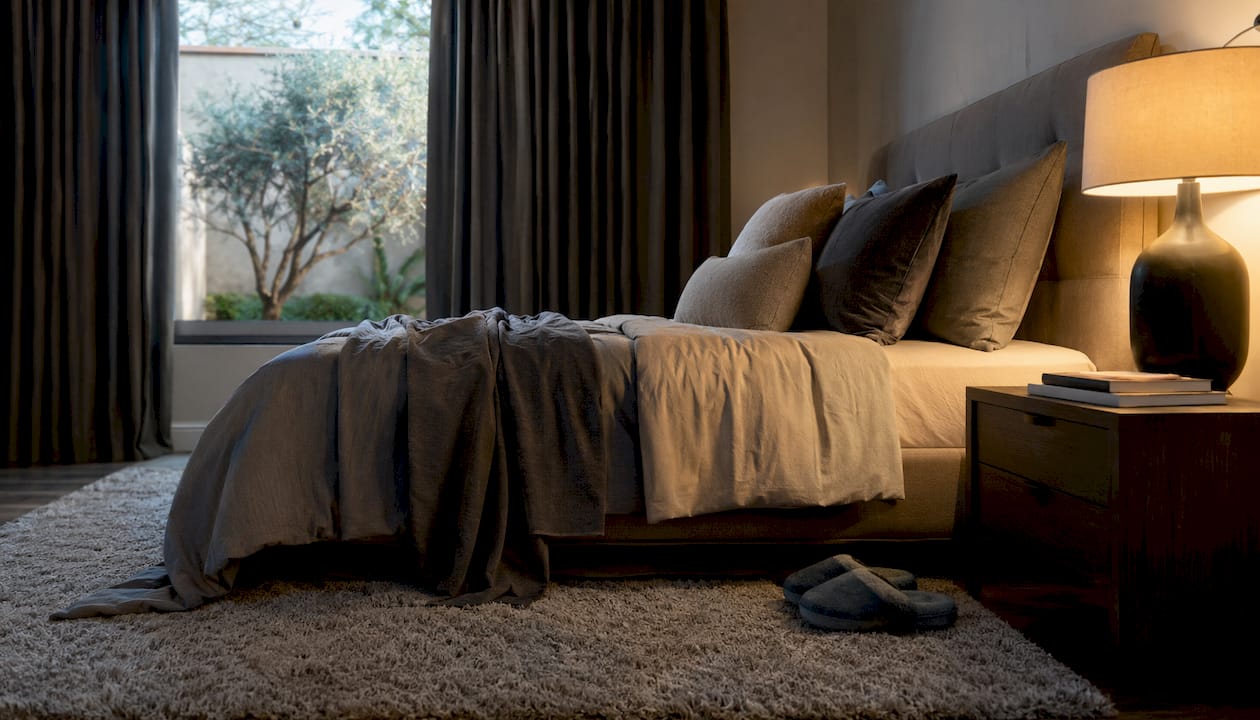
Place the headboard against the quietest wall in the room, ideally an interior wall rather than one facing the street or adjoining a neighbour. If the room layout forces the bed near a noisy wall, position a large wardrobe or bookshelf between the bed and that wall as a secondary barrier. The science of quiet environments confirms that even modest increases in distance from a noise source reduce its sleep-disrupting effect.
For those dealing with footstep noise from above, placing thick neoprene or rubber anti-vibration pads under bed legs reduces how much vibration travels into the frame while you sleep. It will not solve the problem entirely, but it takes the edge off impact noise at the point where it matters most.
Technology solutions that can help you sleep through noise
The right device depends entirely on the type of noise you face. White noise machines work best against distant, diffuse noise such as traffic hum, television through walls, or air conditioning units. They are less effective against close-range impact noise like footsteps or a partner snoring.
Noise-cancelling sleep headphones and wearable devices have improved considerably. The VOLTRA AIR is a wearable designed specifically to mitigate intermittent noise disturbances during sleep, combining active noise reduction with sleep-focused comfort. For those who prefer a mask-style solution, the SomnaAura Pro delivers white noise directly via Bluetooth, combining light blocking with sound masking in a single contour-fit design.
White noise apps on a smartphone are a low-cost starting point, though a dedicated machine with a wider frequency range will block more noise. Apps like myNoise offer adjustable sound profiles that let you tune the frequency balance to your specific noise environment. For sleep tech options beyond basic machines, wearable devices and smart earplugs with active noise reduction represent the current frontier.
Matching your solution to the type of noise keeping you awake
Traffic noise responds well to acoustic curtains, gap sealing, and earplugs. The intermittent nature of traffic, particularly the sharp peaks from lorries or motorcycles, is exactly the pattern that the 2026 study found most disruptive to N3 sleep.
Snoring is a close-range, low-frequency problem. White noise machines rarely mask it effectively because the sound is too close and too variable. Earplugs with a high NRR rating are the most reliable option. If the snoring is severe, with choking or gasping sounds, that warrants a conversation with a GP about obstructive sleep apnoea rather than a noise-reduction product.
Neighbour noise through walls calls for mass: heavy furniture against the shared wall, acoustic plasterboard if you own the property, or a stud wall with an air gap for serious cases. For renters, a combination of furniture placement, a white noise machine, and earplugs covers most situations without structural work. Negotiating quiet hours with neighbours directly, approached diplomatically rather than confrontationally, often resolves the problem faster than any acoustic product.
Somnastudioshop’s sleep-focused approach to noise and rest
Noise reduction is one piece of the sleep puzzle. Physical tension, particularly in the neck and shoulders, keeps the nervous system alert even in a quiet room. Somnastudioshop addresses both sides of that equation.
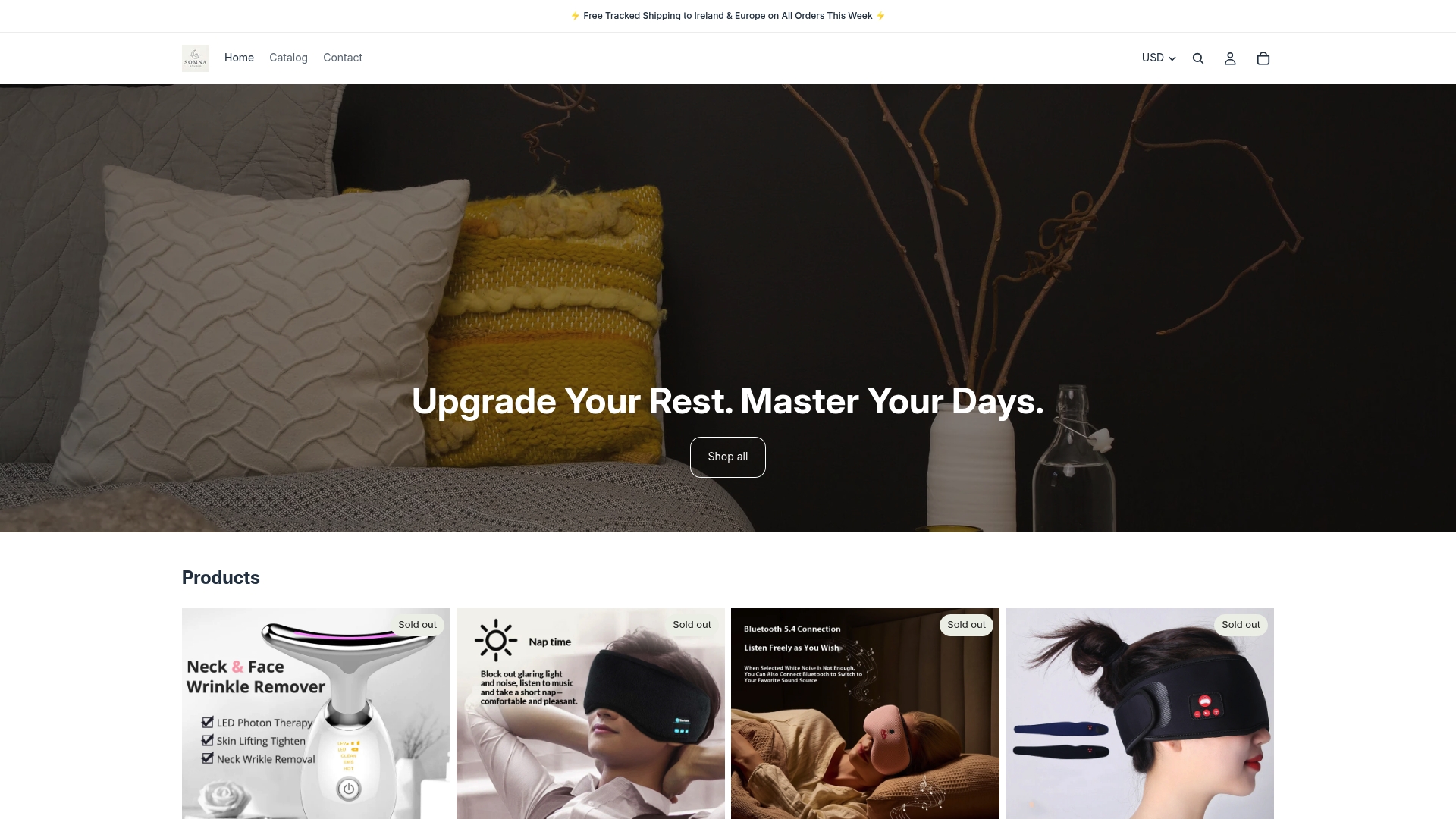
The SomnaAura Pro delivers white noise and calming soundscapes directly via a contour-fit Bluetooth mask, combining sound masking with light blocking in a single wearable. The SomnaSound portable white noise machine offers adjustable soundscapes for the bedside or travel. For physical tension that compounds noise sensitivity, the Somna Lift EMS thermal neck device and the SomnaPulse neck massager help release muscle tension before bed, making it easier for the body to settle even when the environment is not perfectly quiet. Each product is built around user-centric design, with Bluetooth connectivity and adjustable settings suited to modern sleep challenges.
Key takeaways
Earplugs remain one of the most effective interventions for noise-disturbed sleep, substantially recovering deep sleep lost to environmental noise as shown in recent polysomnographic research.
| Point | Details |
|---|---|
| Earplugs outperform pink noise | The 2026 study found earplugs mitigated nearly all effects of environmental noise; pink noise worsened sleep structure. |
| N3 sleep loss is measurable | Environmental noise reduced deep sleep by a mean of 23.4 minutes per night, replaced by lighter N2 sleep. |
| Room acoustics matter | Soft textiles, heavy furniture against shared walls, and gap sealing reduce noise before it reaches your ears. |
| Match the tool to the noise type | Earplugs suit snoring and close-range noise; white noise machines work better for distant, diffuse sound. |
| Somnastudioshop covers both angles | The SomnaAura Pro and SomnaSound address sound masking; the Somna Lift and SomnaPulse reduce physical tension that amplifies noise sensitivity. |