
Sleep quality tracking methods are technological tools that monitor and analyse your sleep patterns to help you rest better and understand what disrupts your nights. The industry standard for clinical measurement is polysomnography (PSG), which records EEG, EOG, and EMG signals simultaneously, but PSG is impractical for home or long-term use. Consumer devices now fill that gap, and the field has matured considerably. Somnastudioshop sits within this space, offering sleep-enhancing devices that complement tracking data with physical comfort improvements. Knowing which monitoring technique suits your life is the first step toward genuinely better rest.
1. What factors make sleep tracking methods effective?
The most effective sleep monitoring techniques share three qualities: accuracy, passivity, and comfort. A device that you stop wearing after a week produces no useful data. One that records inaccurate stages gives you false confidence or unnecessary worry.
Key criteria to evaluate any method:
- Sleep-wake accuracy. Consumer devices achieve approximately 95% accuracy distinguishing sleep from wakefulness. That figure sounds reassuring, but it masks a significant weakness.
- Sleep stage accuracy. The same devices drop to 50%–80% accuracy when differentiating REM, light, and deep sleep. That range matters enormously if you are trying to understand fragmented sleep.
- Physiological signals measured. Devices that capture movement alone (actigraphy) perform worse than those combining actigraphy with photoplethysmography (PPG), which reads heart rate through the skin.
- Passive data collection. The best trackers record automatically, without you pressing buttons or adjusting settings each night.
- Device comfort. A chest patch that irritates your skin or a headband that shifts during the night will reduce compliance and create data gaps.
- Charging requirements. Devices that need nightly charging frequently miss data. Look for multi-day battery life.
Pro Tip: Choose a tracker with at least two days of battery life. Charging every night is the single most common reason people stop using wearables consistently.
The trade-off between comfort and data depth is real. A full EEG headband captures richer data than a wrist band, but many people find it too intrusive to wear every night. Prioritise the device you will actually use.
2. What are the main technology categories for tracking sleep?
Four broad categories cover the consumer sleep tracking market. Each sits at a different point on the accuracy-versus-convenience spectrum.
Wearable devices
Wristbands and smartwatches are the most widely adopted category. They use accelerometers and PPG sensors to estimate sleep stages. Rings follow the same principle in a smaller form factor, which some people find more comfortable overnight. Chest-worn wearables capture both cardiac and respiratory data, giving them higher sleep staging accuracy than wrist-based PPG alone. The trade-off is that a chest patch is less convenient to wear every night.

Nearable and contactless devices
Under-mattress sensors and bedside radar devices track movement, breathing rate, and heart rate without any contact with your body. A study monitoring 117 adults with under-mattress sensors confirmed reliable sleep detection without the charging and wearing fatigue that affects wristbands. These devices suit people who find wearables uncomfortable or who share a bed.
EEG-based headbands
High-end EEG headbands record brainwave activity directly, offering data depth closer to clinical PSG than any other consumer option. The catch is practical. Many people find EEG headbands intrusive, and the discomfort can paradoxically disrupt the sleep you are trying to measure. They suit motivated users with specific clinical questions rather than general wellness tracking.
Smartphone apps
Apps using your phone’s microphone and accelerometer are the lowest-cost entry point. They detect movement and sound to estimate sleep duration and quality. Accuracy is the weakest in this category, but for people who want a starting point before investing in hardware, they provide a useful baseline. Pair them with a sound masking device to reduce ambient noise that skews microphone-based recordings.
3. How accurate are consumer sleep trackers in practice?
Accuracy figures from manufacturers rarely tell the full story. The gap between marketing claims and real-world performance is worth understanding before you buy.
The headline figure is encouraging. Consumer devices distinguish sleep from wakefulness with roughly 95% accuracy. That means the device correctly identifies whether you are asleep or awake in nineteen out of twenty measurements.
Sleep stage accuracy is a different matter entirely. Detection of REM, light sleep, and deep sleep ranges from 50% to 80% depending on the device and the individual. That lower bound means a device could misclassify your sleep stage half the time.
Consumer devices often misclassify quiet wakefulness as sleep, inflating total sleep time estimates. These limitations are especially significant for people with fragmented or disturbed sleep, where still wakefulness is common.
A further complication involves subjective experience. Discrepancies between self-reported sleep quality and device data are well documented, particularly among shift workers whose fragmented sleep patterns challenge tracker algorithms. If your device tells you that you slept well but you feel exhausted, trust your body. The device is an estimation tool, not a medical instrument.
User error compounds these limitations. Inconsistent wearing and missed charging sessions create data gaps that make longitudinal trends unreliable. A week of patchy data is less useful than a month of consistent but imperfect data.
4. How do AI and multimodal sensing improve sleep monitoring?
The most significant recent shift in sleep data analysis methods is the move from raw data display to interpreted guidance. Earlier trackers showed you a sleep stage chart. Newer systems tell you what to do about it.
AI-driven sleep trackers now translate physiological data into personalised coaching, flagging patterns like late caffeine consumption or irregular bedtimes that correlate with poorer sleep in your own data. This moves the technology from passive recording to active behaviour change support.
Multimodal sensing is the hardware side of the same trend. Devices combining EEG, ECG, PPG, and movement sensors produce richer data than any single sensor alone. Soft, wireless, skin-conformal patches now enable high-fidelity signal capture at home, validated in clinical studies. These patches sit flush against the skin, reducing the discomfort that makes traditional EEG headbands impractical for nightly use.
Cloud-based analytics allow longitudinal tracking across weeks and months, revealing trends that a single night’s data cannot show. If your deep sleep consistently drops on Sunday nights, that pattern is only visible across a longer dataset.
Pro Tip: When reviewing AI coaching suggestions, act on one recommendation at a time. Changing your bedtime, caffeine intake, and exercise schedule simultaneously makes it impossible to identify which change actually improved your sleep.
For a broader look at how wellness devices improve sleep, the combination of tracking data with physical comfort devices produces the clearest results.
5. Which sleep tracking method suits your needs?
Choosing the right approach depends on what you are trying to learn and how much friction you can tolerate in your nightly routine.
- If you have fragmented or disturbed sleep: A contactless nearable sensor removes the compliance burden entirely. You place it under your mattress and forget it. This suits shift workers or anyone whose sleep is already disrupted without adding a device to manage.
- If you want detailed stage data: A chest-worn wearable combining cardiac and respiratory measurement gives you the best accuracy outside a clinical setting. Expect a short adjustment period while you get used to wearing it.
- If budget is the primary constraint: A smartphone app costs nothing and gives you a rough baseline. Upgrade to a wristband once you have identified the patterns worth investigating more precisely.
- If you are prone to sleep anxiety: Avoid EEG headbands and high-detail stage trackers initially. Seeing granular data about poor sleep can worsen anxiety and create a cycle where worry about sleep causes the very disruption you are measuring.
- If consistency is your weak point: Prioritise passive, automated data collection over feature richness. A nearable or a ring with multi-day battery life will give you more complete data than a feature-heavy device you forget to charge.
Interpreting your data realistically matters as much as collecting it. Use trends over weeks, not individual nights, to draw conclusions. One poor night’s reading is noise. A consistent pattern across a fortnight is a signal worth acting on. For a detailed breakdown of the metrics worth monitoring, the sleep health metrics guide covers the most clinically relevant indicators.
Key takeaways
The most reliable approach to tracking sleep quality combines passive, multi-sensor data collection with realistic interpretation of trends over time, not individual nights.
| Point | Details |
|---|---|
| Sleep-wake accuracy is high | Consumer trackers achieve roughly 95% accuracy distinguishing sleep from wakefulness. |
| Stage accuracy varies widely | Sleep stage detection ranges from 50%–80%, so treat stage data as an estimate, not a diagnosis. |
| Passive collection beats compliance | Nearable and contactless devices remove user burden and produce more consistent data over time. |
| AI coaching adds practical value | AI-driven systems translate raw sensor data into specific behavioural recommendations you can act on. |
| Comfort determines consistency | The most accurate device you stop wearing is less useful than a comfortable one you use every night. |
What I have learned from watching sleep tracking evolve
The conversation around sleep tracking has shifted in a direction I find both encouraging and slightly concerning. Encouraging because the technology has genuinely improved. Concerning because the gap between what devices promise and what they deliver is still wide enough to mislead people who take the data too literally.
The most common mistake I see is treating a consumer wearable as a clinical instrument. It is not. Polysomnography remains unrivalled for clinical accuracy, and consumer devices are estimation tools for personal wellness. That distinction matters. If your tracker says you got six hours of deep sleep and you feel terrible, the device is wrong. If it consistently shows a pattern of poor sleep that matches how you feel, that pattern is worth taking to a GP.
The people who benefit most from sleep tracking are those who use it to identify behavioural patterns rather than to validate or invalidate how they feel. The data is most powerful when it confirms a suspicion you already had. “I thought late-night screen time was affecting my sleep” becomes “my data shows consistently shorter deep sleep on nights I used my phone after 10 PM.” That is a useful insight.
The future I find genuinely promising is AI coaching that connects sleep data to daytime behaviour. That is where the technology stops being a curiosity and starts being a health tool. But it only works if you combine the tracking with actual changes to your habits. A tracker alone changes nothing.
— Hadi
Somnastudioshop products that work alongside your tracker
Tracking your sleep reveals the problem. Fixing it requires changes to your environment and your body’s ability to relax before bed.
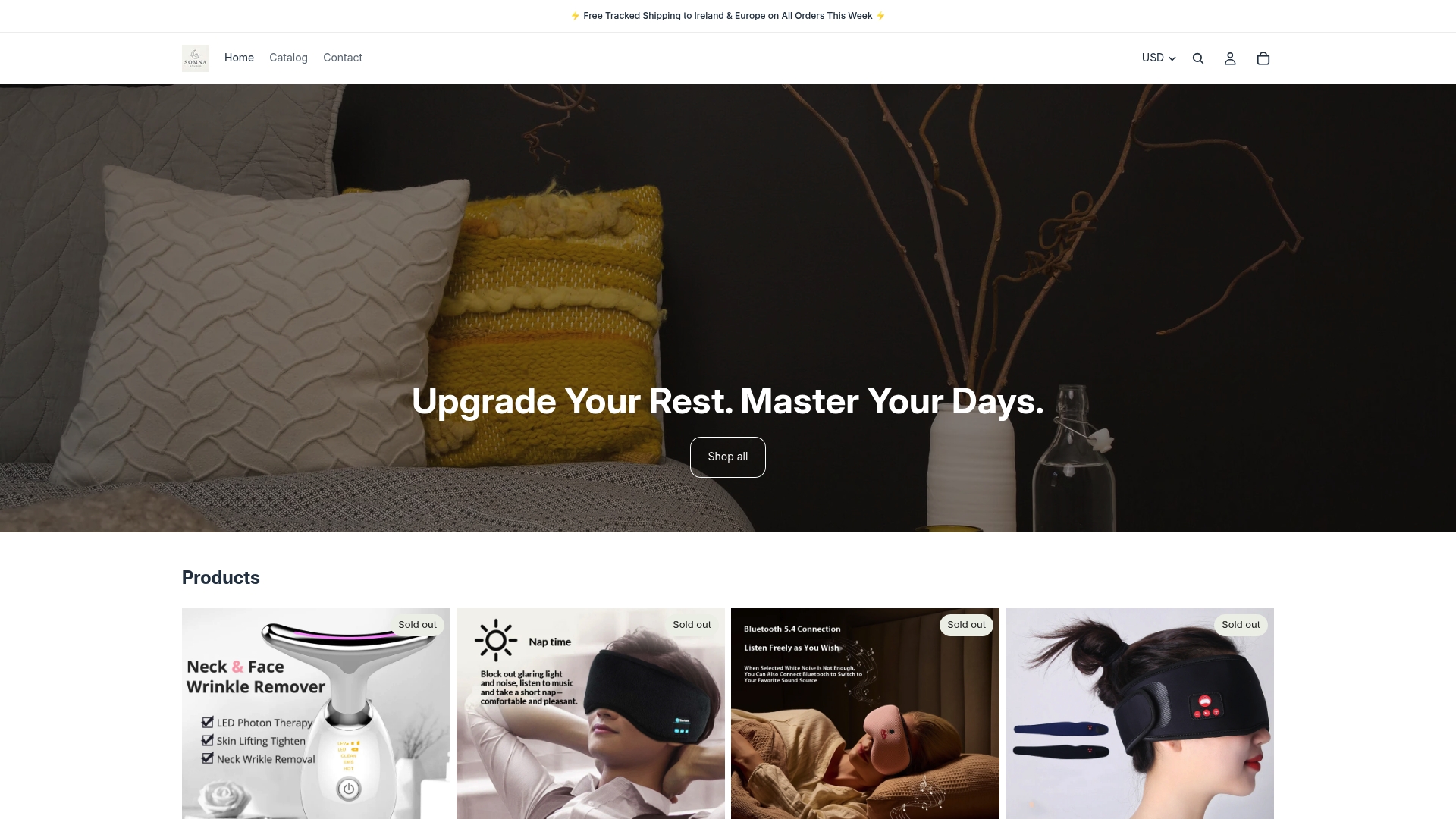
Somnastudioshop builds devices that address the physical side of poor sleep directly. The Somna Lift EMS Thermal Neck Contour Device uses electrical muscle stimulation and gentle heat to release neck tension that keeps you awake or wakes you during the night. The SomnaSound Portable White Noise Sleep Machine masks the ambient noise that disrupts light sleep stages, the very stages where consumer trackers most commonly detect fragmentation. Both devices pair naturally with any tracking method, giving your data something concrete to act on.
FAQ
What is polysomnography and why does it matter?
Polysomnography is the clinical gold standard for sleep assessment, recording EEG, EOG, and EMG signals simultaneously. Consumer devices cannot match its accuracy, but PSG requires a sleep clinic and is impractical for ongoing home use.
Can a smartphone app accurately track sleep quality?
Smartphone apps use the microphone and accelerometer to estimate sleep duration and movement, making them the least accurate category. They provide a useful starting point but should not replace a dedicated wearable or nearable sensor for detailed analysis.
Why does my tracker show good sleep when I feel exhausted?
Consumer devices frequently misclassify still wakefulness as sleep, inflating total sleep time. Discrepancies between device data and how you feel are well documented, particularly in people with fragmented or disturbed sleep patterns.
How do I choose between a wearable and a nearable sensor?
Choose a nearable if compliance or comfort is a concern, as under-mattress sensors require no wearing or charging. Choose a chest-worn wearable if you want higher sleep stage accuracy, as combined cardiac and respiratory data outperforms wrist-based PPG alone.
Does AI in sleep trackers actually improve outcomes?
AI-driven trackers translate raw physiological data into personalised behavioural coaching, which is more useful than sleep stage charts alone. The benefit depends on acting on the recommendations rather than simply reviewing the data.