
Sleep optimisation is defined as the systematic practice of improving the quality of restorative sleep stages, specifically deep (N3) and REM sleep, rather than simply spending more hours in bed. Most adults need 7–9 hours per night, structured in roughly 90-minute cycles that repeat 4–6 times. Yet one-third of adults in industrialised nations fail to meet that threshold, a gap the CDC classifies as a public health epidemic. The consequences reach far beyond tiredness. Chronic poor sleep impairs memory consolidation, immune function, and the brain’s ability to clear metabolic waste. Two core biological systems govern this process: the circadian rhythm and homeostatic sleep pressure. Understanding both is the starting point for any effective sleep wellness programme.
What is sleep optimisation and why does sleep architecture matter?
Sleep architecture describes the structure of a full night’s sleep across its distinct stages. Each 90-minute cycle moves through four phases: N1, N2, N3, and REM. N1 is the brief transition into sleep. N2 handles memory consolidation and accounts for roughly half of total sleep time. N3, known as slow-wave or deep sleep, drives physical repair, immune restoration, and growth hormone release. REM sleep supports emotional processing, learning, and creative thinking.
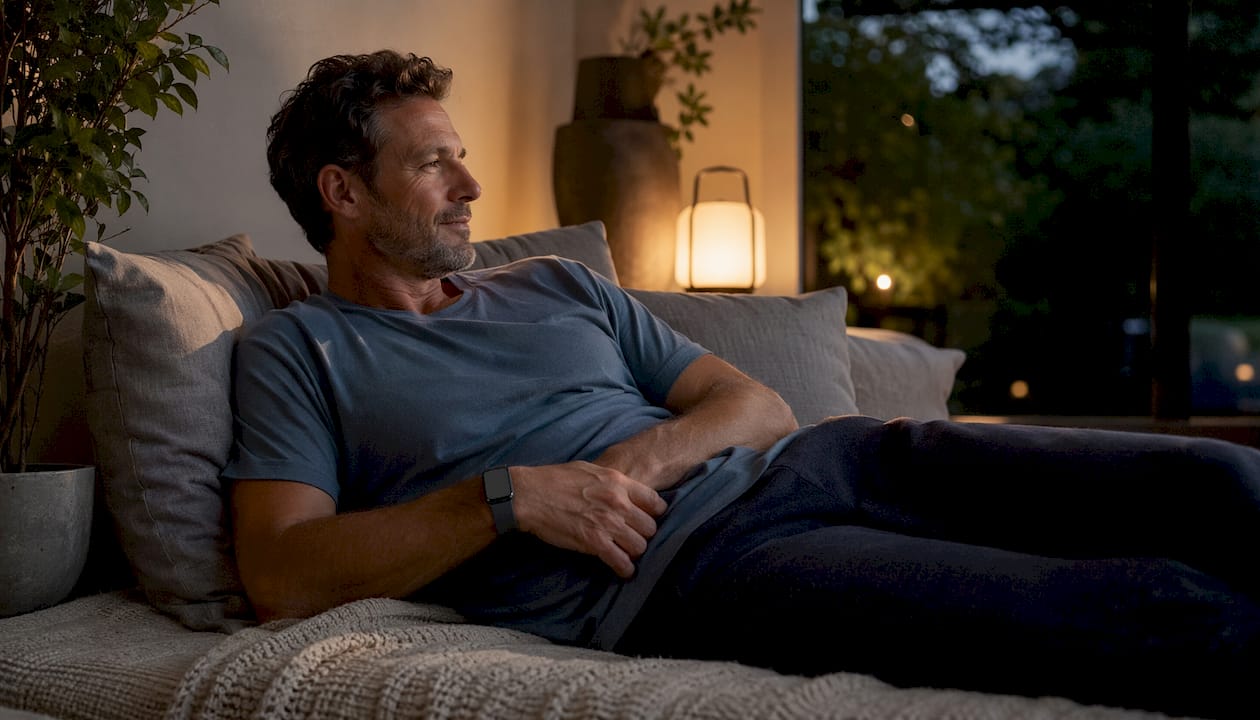
Disrupting any stage carries real costs. Miss deep sleep and your muscles recover more slowly. Miss REM and your emotional regulation suffers the next day. The brain’s waste-clearing function, the glymphatic system, operates almost exclusively during deep sleep. That single fact explains why sleep quality matters more than a raw hour count.
| Sleep stage | Approximate share of night | Primary function |
|---|---|---|
| N1 (light transition) | 5% | Entry into sleep, muscle relaxation |
| N2 (light sleep) | 45–50% | Memory consolidation, body temperature drop |
| N3 (deep/slow-wave) | 15–20% | Physical repair, immune function, waste clearance |
| REM | 20–25% | Emotional processing, learning, creativity |
Improving sleep patterns means protecting these proportions, not just clocking more hours. A night of eight hours with repeated awakenings can deliver less N3 and REM than a solid six-hour block. That is why sleep efficiency strategies focus on continuity and depth, not duration alone.
Which behavioural techniques actually improve sleep quality?
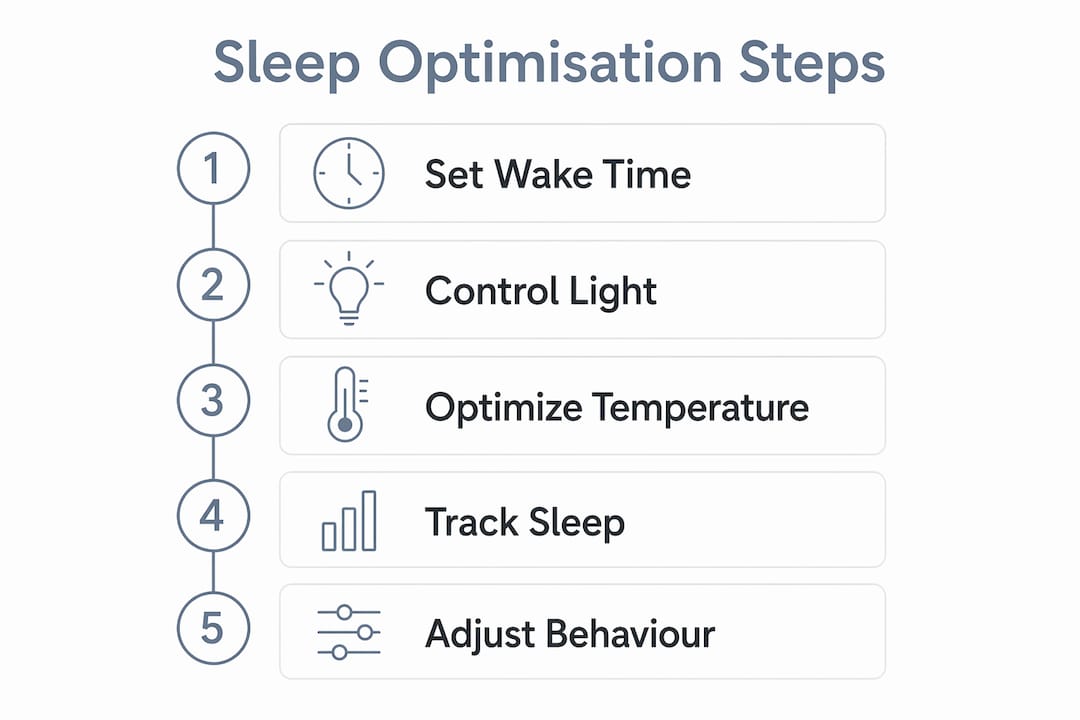
Behavioural change produces the most reliable gains in sleep quality. The foundation is a fixed wake time, every day including weekends. A consistent wake time anchors the circadian clock and stabilises the timing of all subsequent sleep stages. Shift that time by even 90 minutes on a Saturday and you introduce what researchers call social jet lag, which fragments the following week’s sleep.
The sleep environment
The bedroom temperature sits at the centre of sleep environment design. The ideal range is 16°C–19°C because falling core body temperature is the physiological trigger for sleep onset and deep sleep. Rooms above 24°C significantly reduce slow-wave sleep. Darkness and noise reduction matter equally. Light suppresses melatonin even at low intensities, and intermittent noise raises cortisol without waking you fully. For practical sleep environment improvements, address temperature, blackout curtains, and sound before spending money on gadgets.
Light management and pre-sleep wind-down
Blue light in the 415–495 nm wavelength range suppresses melatonin production. Avoiding blue light exposure in the two hours before bed preserves the natural melatonin rise that signals sleep readiness. Equally, morning bright light exposure within 30 minutes of waking sets the cortisol peak at the right time, which in turn determines when melatonin rises that evening.
A structured wind-down routine matters as much as the environment. A 60-minute cortisol buffer before bed, including 10–15 minutes of written cognitive offloading, quiets the brain’s default mode network. Writing down unresolved tasks or tomorrow’s to-do list is not journalling for its own sake. It is a mechanical act that transfers mental load off working memory, reducing the hyperarousal that delays sleep onset.
Practical sleep optimisation interventions:
- Fix your wake time, even after a poor night.
- Set the bedroom to 16°C–19°C.
- Eat dinner at least 3 hours before bedtime to avoid the metabolic activity that fragments sleep.
- Avoid caffeine after 2:00 PM and alcohol within 3 hours of bed.
- Dim screens and overhead lights from 9:00 PM onwards.
- Write a brief task list before bed to offload mental clutter.
- Reserve the bed strictly for sleep and sex.
Pro Tip: If you cannot fall asleep within 20 minutes, get up and do a quiet, non-stimulating activity in dim light. Lying awake in bed trains your brain to associate the bed with wakefulness, which makes the problem worse over time.
How do circadian rhythm and sleep pressure shape your rest?
The circadian rhythm is a roughly 24-hour biological clock regulated by the suprachiasmatic nucleus (SCN) in the hypothalamus. It controls the timing of melatonin release, cortisol peaks, body temperature fluctuations, and dozens of other physiological processes. Light is its primary external signal, known in chronobiology as a zeitgeber, meaning “time-giver.”
Homeostatic sleep pressure works differently. It builds through adenosine accumulation in the brain from the moment you wake. The longer you stay awake, the stronger the drive to sleep. Caffeine works by blocking adenosine receptors, which is why it delays sleep onset but does not eliminate the underlying pressure. When both systems align, the circadian clock signals “sleep time” just as adenosine pressure peaks, and sleep onset becomes natural and rapid.
Disruption of either system causes problems. Shift work, irregular schedules, and artificial light at night all desynchronise the SCN from the external day. The result is fragmented sleep, reduced deep sleep, and impaired daytime alertness. Circadian disruption from artificial light is one of the most underestimated contributors to poor sleep in modern life.
Pro Tip: Get outside within 30 minutes of waking, even on overcast days. Natural morning light is 10–50 times brighter than indoor lighting and delivers a far stronger circadian signal than any light therapy lamp.
Aligning meal timing with your circadian rhythm adds another layer of benefit. Meal timing and light exposure working together enhance both metabolic health and sleep restoration. Eating late shifts the body’s metabolic clock out of sync with the SCN, which delays the core temperature drop needed for deep sleep.
What role does technology play in sleep optimisation?
Consumer sleep trackers have improved considerably. Wearable devices now monitor heart rate variability (HRV), estimated sleep stages, respiratory rate, and overnight movement. Tracking sleep health metrics like HRV gives you a daily readout of how well your nervous system recovered overnight. A consistently low HRV score is a reliable signal that your sleep quality, not just duration, needs attention.
The caution is proportionality. Sleep technology aids optimisation but does not replace behavioural fundamentals. Wearing a tracker while keeping irregular hours, a warm bedroom, and a phone in bed produces data without improvement. Gadgets offer diminishing returns when the foundations are missing.
Where technology genuinely helps:
- Identifying patterns: a tracker may reveal that alcohol reliably reduces your deep sleep percentage, even when you feel fine the next morning.
- Accountability: seeing your sleep efficiency score each morning creates a feedback loop that reinforces good habits.
- Environment devices: white noise sound masks block intermittent noise that raises cortisol without waking you. Temperature regulation tools maintain the 16°C–19°C window automatically.
- HRV monitoring: guides decisions about training load, stress management, and recovery on a day-to-day basis.
For a detailed breakdown of current devices, the sleep tech gadgets guide covers the most useful options for 2026. The key principle remains: use technology to measure and refine, not to substitute for the behavioural work.
Key takeaways
Sleep optimisation produces measurable improvements in health and performance when it targets sleep architecture, circadian alignment, and environment before turning to gadgets or supplements.
| Point | Details |
|---|---|
| Quality over quantity | Deep (N3) and REM sleep drive restoration; total hours alone do not guarantee either. |
| Temperature is critical | Keep the bedroom at 16°C–19°C to trigger the core temperature drop needed for deep sleep. |
| Circadian anchoring | A fixed daily wake time stabilises the biological clock and improves all subsequent sleep stages. |
| Cognitive offloading works | Writing down unresolved tasks before bed reduces brain hyperarousal and speeds sleep onset. |
| Technology supports, not replaces | Trackers and environment devices add value only after behavioural fundamentals are in place. |
Why I think most people are solving the wrong sleep problem
People come to sleep optimisation looking for a shortcut. They want the right supplement, the right tracker, or the right mattress. What they actually need is a consistent wake time and a cooler bedroom. I have seen this pattern repeatedly: someone spending significant money on wearables while their bedroom sits at 22°C and they scroll their phone until midnight.
The mindset shift that produces real results is moving from “I need to sleep more” to “I need better cycles.” Two weeks of consistent wake times, a proper wind-down routine, and a bedroom below 19°C will do more than most gadgets. Improvements typically appear within 2–3 weeks of consistent adherence. That timeline is realistic and worth committing to.
The other thing I would stress: do not ignore persistent problems. If you apply these protocols for four weeks and still wake exhausted, see a specialist. CBT-I carries an 80% success rate for chronic insomnia and outperforms sleeping medication over the long term. Sleep apnea is frequently undiagnosed and no amount of behavioural optimisation compensates for obstructed breathing. Know when the problem is clinical, not behavioural.
Finally, stop clock-watching. Checking the time at 3:00 AM triggers a cortisol spike that makes returning to sleep harder. Turn the clock face away. The goal is to make the bedroom a place your brain associates entirely with rest.
— Hadi
How Somnastudioshop supports your sleep environment
Getting the behavioural foundations right is the hard part. Once you have your wake time fixed and your wind-down routine in place, the right environment tools make a genuine difference to sleep continuity and depth.
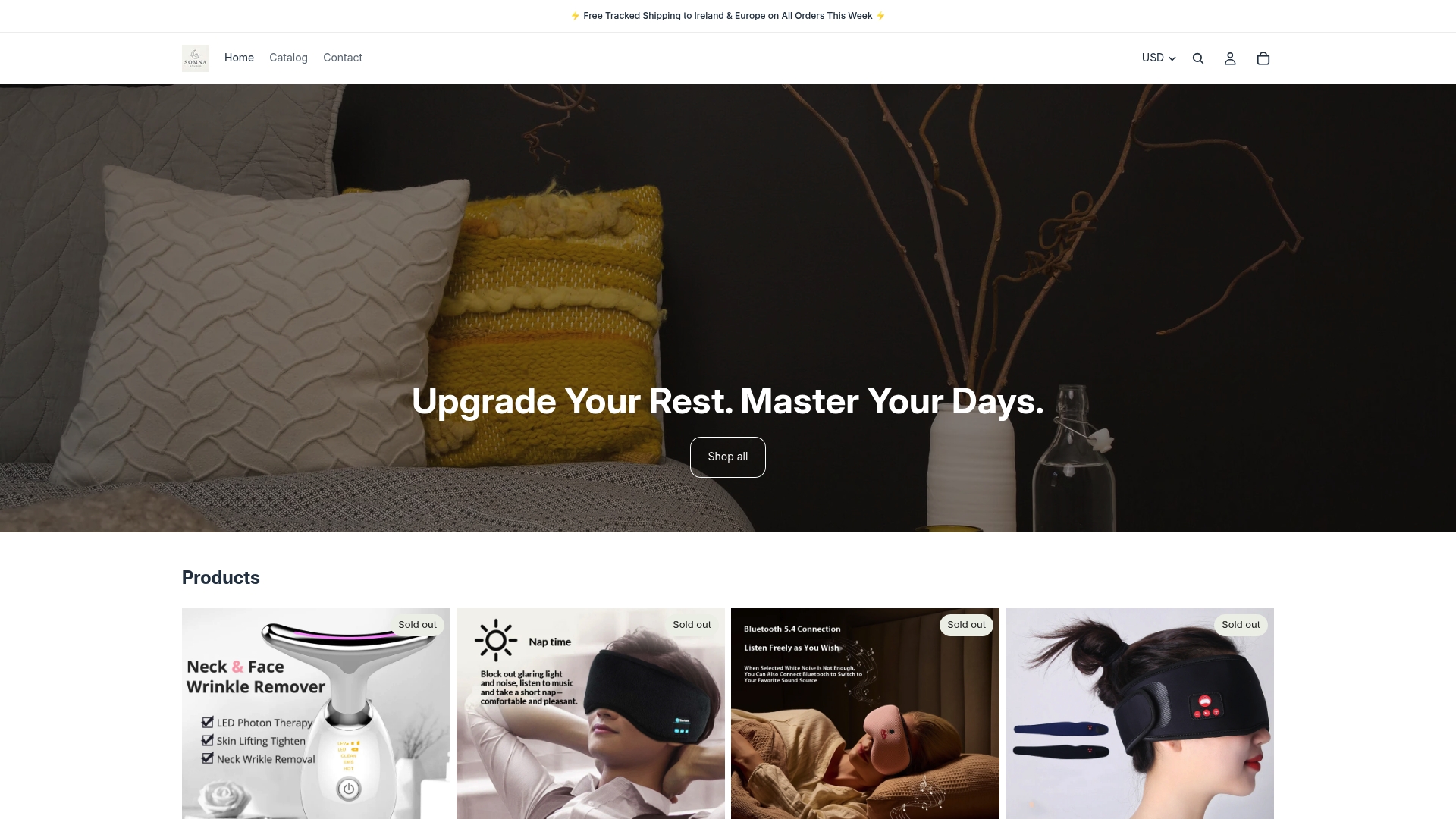
Somnastudioshop designs products specifically for the physical barriers that disrupt sleep. The Somna Lift EMS Thermal Neck Contour Device uses thermal therapy and electrical muscle stimulation to release neck tension before bed, addressing one of the most common sources of pre-sleep physical discomfort. The SomnaAura Pro Contour White Noise Sound Mask blocks light pollution and delivers white noise directly, tackling two of the most disruptive environmental factors in one device. For those seeking passive relaxation support, the SomnaRing uses magnetic therapy to aid decompression and calm the nervous system before sleep. These tools work alongside your behavioural protocol, not instead of it.
FAQ
What is sleep optimisation in simple terms?
Sleep optimisation is the practice of improving the quality of your sleep stages, particularly deep and REM sleep, rather than just increasing time in bed. It combines behavioural habits, environmental adjustments, and circadian alignment.
How long does it take to see results from sleep optimisation?
Most people notice measurable improvements within 2–3 weeks of consistently applying sleep optimisation techniques such as a fixed wake time, cooler bedroom temperature, and a pre-sleep wind-down routine.
What is sleep hygiene and how does it relate to sleep optimisation?
Sleep hygiene refers to the set of daily habits and environmental conditions that support good sleep. It forms the foundation of sleep optimisation, covering practices like consistent sleep timing, light management, and keeping the bedroom cool and dark.
When should I see a doctor about my sleep?
Seek medical advice if sleep optimisation protocols fail after four weeks of consistent effort. Conditions like sleep apnea or chronic insomnia require clinical treatment. CBT-I is the first-line treatment for chronic insomnia and carries an 80% success rate.
Does tracking sleep actually help improve it?
Sleep tracking helps by identifying patterns, such as how alcohol or late meals affect your deep sleep percentage, and by creating a daily feedback loop. Monitoring metrics like HRV guides personalised adjustments to your sleep and recovery routine.