
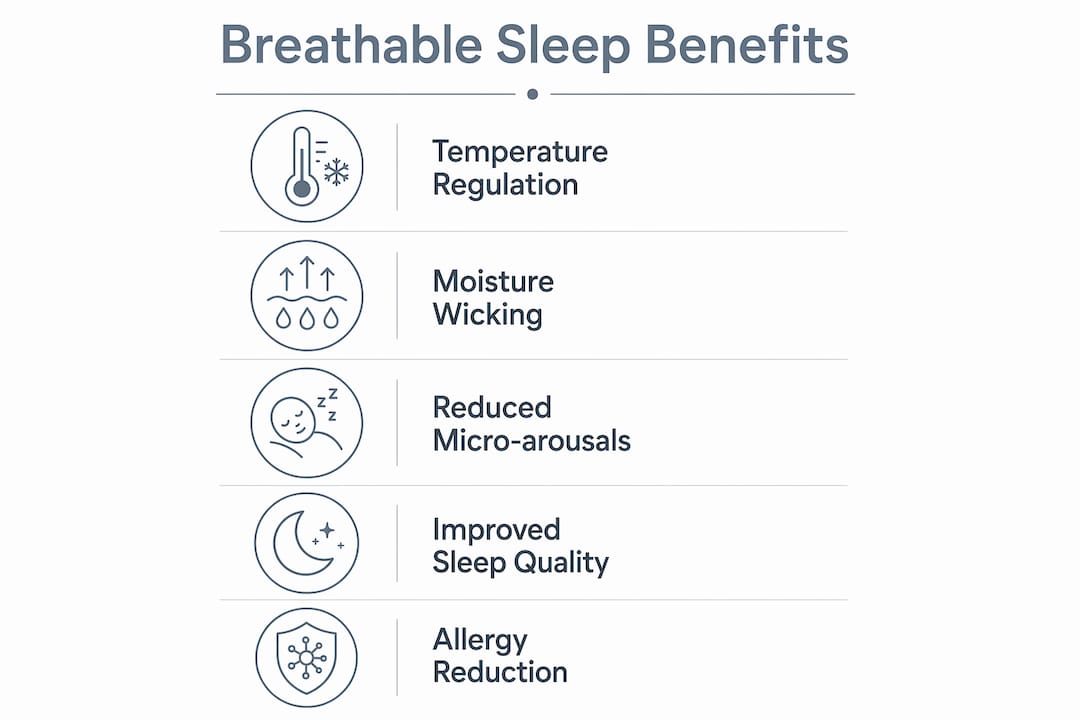
Breathable sleep accessories are defined as bedding, pillows, sleepwear, and protective layers engineered to regulate temperature and move moisture away from the body during sleep. Switching to breathable bedding improved subjective sleep quality by 26% in a 2022 study published in Sleep Medicine Reviews. That figure is not a minor footnote. It means the fabric touching your skin each night has a measurable, direct effect on how rested you feel the next morning. Understanding why breathable sleep accessories matter is the first step towards making changes that actually work.
Why breathable sleep accessories matter: the science of thermoregulation
Your body begins shedding heat before you fall asleep, a process called distal vasodilation. Blood moves towards the hands and feet, releasing warmth and signalling the brain that sleep onset is near. When your bedding traps that heat, the process stalls. You take longer to fall asleep, and you wake more often through the night.
Warm, humid microclimates beneath the covers trigger micro-arousals, brief awakenings that fragment deep slow-wave sleep. Most people never consciously register these arousals, but they accumulate across the night and leave you feeling unrested by morning. Breathable materials prevent this by allowing air to circulate and moisture to escape before a humid microclimate can form.
Moisture management is equally critical. Sweat that sits against the skin raises local humidity, which compounds heat retention and creates conditions where allergens thrive. Humidity in the sleep environment raises allergen load and disrupts thermoregulation, increasing sleep disturbances. A breathable pillow or sheet wicks that moisture outward, keeping the microclimate around your body stable.
Sleep quality depends on the thermal, mechanical, and biochemical environment around the body, particularly during pre-sleep heat shedding. Breathable accessories address all three dimensions simultaneously, which is why they outperform single-feature solutions like cooling gel pads alone.
Pro Tip: If you wake feeling clammy rather than refreshed, the problem is almost certainly moisture trapped by a non-breathable layer, not room temperature. Start by replacing your pillow cover before investing in a new mattress.
What materials actually work for breathable bedding?
Not all breathable fabrics perform equally. Natural fibres and high-performance synthetics each have distinct properties, and choosing the wrong one for your sleep style can undermine the benefits entirely.
| Fabric | Breathability | Moisture wicking | Antimicrobial | Notes |
|---|---|---|---|---|
| Bamboo viscose | Excellent | Excellent | Yes (bamboo kun) | 40% faster moisture transport than cotton |
| Cotton (percale) | Good | Moderate | No | Best at lower thread counts |
| Linen | Excellent | Good | Mild | Coarser texture; very durable |
| Microfibre | Poor | Poor | No | Traps heat; avoid for hot sleepers |
| Tencel (lyocell) | Good | Good | Mild | Smooth feel; eco-friendly production |
Bamboo viscose stands out for two reasons. First, laboratory testing shows it transports moisture 40% faster than conventional cotton. Second, bamboo fibres contain bamboo kun, a natural compound that inhibits bacteria and odour within the fabric between washes. That antimicrobial property matters because bacteria thrive in the warm, moist environment that non-breathable bedding creates.
Thread count is widely misunderstood. High thread count bedding can inhibit airflow and moisture wicking despite its reputation for quality. A percale cotton sheet at 200–300 threads per inch often breathes better than a sateen weave at 600. The weave structure and fibre type matter far more than the number on the label.
Linen deserves more attention than it receives. Its open weave allows exceptional airflow, and it becomes softer with each wash without losing its moisture-wicking ability. The initial coarser texture puts some people off, but for those who run hot, linen sheets are among the most effective options available.
Pro Tip: When buying bamboo bedding, check that the label reads “bamboo viscose” or “bamboo lyocell.” Products labelled simply “bamboo” may contain blended synthetics that reduce breathability significantly.
How to build a fully breathable sleep environment
The most common mistake people make is replacing one item, such as a pillow, while leaving every other layer unchanged. Airflow only works when sheets, protectors, pillows, and the mattress itself are breathable in unison. One non-breathable layer creates a heat dam that negates the benefits of everything else.
The most overlooked culprit is the waterproof mattress protector. Standard vinyl or polyurethane protectors are completely impermeable. They block all airflow from the mattress and trap heat at the surface. Breathable waterproof protectors using membrane technology exist and perform far better. If you need waterproofing, choose one with a fabric-laminate construction rather than a solid plastic backing.
Follow these steps to build a sleep environment where breathability works across every layer:
- Start with the mattress. Choose an open-cell foam, latex, or hybrid mattress with ventilation channels. A dense memory foam mattress traps heat at the source, and no amount of breathable bedding fully compensates for it.
- Replace the mattress protector. Swap any vinyl or solid-plastic protector for a breathable membrane version. This single change often produces the most immediate improvement in sleep temperature.
- Choose breathable sheets. Opt for bamboo viscose, percale cotton, or linen. Avoid sateen weaves and high thread counts above 400, as these restrict airflow.
- Select the right pillow. Latex and shredded-foam pillows allow far more airflow than solid memory foam. Pair them with a bamboo or cotton pillow cover rather than polyester.
- Assess your sleepwear. Tight, synthetic sleepwear traps heat against the skin even when your bedding is breathable. Loose cotton or bamboo sleepwear completes the system.
- Consider your weighted blanket. If you use one, choose a version with a breathable cotton or bamboo cover and glass bead fill rather than plastic pellets, which retain heat.
Addressing the entire sleep system is the only approach that consistently produces lasting results. Treating breathability as a single-product fix is why so many people spend money on new bedding and still wake up overheated.
Who benefits most from breathable sleep accessories?
Breathable accessories benefit most people, but certain groups see the sharpest improvements. Understanding where the gains are largest helps you prioritise where to spend.
- People who sweat at night. Moisture-managing sleepwear produced measurable results in clinical testing. Sleep efficiency increased to 93.0% from 89.5% when participants wore functional moisture-managing fabric, and wake time after sleep onset dropped from 41.6 minutes to 30.4 minutes. Those numbers represent a meaningful shift in how restorative sleep actually feels.
- People with insomnia. Fragmented sleep caused by thermal discomfort is one of the most under-recognised drivers of insomnia. Reducing micro-arousals through breathable bedding addresses the physical trigger without medication.
- Allergy sufferers. Humidity control within bedding is a hidden factor affecting allergen accumulation and respiratory health during sleep. Dust mites require humidity above 50% to thrive. Breathable fabrics that wick moisture away keep the microclimate drier, reducing the conditions that support mite populations.
- Menopausal women. Hot flushes and night sweats disrupt sleep architecture severely. Bamboo viscose sleepwear and sheets provide the fastest moisture transport available in natural fibres, which directly reduces the duration and discomfort of each episode.
- Children and older adults. Both groups have less efficient thermoregulation than healthy adults in mid-life. Breathable accessories compensate for this reduced capacity and support more stable sleep across the night.
The importance of breathable bedding extends beyond comfort. For people with allergies or chronic sleep disturbances, it functions as a genuine health intervention rather than a lifestyle upgrade. Pairing breathable accessories with other sleep environment improvements compounds the benefit further.
Key takeaways
Breathable sleep accessories improve sleep quality by regulating temperature, wicking moisture, and reducing micro-arousals across the entire sleep system.
| Point | Details |
|---|---|
| Thermoregulation drives sleep quality | Breathable fabrics support distal vasodilation and prevent heat trapping that delays sleep onset. |
| Bamboo viscose leads on performance | It transports moisture 40% faster than cotton and contains natural antimicrobial bamboo kun. |
| Thread count misleads buyers | Breathability depends on weave structure and fibre type, not thread count numbers on the label. |
| One bad layer breaks the system | A non-breathable mattress protector creates a heat dam that negates all other breathable layers. |
| Specific groups gain the most | Night sweaters, allergy sufferers, and older adults see the sharpest improvements from breathable accessories. |
Why I think breathability is the most underrated factor in sleep health
Most people focus on mattress firmness or pillow loft when they want better sleep. I understand why. Those are tangible, easy to test in a shop. But in my experience, the fabric environment around the body does more to determine sleep quality than either of those factors for the majority of people.
The research on moisture-managing sleepwear is particularly striking. A reduction in wake time after sleep onset from 41.6 minutes to 30.4 minutes is not a marginal gain. That is nearly 11 minutes of additional consolidated sleep per night, achieved purely through fabric choice. No supplement, no gadget, no sleep programme delivers that kind of result so reliably.
What I find most people get wrong is treating breathability as a single-product decision. They buy a bamboo pillow cover and expect transformation. The systemic approach is what actually works. Every layer matters, and one compromised layer undoes the rest. Start with your mattress protector if you have a standard waterproof one. That is almost always the hidden culprit.
Breathability should sit at the top of your criteria list when upgrading any sleep accessory, above thread count, above brand reputation, and above price. The science is clear, and the practical results are consistent.
— Hadi
Somnastudioshop products that support restorative sleep
Breathable bedding creates the right thermal foundation, but sleep disturbances rarely have a single cause. Somnastudioshop builds products that address the other factors that fragment rest, including neck discomfort, light exposure, and ambient noise.
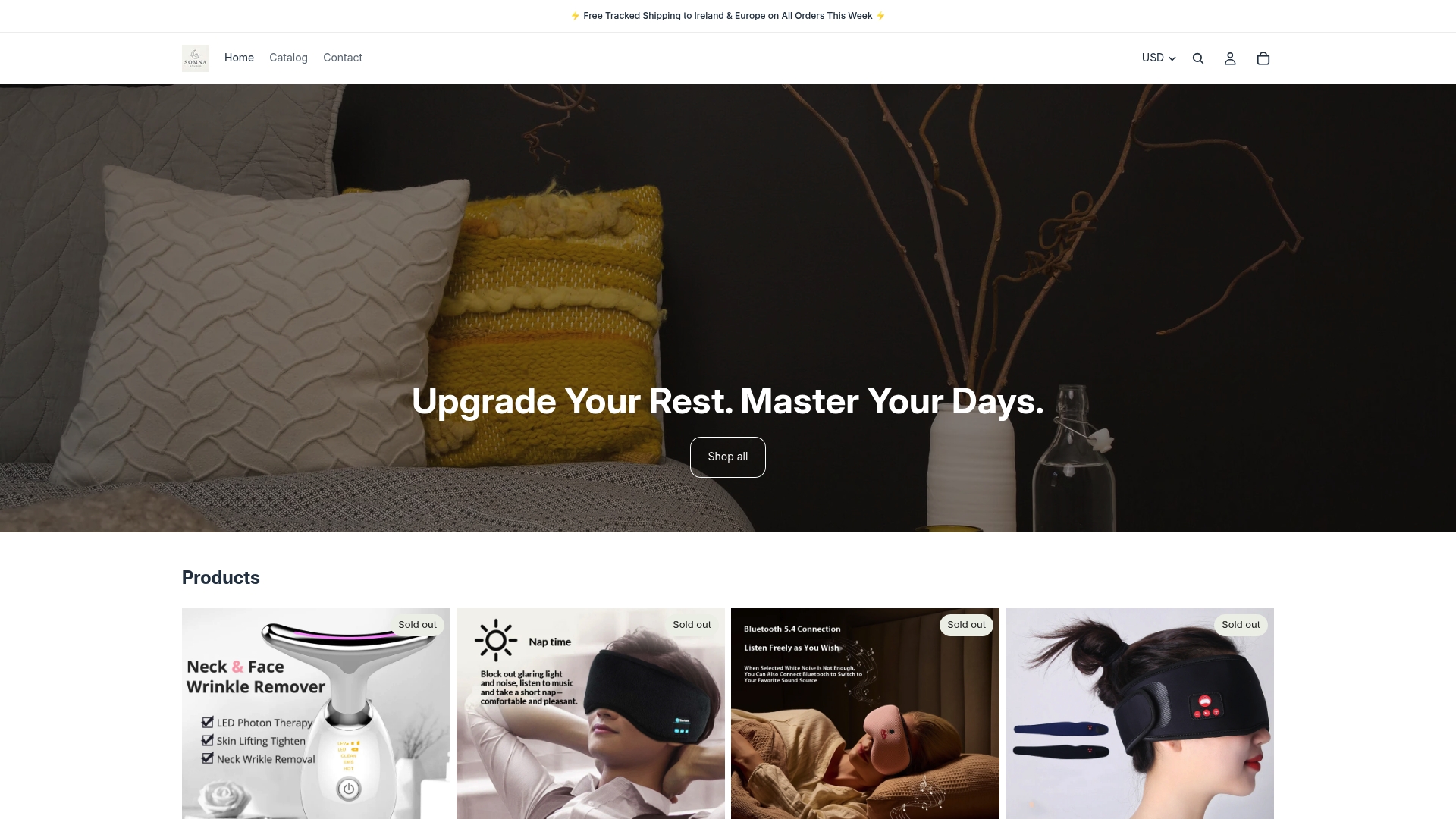
The Somna Lift is a thermal neck contour device that uses EMS technology to ease neck tension before sleep, supporting the physical relaxation that breathable bedding alone cannot provide. The SomnaAura Pro combines a contoured sleep mask with white noise to block both light and disruptive sound simultaneously. Together, these products complement a breathable sleep environment by addressing the sensory and physical triggers that breathable fabric cannot reach. Browse the full Somnastudioshop range to find the combination that fits your specific sleep challenges.
FAQ
What are breathable sleep accessories?
Breathable sleep accessories are bedding, pillows, sleepwear, and mattress protectors made from materials that allow air to circulate and moisture to escape. They regulate the thermal microclimate around the body to support uninterrupted sleep.
How do breathable materials improve sleep quality?
Breathable fabrics prevent warm, humid microclimates that trigger micro-arousals and fragment deep sleep. Research shows that moisture-managing sleepwear raised sleep efficiency from 89.5% to 93.0% in clinical testing.
Why choose breathable pillows over standard foam options?
Standard solid memory foam pillows restrict airflow and retain heat throughout the night. Latex or shredded-foam pillows with bamboo or cotton covers allow consistent airflow and reduce the heat build-up that disrupts sleep.
Does thread count affect breathability?
Higher thread counts generally reduce breathability by creating denser, less permeable fabric. A percale weave at 200–300 threads per inch typically outperforms a sateen weave at 600 for airflow and moisture wicking.
Can breathable bedding help with allergies?
Yes. Breathable fabrics keep the sleep microclimate drier, which reduces the humidity that dust mites need to survive. Bamboo viscose also contains bamboo kun, a natural antimicrobial that limits bacteria and allergen accumulation between washes.