
Sleep quality is defined as how effectively your sleep restores your brain and body, covering not just how long you sleep but how deeply, continuously, and efficiently you do so. Most people focus on hours in bed, yet one in three adults gets fewer than seven hours per night, and many of those who do reach seven hours still wake unrefreshed. Why sleep quality matters goes beyond tiredness. Poor sleep architecture raises your risk of chronic disease, impairs memory, lowers your pain threshold, and chips away at daily productivity. The Pittsburgh Sleep Quality Index (PSQI) gives clinicians and individuals alike a structured way to measure these dimensions. Understanding what good sleep actually looks like is the first step to getting it.
How does sleep quality affect brain and physical health?
Sleep is not passive rest. It is a state of intense neurological activity where the brain clears harmful metabolic waste and consolidates memory, requiring uninterrupted sleep stages to work properly.

The mechanism behind this is the glymphatic system. During deep non-REM sleep, cerebrospinal fluid flushes through the brain’s tissue, removing toxic proteins linked to Alzheimer’s disease and other neurological conditions. This process is most active during deep sleep and shuts down almost entirely when you are awake. Fragmented or shallow sleep means your brain misses its nightly clean.
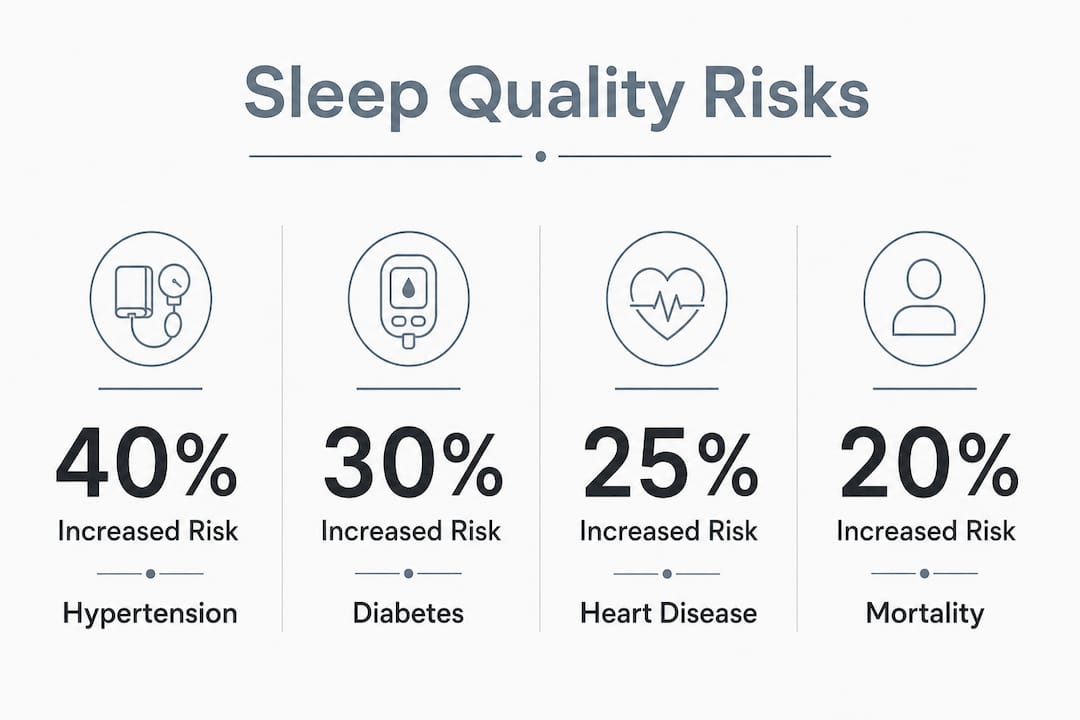
The physical consequences of poor sleep extend well beyond the brain. Sleeping fewer than six hours consistently raises your risk of hypertension, obesity, type 2 diabetes, cardiovascular disease, and dementia. That is not a list of distant possibilities. Each of those conditions has a direct, documented link to disrupted sleep architecture.
Sleep also regulates pain. Poor sleep quality lowers your pain threshold and makes chronic conditions such as migraines harder to manage. This creates a difficult cycle: pain disrupts sleep, and disrupted sleep amplifies pain. Breaking that cycle requires addressing sleep quality directly, not just duration.
Key biological roles of quality sleep include:
- Memory consolidation: The hippocampus replays and stores new information during slow-wave and REM sleep.
- Emotional regulation: REM sleep processes emotional experiences, reducing their psychological charge.
- Immune function: Cytokine production peaks during deep sleep, supporting your body’s defences.
- Hormonal balance: Growth hormone releases primarily during slow-wave sleep, supporting tissue repair.
“Experts emphasise the vital role of sleep in maintaining homeostasis, including stable blood pressure and temperature, illustrating why poor sleep hinders mental and economic productivity.” University of Utah Health
What is the Pittsburgh Sleep Quality Index and how does it measure sleep quality?
The Pittsburgh Sleep Quality Index (PSQI) is the most widely used clinical tool for assessing sleep quality. It measures seven components: subjective sleep quality, sleep latency, sleep duration, sleep efficiency, sleep disturbances, use of sleep medication, and daytime dysfunction. Each component is scored from 0 to 3, giving a total score between 0 and 21.
The scoring thresholds are clear and practical:
| PSQI Score | Interpretation | Recommended action |
|---|---|---|
| 0–5 | Good sleep quality | Maintain current habits |
| 6–10 | Poor sleep quality | Lifestyle changes advised |
| Above 10 | Very poor sleep quality | Clinical evaluation needed |
The PSQI carries a sensitivity of 89.6% and specificity of 86.5%, making it a reliable screening tool. That level of accuracy means it catches genuine sleep problems without generating excessive false positives.
One component worth understanding separately is sleep efficiency. Sleep efficiency is the ratio of time actually asleep to total time spent in bed. A score above 85% indicates good efficiency. People with insomnia often score well below this threshold because they spend long periods lying awake, which conditions the brain to associate the bed with wakefulness rather than sleep.
Wearable trackers such as smartwatches can estimate sleep stages and efficiency, but they measure movement and heart rate rather than brain activity. The PSQI captures subjective experience, which wearables cannot. The most complete picture of your sleep health comes from combining both approaches. You can explore sleep quality tracking methods to understand how subjective indices and wearable data work together.
Pro Tip: Complete the PSQI honestly over a full month rather than a single week. Sleep quality fluctuates, and a four-week average gives you a far more accurate baseline than a snapshot.
What common factors disrupt sleep quality and how can you recognise them?
Sleep fragmentation is the single biggest driver of poor sleep quality. Waking briefly during the night, even without remembering it, pulls you out of deep and REM sleep stages. Each interruption resets the sleep cycle, reducing the total time spent in restorative stages.
The most common disruptors are behavioural and environmental:
- Caffeine timing: Caffeine has a half-life of 5–7 hours, meaning a 3PM coffee still has half its stimulant effect at 9PM. It delays sleep onset and reduces slow-wave sleep depth, even when total sleep time appears unchanged.
- Alcohol: Alcohol helps you fall asleep faster but suppresses REM sleep in the second half of the night, leaving you feeling unrefreshed.
- Screen exposure: Blue light from screens suppresses melatonin production, delaying your body’s natural sleep signal.
- Medications: Certain sedatives, including zolpidem, can suppress glymphatic function during sleep, impairing the brain’s detoxification process despite inducing unconsciousness. This is a critical distinction: sedation is not the same as restorative sleep.
- Noise and light pollution: Ambient noise and light cause micro-arousals that fragment sleep architecture without fully waking you.
Recognising poor sleep quality does not always require a clinical test. Common signs include waking unrefreshed despite adequate hours, difficulty concentrating before midday, irritability without clear cause, and relying on caffeine to function before noon. If you recognise three or more of these consistently, your sleep quality warrants attention.
How can you improve your sleep quality effectively?
Improving sleep quality requires targeting the architecture of sleep, not just the number of hours. The medical field now assesses sleep across five dimensions: regularity, satisfaction, timing, efficiency, and duration. Addressing all five produces better outcomes than focusing on bedtime alone.
-
Fix your sleep schedule first. Go to bed and wake at the same time every day, including weekends. Consistency anchors your circadian rhythm and reduces sleep latency over time.
-
Cut caffeine before 2PM. Given caffeine’s half-life, afternoon consumption directly degrades slow-wave sleep depth. Switching to decaffeinated options after lunch is one of the highest-return changes you can make.
-
Redesign your sleep environment. Temperature, noise, and light are the three primary environmental disruptors. A cool, dark, and quiet room supports deeper sleep stages. Somnastudioshop’s SomnaAura Pro addresses both light and noise simultaneously with its contour white noise sound mask, blocking ambient disruptions that fragment sleep architecture.
-
Exercise regularly. Regular aerobic exercise increases slow-wave sleep and reduces the time it takes to fall asleep. Even 30 minutes of brisk walking five days a week produces measurable improvements in sleep efficiency.
-
Establish a wind-down routine. The 60 minutes before bed should be free of screens, work, and stimulating content. Reading, light stretching, or a warm bath all signal to your nervous system that sleep is approaching.
-
Consider Cognitive Behavioural Therapy for Insomnia (CBT-I). CBT-I is the first-line clinical treatment for chronic insomnia. It addresses the thought patterns and behaviours that perpetuate poor sleep, producing longer-lasting results than medication alone.
-
Track your progress. Use the PSQI monthly to measure whether your changes are working. Pair it with a wearable device for objective data on sleep stages and efficiency. A guide to monitoring sleep health metrics can help you build a practical tracking routine.
Pro Tip: If you wake during the night and cannot return to sleep within 20 minutes, get up and do something calm in dim light. Lying awake in bed trains your brain to associate the bed with wakefulness, which worsens sleep efficiency over time.
Key takeaways
Sleep quality determines how well your brain and body restore themselves overnight, and poor quality raises your risk of chronic disease, cognitive decline, and pain regardless of how many hours you spend in bed.
| Point | Details |
|---|---|
| Quality beats duration | Restorative sleep depends on architecture and continuity, not hours alone. |
| PSQI scores guide action | A score above 5 signals the need for lifestyle changes; above 10 requires clinical review. |
| Glymphatic health is at stake | Deep sleep clears brain toxins; fragmented sleep leaves this process incomplete. |
| Common disruptors are fixable | Caffeine timing, screen exposure, and noise are the most manageable causes of poor sleep. |
| Exercise and routine work | Aerobic exercise and a consistent sleep schedule are the two highest-impact free interventions. |
Why I think we have been measuring sleep all wrong
For years, the conversation about sleep centred almost entirely on hours. Eight hours became the gold standard, repeated so often it felt like a law of nature. What that framing missed was everything that happens within those hours.
I have seen people who sleep nine hours and wake exhausted, and others who sleep six and feel genuinely restored. The difference is almost always architecture. Deep slow-wave sleep and uninterrupted REM cycles do the work. Hours are just the container.
The shift toward multidimensional sleep health, measuring regularity, satisfaction, timing, efficiency, and duration together, is the most important development in sleep science in a decade. It gives people a framework that actually matches their experience. You can feel the difference between a night of deep, unbroken sleep and a night of shallow, fragmented rest, even when the clock says the same thing.
What I find most underappreciated is the glymphatic system. The idea that your brain physically cleans itself during deep sleep, and that this process can be undermined by the very sedatives prescribed to help you sleep, should change how we think about sleep medication. Sedation and restoration are not the same thing.
My honest recommendation: stop counting hours and start paying attention to how you feel at 10AM. That is your most reliable quality signal.
— Hadi
Somnastudioshop’s sleep devices: what they actually address
Sleep quality problems are rarely just about habits. Environmental factors, neck tension, and ambient noise are physical barriers that no bedtime routine fully removes.

Somnastudioshop builds devices that target these specific barriers. The SomnaAura Pro Contour White Noise Sound Mask blocks both light and disruptive sound, directly reducing the micro-arousals that fragment sleep architecture. The Somna Lift EMS Thermal Neck Contour Device addresses neck tension before bed, which is a common and overlooked cause of restless sleep. Each product is designed around a specific, evidence-based sleep disruptor rather than general wellness claims. If your sleep environment is working against you, these are practical tools worth considering.
FAQ
What does sleep quality actually mean?
Sleep quality refers to how restorative your sleep is, covering depth, continuity, and efficiency rather than duration alone. It includes how quickly you fall asleep, how often you wake, and how much time you spend in deep and REM sleep stages.
What does a Pittsburgh Sleep Quality Index score tell you?
A PSQI score of 0–5 indicates good sleep quality, 6–10 signals poor quality requiring lifestyle changes, and a score above 10 suggests very poor quality needing clinical evaluation. The tool covers seven components including sleep latency, disturbances, and daytime dysfunction.
How does poor sleep affect your health long-term?
Consistently sleeping fewer than six hours raises your risk of hypertension, type 2 diabetes, cardiovascular disease, and dementia. Poor sleep also lowers your pain threshold, making chronic conditions harder to manage.
Does exercise genuinely improve sleep quality?
Regular aerobic exercise increases slow-wave sleep and reduces the time it takes to fall asleep. Even moderate activity, such as brisk walking five days a week, produces measurable improvements in sleep efficiency.
What is sleep efficiency and why does it matter?
Sleep efficiency is the percentage of time in bed that you are actually asleep. A score above 85% indicates good quality sleep. People with insomnia typically score well below this threshold, spending significant time lying awake, which reinforces poor sleep patterns over time.