
Sleep technology assessment is the structured process of measuring a device’s accuracy, usability, and data quality against your personal sleep goals. The market for sleep gadgets has grown rapidly, and not every device delivers what it promises. This evaluate sleep tech devices guide gives you a clear framework to cut through the noise. You will learn which criteria matter, how to test devices properly, and how to interpret the data you collect. Somnastudioshop builds its product philosophy around exactly this kind of informed, user-centred thinking.
How do you evaluate sleep tech devices accurately?
Accuracy is the first criterion in any sleep technology assessment, and the gold standard for measuring it is Polysomnography (PSG). PSG records brain waves, eye movements, muscle activity, and breathing simultaneously in a clinical setting. Consumer devices cannot replicate this. They use indirect measurements such as heart rate, body movement, and skin temperature to estimate sleep states.
The gap between PSG and consumer devices is real but manageable. Top-performing trackers achieve accuracy up to 86.5% in home environments, with Macro F1 scores between 0.71 and 0.83 in comparative studies. That range means a device can be genuinely useful without being clinically precise.
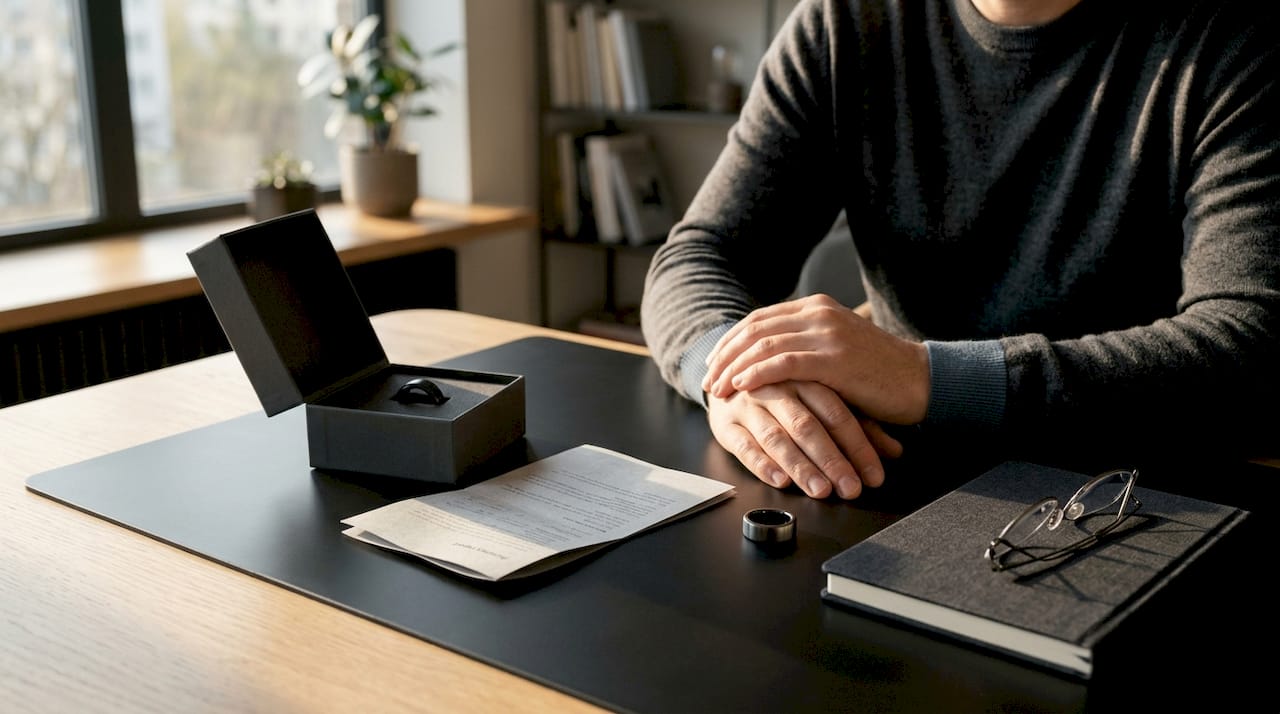
The most consistent bias across devices is overestimation. Wearable trackers overestimate total sleep time and sleep efficiency while underestimating wake after sleep onset (WASO) compared to PSG. This finding comes from a meta-analysis of 16 studies, so it reflects a pattern rather than a one-off result.
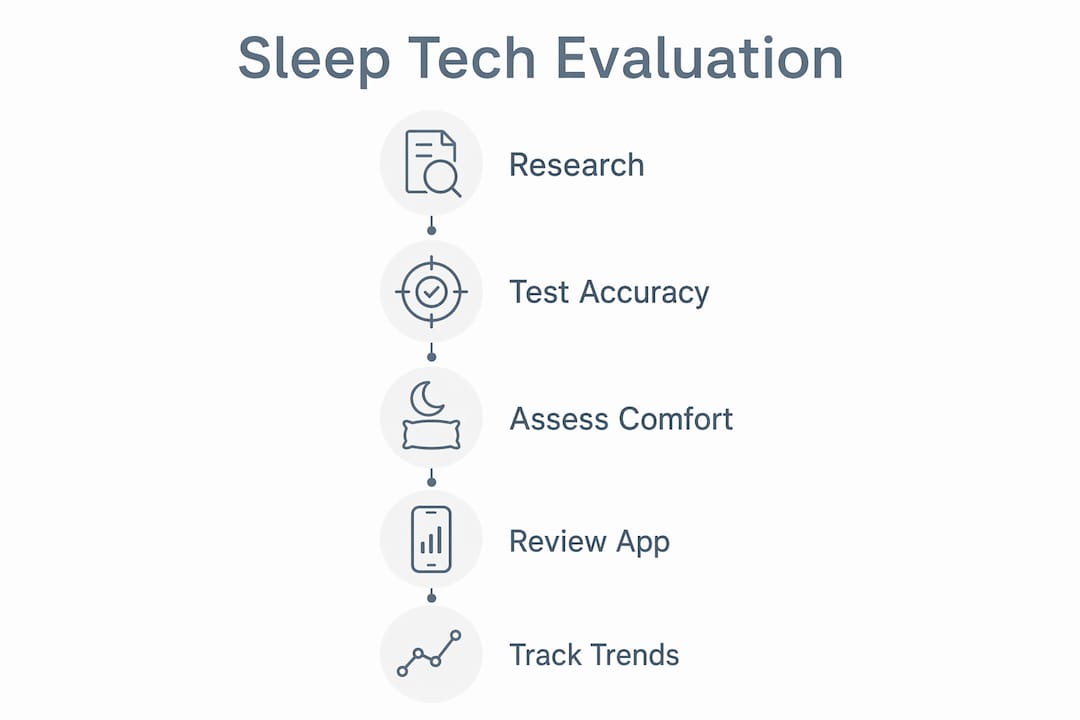
Sleep stage classification is where accuracy drops furthest. Devices struggle most with distinguishing light sleep from deep sleep, and performance varies significantly by individual. Accuracy varies based on movement patterns and the presence of sleep disorders, which means your results may differ from published averages.
Before buying, check whether a device has published validation data. Devices with transparent published data and well-supported sensing modalities such as photoplethysmography (PPG) for heart rate offer greater reliability. If a manufacturer does not publish independent validation, treat accuracy claims with scepticism.
- Check for published peer-reviewed validation studies before purchasing.
- Prioritise PPG-based heart rate sensing over purely movement-based algorithms.
- Expect overestimation of total sleep time as a near-universal device trait.
- Treat sleep stage data as directional, not diagnostic.
- Look for Macro F1 scores or equivalent accuracy metrics in published research.
Pro Tip: Evaluate devices for longitudinal tracking over weeks rather than judging a single night’s data. Trends are far more reliable than individual readings.
What features should you compare when choosing sleep tech?
The best sleep tech devices differ not just in accuracy but in what they actually measure and how they present it. Sensors determine the quality of raw data. The most common types are:
- Accelerometers: detect movement and estimate sleep versus wake states.
- PPG sensors: measure heart rate and heart rate variability through light pulses on the skin.
- Temperature sensors: track skin or ambient temperature changes linked to sleep cycles.
- Pulse oximetry: measures blood oxygen saturation, relevant for detecting breathing irregularities.
Data outputs vary considerably between device categories. Devices like the Apple Watch provide automated sleep scoring from 1 to 100, allowing you to track trends over weeks or months. That scoring system is influenced by bedtime consistency and screen usage behaviour, which means the device is measuring habits as much as biology.
Form factor shapes the data you collect. Wristbands are the most common format and offer broad sensor integration. Smart rings sit closer to the skin and generate less movement artefact during sleep. Smart rings offer comfort advantages over wrist-worn devices and are often preferred for minimal sleep interference, though they share similar measurement limitations. Headbands add EEG-adjacent sensing but are less practical for nightly use. Under-mattress sensors require no wearing at all, which suits people who find wearables disruptive.
App interface quality matters more than most buyers expect. A device that produces rich data but buries it in a confusing dashboard will not change your behaviour. Look for clear trend visualisation, weekly summaries, and coaching prompts that translate numbers into actions.
Comfort and form factor are critical for naturalistic sleep data collection, often outweighing marginal accuracy gains. A device you remove after two nights produces no data at all.
Pro Tip: Prioritise devices that match your lifestyle and comfort preferences. A slightly less accurate device you wear every night outperforms a precise one you abandon.
Step-by-step approach to testing and selecting a device
Selecting the right device requires a structured process, not a single purchase decision. Follow these steps to make a well-informed choice.
-
Identify your core sleep concern. Are you struggling with falling asleep, staying asleep, or feeling unrefreshed? Total sleep time and WASO data suit different problems. Knowing your concern narrows the feature set you actually need.
-
Research devices with published validation. Rapid product development often outpaces validation, so prioritise devices with peer-reviewed studies behind them. Check academic databases or independent review sites for validation data before committing.
-
Use trial periods and return policies. Many retailers offer 30-day returns. Use that window to test comfort across a full sleep cycle, including nights when you sleep poorly. A device that only performs well on good nights is not useful.
-
Compare data reliability, features, and cost together. A low-cost contactless device may suit long-term trend tracking even if sleep stage precision is lower. Low-cost contactless devices can be effective for large-scale preliminary sleep research despite lower precision in stage detection. Apply the same logic to your personal use case.
-
Monitor over weeks, not days. Single-night readings are noisy. Commit to at least two to three weeks of consistent use before drawing conclusions. Check the sleep quality tracking methods guide for a deeper look at how consumer wearables perform over time.
-
Avoid expecting clinical diagnostic accuracy. Consumer devices are not medical instruments. Expecting PSG-level precision from a wristband sets you up for frustration and misinterpretation.
Pro Tip: Keep a brief sleep journal alongside your device data. Note alcohol intake, stress levels, and exercise. This context makes device trends far more interpretable.
How do you interpret sleep data to improve your sleep health?
Interpreting device output correctly is where most people go wrong. The core metrics to understand are total sleep time, sleep efficiency, WASO, and sleep stage distribution. Total sleep time is the most reliable metric across devices. Sleep efficiency (the percentage of time in bed actually spent asleep) is useful but inflated by the overestimation bias noted earlier.
WASO, or wake after sleep onset, is the metric most likely to be underreported by consumer devices. If your device shows very low WASO but you feel unrefreshed, trust your subjective experience. Consumer devices are most effective as tools for longitudinal tracking and behaviour modification, not clinical diagnosis.
Use trend data to spot patterns rather than reacting to individual nights. A consistent drop in sleep efficiency every Sunday night points to a behavioural or environmental cause worth investigating. A single poor reading on a Wednesday tells you very little.
- Rising WASO over several weeks may indicate stress, caffeine, or alcohol effects.
- Consistently low deep sleep scores warrant a review of evening screen use and room temperature.
- Irregular sleep timing correlates with lower overall sleep scores across most platforms.
- Sudden changes in heart rate variability during sleep can flag illness or overtraining in active people.
Individual variability in device performance is significant, especially across sleep stages. Your data is most useful when compared to your own baseline, not to population averages. For a detailed breakdown of which metrics to monitor and why, the sleep health metrics guide covers device capabilities in depth.
Pro Tip: If your device consistently flags short sleep duration, fragmented sleep, or low blood oxygen, consult a GP or sleep specialist. Devices can prompt the right conversation, even if they cannot make a diagnosis.
Key takeaways
Choosing and using a sleep tech device well requires matching accuracy expectations to real-world device capabilities, prioritising comfort, and reading trend data rather than individual nights.
| Point | Details |
|---|---|
| PSG is the accuracy benchmark | Consumer devices use indirect sensors and consistently overestimate total sleep time versus clinical PSG. |
| Comfort drives consistent data | A device you wear every night produces more useful trends than a precise one you abandon after a week. |
| Longitudinal trends matter most | Single-night readings are unreliable; monitor data across two to three weeks before drawing conclusions. |
| Validation data is non-negotiable | Prioritise devices with published peer-reviewed studies and established PPG-based sensing. |
| Devices support behaviour change | Sleep tech is a tool for awareness and habit adjustment, not a standalone diagnostic instrument. |
My honest view on sleep tech after years of testing
The biggest misconception I see is that a higher price tag means clinical accuracy. It does not. A £300 wristband and a £80 ring share the same fundamental limitation: neither measures brain waves, so neither can truly classify sleep stages the way a PSG can. What separates good devices from poor ones is not raw accuracy but the quality of their trend reporting and the honesty of their validation claims.
The second misconception is that more data is better. People obsess over nightly sleep scores and end up more anxious about sleep, not less. Orthosomnia, the clinical term for sleep-tracker-induced anxiety, is a documented phenomenon. The devices that genuinely help are the ones that surface weekly patterns clearly and prompt one or two behaviour changes, not the ones that overwhelm you with granular stage breakdowns every morning.
My practical advice: pick a device with a comfortable form factor first, check for published validation second, and commit to using it consistently for a month before judging it. The guide to sleep tech for professionals offers useful context on evaluating physical design for daily use. Combine device data with basic sleep hygiene habits and, where needed, professional advice. The technology is a prompt, not a prescription.
— Hadi
Sleep wellness products that complement your tracking data
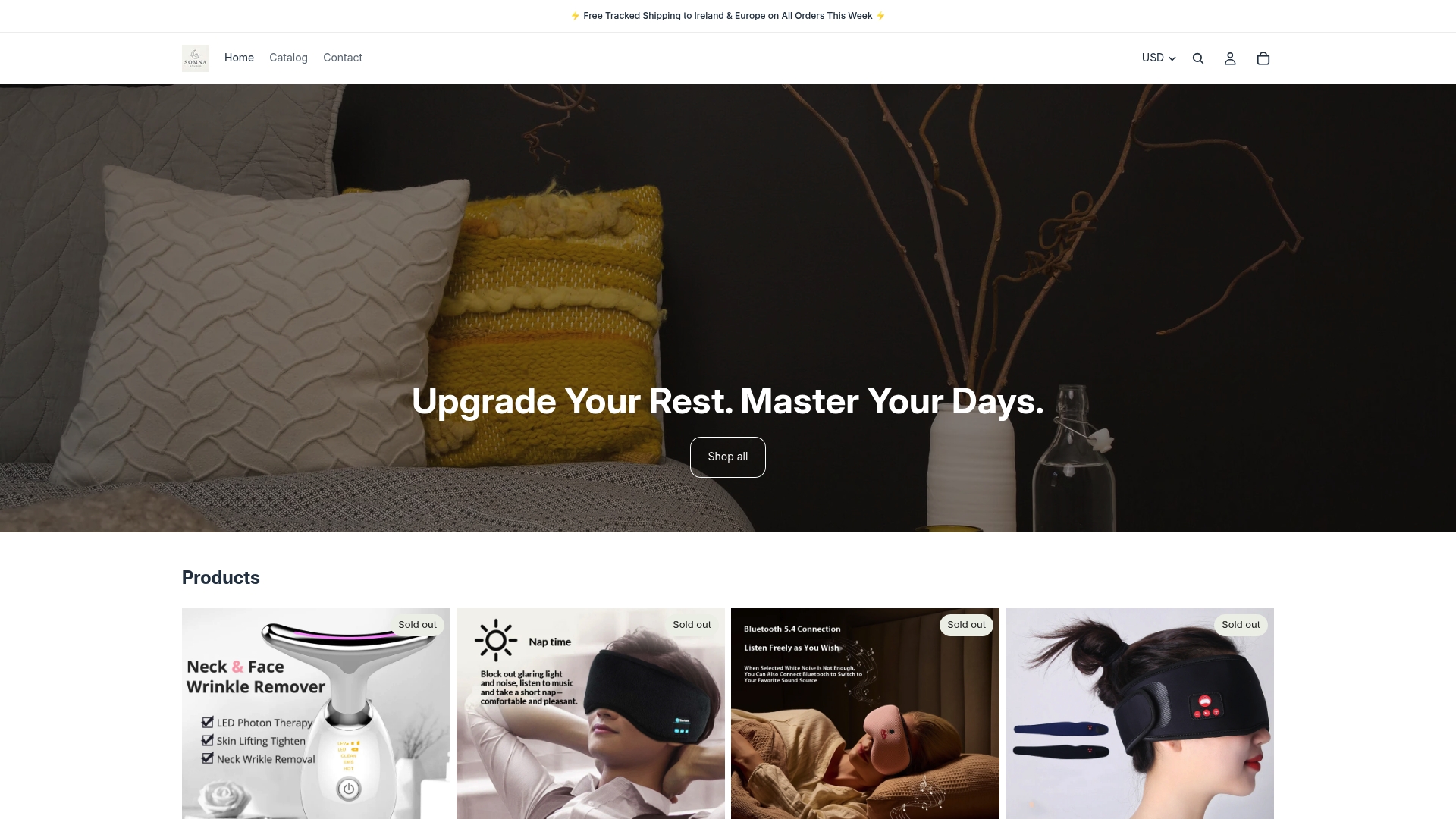
Once you know what your sleep data is telling you, the next step is addressing the physical factors your device cannot fix on its own. Somnastudioshop designs products specifically for people who have identified real sleep disturbances and want targeted solutions. The Somna Lift EMS Thermal Neck Contour Device addresses neck discomfort that disrupts sleep posture, while the SomnaAura Pro Contour White Noise Sound Mask tackles light pollution and ambient noise simultaneously. The SomnaSound portable white noise machine suits people whose data shows frequent night-time waking linked to environmental disturbances. Each product is built around the same principle as good sleep tech: address a specific problem, measure the result, and adjust.
FAQ
What is the most accurate type of consumer sleep tracker?
Wrist-worn devices with PPG sensors currently achieve the highest accuracy, with top performers reaching 86.5% in home environments. No consumer device matches clinical Polysomnography for sleep stage classification.
Do sleep trackers overestimate how much sleep you get?
Yes. A meta-analysis of 16 studies confirms that wearable trackers consistently overestimate total sleep time and sleep efficiency compared to PSG. Treat absolute figures as approximate rather than exact.
How long should I use a sleep tracker before trusting the data?
Use the device consistently for at least two to three weeks. Single-night readings carry too much variability to be meaningful; trend data across multiple weeks is far more reliable for identifying genuine patterns.
Are smart rings better than wristbands for sleep tracking?
Smart rings offer comfort advantages and produce less movement artefact during sleep, making them easier to wear consistently. They share the same indirect measurement limitations as wristbands, so accuracy differences are marginal.
When should I see a doctor about my sleep tracker data?
Consult a GP or sleep specialist if your device consistently shows very short sleep duration, frequent fragmented sleep, or low blood oxygen readings. Devices can flag patterns worth investigating, even though they cannot diagnose sleep disorders.