
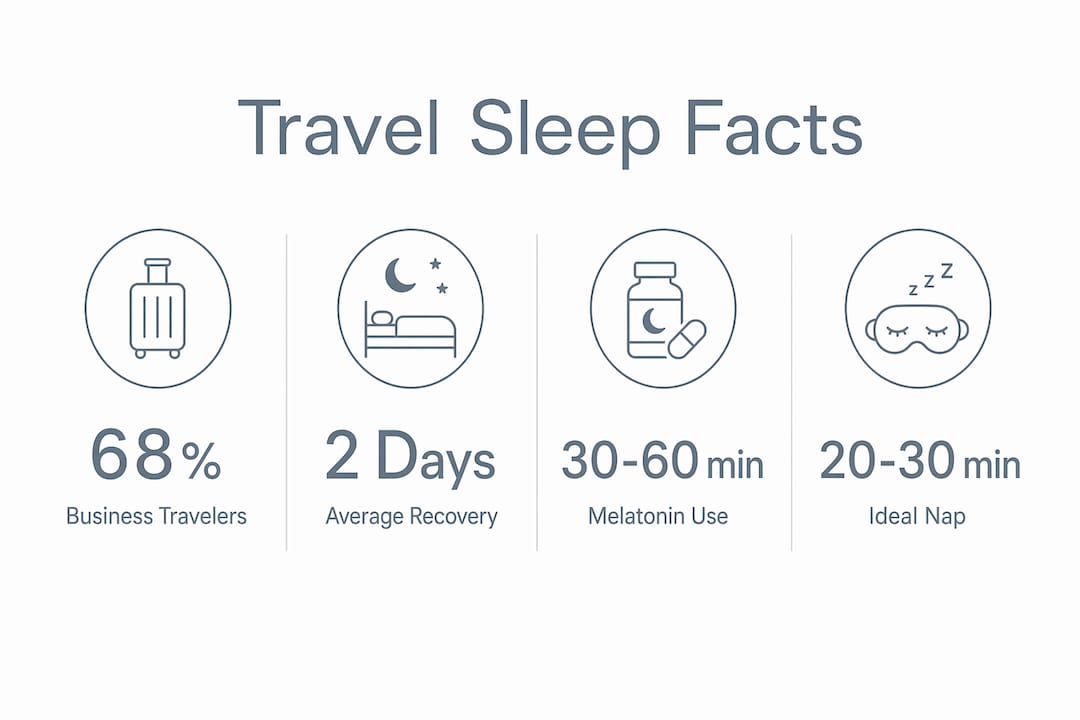
Sleep and travel health is defined as the understanding and active management of how travel disrupts sleep patterns, circadian rhythms, and overall wellbeing. Jet lag disorder affects 68% of international business travellers regularly, producing daytime sleepiness, cognitive impairment, and gastrointestinal disturbances. That figure alone shows this is not a minor inconvenience. The American Academy of Sleep Medicine and the CDC both recognise jet lag as a clinical disorder, not simply tiredness from a long flight. Managing sleep during travel is as important as any other aspect of trip planning.
What is sleep and travel health, and why does it matter?
Sleep and travel health covers the full relationship between travel and sleep quality, from the moment you book an early flight to the week after you land. The core concern is circadian misalignment: your internal body clock runs on a roughly 24-hour cycle, and crossing time zones forces it to reset faster than it naturally can.
The consequences are real and measurable. Jet lag symptoms include difficulty falling asleep at the destination’s local time, reduced concentration, irritability, and digestive disruption. For frequent travellers, chronic circadian disruption carries significant long-term health risks, making proactive sleep strategies not optional but necessary.
Travel health, as recognised by bodies like the CDC, encompasses physical and mental wellbeing during and after travel. Sleep sits at the centre of that framework. Without adequate sleep, immune function drops, reaction times slow, and the enjoyment of any trip diminishes sharply.
How does travel affect sleep patterns and circadian rhythms?
Travel disrupts sleep through two distinct mechanisms: physiological and environmental. Understanding both helps you address them directly.
The physiology of jet lag
Your circadian rhythm is governed by the suprachiasmatic nucleus in the brain, which responds primarily to light. When you fly across time zones, local light cues conflict with your internal clock, causing desynchronisation. Eastward travel requires longer adaptation than westward travel because the body naturally tends to delay its clock rather than advance it. The average adaptation rate is 1.5 hours per day travelling westward, versus 1 hour per day travelling eastward. A six-hour eastward journey could take six days to fully resolve.
The first night effect
Even without crossing time zones, sleeping in an unfamiliar environment triggers what sleep researchers call the first night effect. The brain’s left hemisphere remains more alert in unfamiliar settings, acting as a protective sentinel. This hemispheric vigilance reduces deep sleep and increases wakefulness. It is the reason you often sleep poorly on the first night of any trip, regardless of jet lag.
Environmental and logistical stressors
Cabin air on long-haul flights is low in humidity, which accelerates dehydration and worsens fatigue. Noise, irregular meal timing, and disrupted routines compound the effect. Earlier flights are linked to greater pre-travel sleep loss, meaning the disruption often begins before you board.
- Cabin humidity on commercial flights typically sits well below comfortable sleeping levels
- Alcohol consumed during flights increases sleep fragmentation and dehydration
- Irregular meal timing sends conflicting signals to peripheral circadian clocks in the gut and liver
- Noise and light in cabins and hotel rooms suppress melatonin production
Pro Tip: Drink at least 250ml of water per hour of flight time. Dehydration amplifies every jet lag symptom.
What strategies can travellers use to minimise sleep disruption?
Evidence-based sleep management before, during, and after travel reduces jet lag significantly. The approach differs by travel direction and trip length.
Before you travel
- Shift your sleep schedule by 30–60 minutes per night for 2–3 days before departure, moving earlier for eastward travel and later for westward travel.
- Avoid booking the earliest possible flight unless necessary. Pre-travel sleep loss worsens the overall jet lag burden.
- Set your watch to the destination time zone as soon as you board. Begin eating and sleeping according to that schedule.
During the flight
- Limit alcohol entirely or restrict it to one drink. Alcohol disrupts sleep quality despite helping you fall asleep faster, leaving you more fatigued on arrival.
- Time caffeine carefully. Avoid it within 10 hours of your target bedtime at the destination. Caffeine used at the wrong time delays circadian adaptation rather than supporting it.
- Use a quality eye mask and earplugs to block light and noise, particularly on overnight flights.
After arrival
- Limit daytime naps to 20–30 minutes to sustain alertness without undermining night-time sleep.
- Seek morning light after eastward travel and evening light after westward travel to accelerate clock resetting.
- Take melatonin 30–60 minutes before target bedtime at the destination, particularly for eastward journeys. Timing matters: melatonin taken at the wrong phase can delay rather than advance your clock.
Pro Tip: Pack a familiar pillowcase from home. The scent and texture send powerful cues to your brain that it is safe to enter deep sleep, directly countering the first night effect.
| Strategy | Best for eastward travel | Best for westward travel |
|---|---|---|
| Advance sleep schedule pre-trip | Yes, shift earlier | No, shift later |
| Morning light exposure on arrival | Yes | Avoid until afternoon |
| Evening light exposure on arrival | Avoid | Yes |
| Melatonin timing | Before destination bedtime | Less critical |
| Nap limit post-arrival | 20–30 minutes maximum | 20–30 minutes maximum |
What practical tools and routines improve sleep quality while travelling?
The right kit and habits make a measurable difference to sleep quality on the road. Travellers who replicate their home sleep environment as closely as possible recover faster and sleep more deeply.
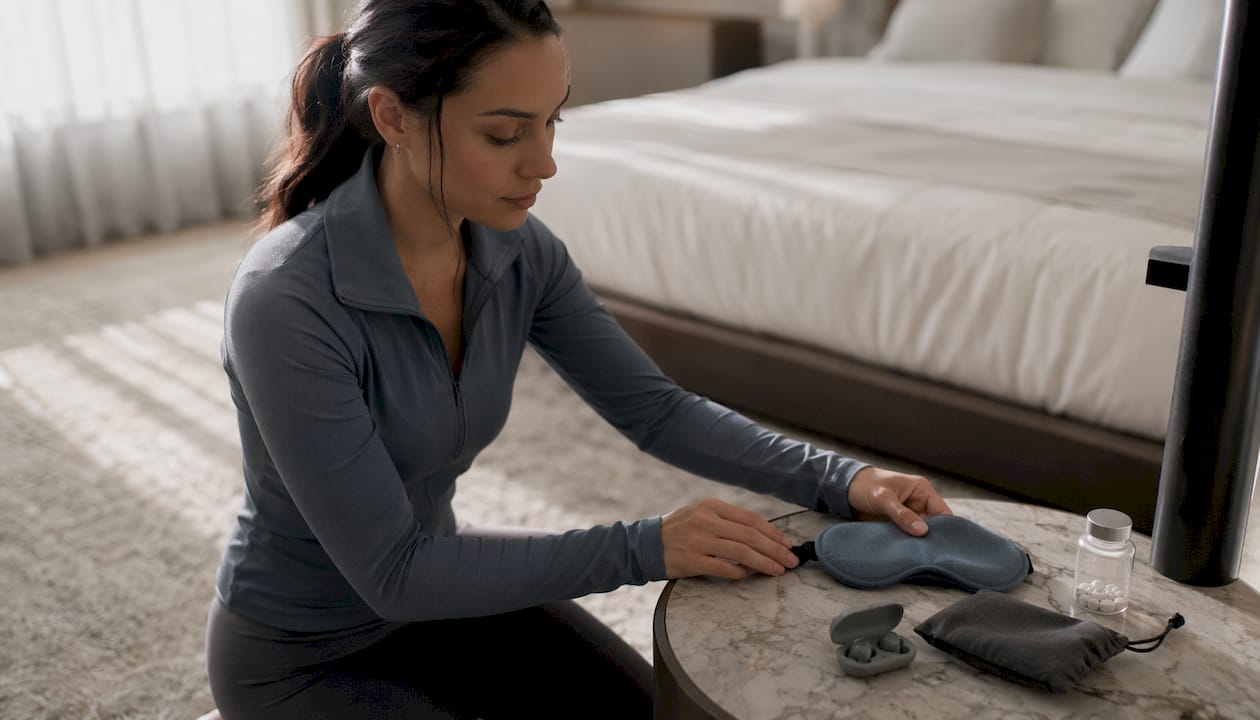
Familiar sleep items send cues to the brain that ease the first night effect in unfamiliar settings. A quality silk eye mask, a compact white noise device, and a familiar scent such as lavender are not luxuries. They are functional tools that reduce hemispheric vigilance and support deeper sleep stages.
Sleep tracking wearables offer a practical advantage for frequent travellers. Devices that monitor sleep stages, heart rate variability, and timing give you objective data on how well you are adapting. This lets you adjust your strategy in real time rather than guessing. For a structured approach to this, the sleep quality tracking guide from Somnastudioshop covers the most reliable methods available in 2026.
Choosing sleep-friendly accommodation matters too. Request a room away from lifts, ice machines, and street-facing walls. Ask for blackout curtains. These requests cost nothing and can add one to two hours of quality sleep per night.
- Pack a silk eye mask to block light completely without pressure on the eyes
- Use a white noise app or compact sound device to mask hotel corridor noise
- Bring a small lavender spray or familiar pillow scent to trigger sleep associations
- Wear loose, breathable clothing to bed rather than sleeping in travel clothes
- Keep your bedroom temperature cool, ideally between 16°C and 19°C, to support sleep onset
For professionals who travel frequently, the sleep tech guide for professionals from Somnastudioshop outlines which wearables and devices deliver the best results for managing sleep health across time zones.
How does trip duration and travel type affect your sleep strategy?
Not every trip demands the same approach. The length and purpose of travel fundamentally changes which sleep strategies apply.
Short trips under two days
For trips under two days, adapting to the destination time zone is counterproductive. By the time your clock begins to shift, you are already heading home. The better strategy is to maintain your home-base sleep schedule throughout, using sleep aids and light management to stay alert during required hours.
Longer stays and full adaptation
For trips of a week or more, full circadian adaptation is both possible and worthwhile. Sleep duration returns to near baseline within roughly two days of arrival, but sleep timing and quality can take up to 15 days to fully normalise, particularly after eastward travel. Setting realistic expectations prevents the frustration that leads travellers to abandon good sleep habits mid-trip.
Frequent travellers and chronic disruption
Business travellers who cross multiple time zones every few weeks face a compounding problem. Chronic circadian disruption is associated with increased risk of metabolic disorders, cardiovascular issues, and mood disturbances. For this group, consistent sleep hygiene between trips is as important as managing jet lag during them.
| Trip type | Recommended strategy | Recovery timeline |
|---|---|---|
| Short trip under 2 days | Maintain home sleep schedule | No adaptation needed |
| Medium trip of 3–6 days | Partial adaptation, prioritise light exposure | 3–5 days |
| Long trip of 7 or more days | Full adaptation, use melatonin and light | Up to 15 days for timing |
| Frequent travel (weekly) | Consistent sleep hygiene between trips | Ongoing management |
Key takeaways
Managing sleep and travel health requires deliberate pre-trip preparation, in-flight discipline, and post-arrival routines tailored to travel direction and duration.
| Point | Details |
|---|---|
| Jet lag is a clinical disorder | 68% of international business travellers experience regular symptoms including cognitive impairment. |
| Direction determines difficulty | Eastward travel adapts at 1 hour per day versus 1.5 hours per day westward, requiring longer recovery. |
| Pre-travel schedule shifts work | Shifting sleep by 30–60 minutes for 2–3 days before departure measurably reduces jet lag symptoms. |
| Short trips need a different approach | Trips under two days are better managed by keeping home sleep hours rather than adapting to local time. |
| Environment replication aids deep sleep | Familiar items like eye masks and scent cues directly counter the brain’s first night effect vigilance. |
Why most travellers get sleep planning completely wrong
Travellers spend hours researching flights, hotels, and itineraries. They spend almost no time planning their sleep. That imbalance is the single biggest reason jet lag hits harder than it needs to.
I have spoken with frequent flyers who carry melatonin but take it at the wrong time, making their adaptation slower rather than faster. Timing melatonin to your departure time zone rather than your destination bedtime is a common and entirely avoidable mistake. The CDC’s guidance on this is clear, but most travellers never read it.
The other overlooked factor is pre-travel sleep loss. An early morning flight that requires a 4:00 AM wake-up means you arrive at your destination already sleep-deprived, before jet lag even begins. Booking a slightly later flight, or building in a pre-departure rest day, changes the entire recovery trajectory.
The technology available now is genuinely useful. Sleep tracking wearables give you data that removes the guesswork from adaptation. If your deep sleep is recovering by day three, you can ease up on melatonin. If it is not, you know to extend your light exposure strategy. That kind of feedback loop was not available to travellers a decade ago.
The travellers who manage sleep best treat it as part of the trip, not a problem to solve after they land.
— Hadi
How Somnastudioshop supports better sleep on the road
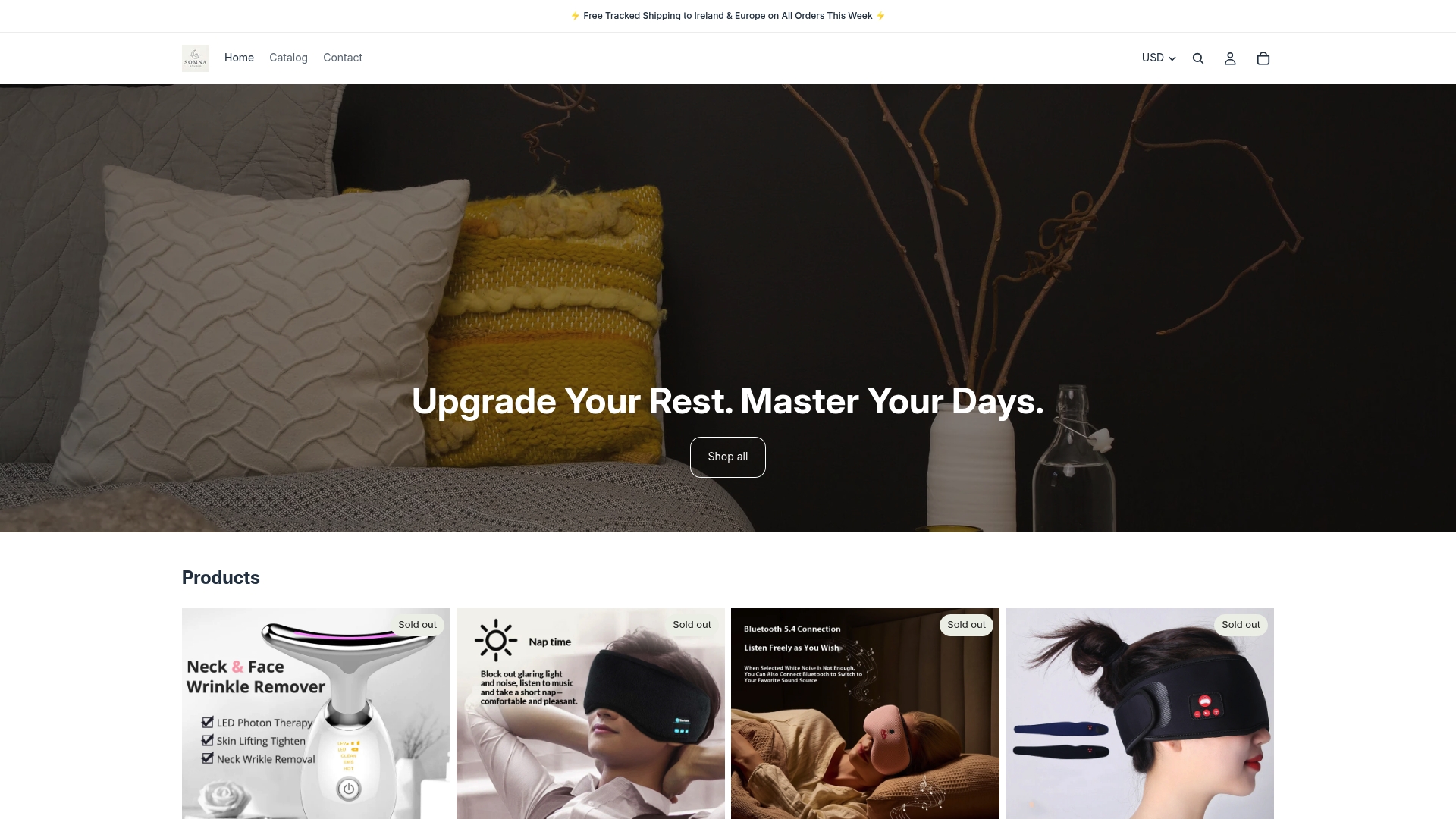
Blocking light and masking noise are the two most controllable factors in any travel sleep environment. The SomnaSilk Pure Natural Silk Sleep Mask from Somnastudioshop delivers complete light blocking with a natural silk surface that sits gently against the skin, making it well suited for long-haul flights and unfamiliar hotel rooms alike. For noise, the SomnaAura Pro Contour White Noise Sound Mask combines a contoured fit with white noise output, addressing both sound disruption and light pollution in one device. Somnastudioshop designs each product around the specific conditions that make travel sleep difficult, from cabin light to corridor noise to neck discomfort on overnight flights.
FAQ
What is sleep and travel health?
Sleep and travel health refers to the management of how travel, particularly across time zones, disrupts sleep patterns and circadian rhythms. The goal is to reduce jet lag symptoms and maintain wellbeing throughout a trip.
How long does jet lag take to recover from?
Sleep duration returns to near baseline within roughly two days of arrival, but sleep timing and quality can take up to 15 days to fully normalise, especially after eastward travel.
Does melatonin actually help with jet lag?
Melatonin is effective for jet lag, particularly for eastward travel, when taken 30–60 minutes before the target bedtime at the destination. Incorrect timing can delay adaptation rather than support it.
Should I nap after a long-haul flight?
Naps after arrival should be limited to 20–30 minutes. Longer naps interfere with night-time sleep and slow circadian adaptation to the new time zone.
Is it worth adapting to a new time zone on a short trip?
For trips under two days, maintaining your home sleep schedule is more effective than attempting adaptation. The body cannot shift its clock fast enough to make adaptation worthwhile on very short stays.