
Sleep hygiene is defined as the set of behavioural and environmental practices that promote consistent, sound, and sufficient sleep. Recognised since the 1970s as a foundational treatment for mild to moderate insomnia, the role of sleep hygiene extends far beyond simply going to bed at a reasonable hour. It covers everything from light exposure and caffeine timing to bedroom temperature and how you associate your bed with rest. If you are struggling with broken sleep, early waking, or persistent fatigue, understanding what sleep hygiene practice means is the most logical place to start.
What key practices make up effective sleep hygiene?
Sleep hygiene practice means applying a consistent set of daily habits and environmental controls that support your body’s natural sleep drive and circadian rhythm. The practices with the strongest evidence base are not complicated, but they do require consistency.
The single most impactful habit is maintaining a fixed wake time every day, including weekends. Wake time consistency regulates your sleep drive more effectively than any other single variable. Bedtime flexibility matters far less than getting up at the same hour each morning.

Light exposure is the second major lever. Blue light from screens suppresses melatonin production and delays sleep onset. Dimming lights and avoiding screens for 60 minutes before bed gives your brain a clear signal that sleep is approaching.
Caffeine is a more significant disruptor than most people realise. Its half-life ranges 5–7 hours, meaning an afternoon coffee at 3:00PM still has half its stimulant effect at 8:00PM or 9:00PM. This suppresses slow-wave sleep even when you feel subjectively sleepy.
Core sleep hygiene practices include:
- Consistent wake time every day, regardless of when you fell asleep
- Limiting screens and bright light for at least 60 minutes before bed
- Avoiding caffeine, nicotine, and alcohol in the hours before sleep
- Using your bed only for sleep and intimacy, not reading, working, or watching television
- Keeping your bedroom cool, dark, and quiet to support the body’s natural temperature drop at sleep onset
- Eating lighter meals in the evening, as large meals close to bedtime delay sleep onset
- Timing exercise earlier in the day, since vigorous late evening workouts can elevate core temperature and delay sleep
Pro Tip: Set your alarm for the same time every morning and do not move it, even after a poor night. This single habit builds sleep pressure faster than any other change and is the backbone of a healthy sleep environment.
How does sleep hygiene affect health and cognitive function?
Good sleep hygiene produces measurable benefits across both physical and mental health. Consistent sleep hygiene practices correlate with decreased anxiety, improved alertness, and better cognitive performance across all age groups, including older adults.
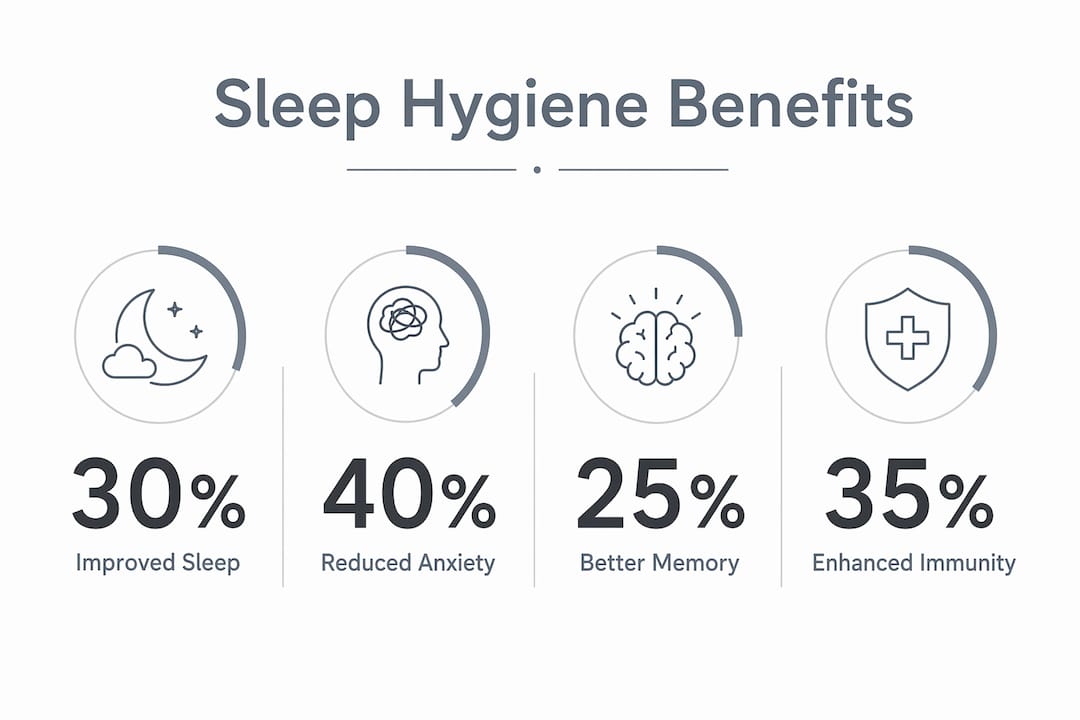
The physiological effects are well documented. Sleep hygiene programmes can reduce anxiety and depressive symptom scores by over 30%. That is a clinically meaningful shift, comparable to some pharmacological interventions, achieved through behavioural change alone.
Immune function, emotional regulation, and cardiometabolic health all respond to sleep quality improvement. Poor sleep habits raise the risk of obesity, type 2 diabetes, and cardiovascular disease over time. The mechanism is straightforward: disrupted sleep elevates cortisol, impairs glucose metabolism, and reduces the body’s ability to repair tissue overnight.
| Benefit area | Effect of consistent sleep hygiene |
|---|---|
| Cognitive performance | Improved alertness, memory consolidation, and reaction time |
| Mood and anxiety | Reduced anxiety and depressive symptom scores |
| Immune function | Stronger immune response and reduced illness frequency |
| Cardiometabolic health | Lower risk of obesity, type 2 diabetes, and cardiovascular disease |
| Daytime functioning | Reduced daytime sleepiness and improved productivity |
Research into older adults found that video-based sleep hygiene education significantly improved subjective sleep quality and reduced daytime sleepiness, even when objective sleep measurements showed smaller changes. This tells us that how people perceive and relate to their sleep shifts meaningfully with education alone.
What are the limitations of sleep hygiene as a standalone solution?
Sleep hygiene is foundational, not curative. This is the most important distinction that most people miss. Systematic reviews show that sleep hygiene alone has modest effects and is significantly less effective than Cognitive Behavioural Therapy for Insomnia (CBT-I) for chronic insomnia. Using it as your only tool when insomnia is severe is like treating a broken bone with a bandage.
Clinicians view sleep hygiene as the base layer of a broader treatment plan. If your sleep does not improve after several weeks of consistent practice, that is a clear signal to seek further intervention, not to try harder with the same approach.
The effort-sleep paradox is a real and underappreciated risk. Over-efforting on sleep optimisation creates performance anxiety around sleep, which directly disrupts the relaxation needed to fall asleep. The trend of “sleepmaxxing,” obsessively tracking and optimising every sleep variable, often worsens sleep quality rather than improving it.
Key limitations and recommended next steps:
- Sleep hygiene alone is insufficient for chronic insomnia. CBT-I is the first-line clinical treatment and should be pursued if hygiene changes do not resolve the problem within a few weeks.
- Compliance is genuinely difficult. Shift workers, parents of young children, and people with mental health conditions face structural barriers that hygiene tips alone cannot address.
- Misapplication creates anxiety. Treating sleep hygiene as a performance standard rather than a supportive routine increases arousal at bedtime.
- Stimulus control is a separate but related technique. Getting out of bed when unable to sleep for more than 20 minutes is an evidence-based strategy that prevents the bed from becoming associated with wakefulness and frustration.
- Sleep hygiene was removed from ICSD diagnostic criteria. This reflects a clinical shift toward treating insomnia as a disorder rather than a deficit of hygiene habits.
Pro Tip: If you find yourself lying awake worrying about whether you are doing sleep hygiene correctly, that worry is the problem. Aim for consistency, not perfection. A relaxed approach to your routine works better than a rigid one.
How can you practically implement better sleep habits?
Sustainable sleep hygiene works through gradual habit change, not overnight overhaul. Trying to change every variable at once is the fastest route to giving up. Pick one or two practices, embed them for two weeks, then add the next.
Practical steps for building a lasting routine:
- Anchor your morning first. Set a fixed wake time and protect it for two weeks before adjusting anything else. This single change builds sleep pressure and makes falling asleep easier.
- Manage light deliberately. Use blue light filtering glasses or switch devices to night mode from 8:00PM. Blackout curtains or a well-fitted sleep mask address light pollution in your bedroom.
- Build a wind-down buffer. A 30 to 45 minute pre-sleep routine signals your nervous system to shift down. This might include a warm shower, light reading, or breathing exercises.
- Cool your bedroom. Thermoregulation relies on a drop in core body temperature at sleep onset. A cool room, typically between 16°C and 19°C, supports this process directly.
- Use technology selectively. Sleep quality tracking tools can help you identify patterns, but avoid checking data obsessively, as this feeds the effort-sleep paradox.
Shift workers and people with mental health conditions face unique challenges. For shift workers, the priority is protecting sleep opportunity windows and using blackout measures aggressively. For those with anxiety or depression, sleep hygiene works best as part of a broader therapeutic plan rather than a standalone fix. Travellers face a specific version of this challenge, and portable sleep hygiene kits can help maintain environmental consistency away from home.
Pro Tip: If your schedule changes week to week, focus on your wake time rather than your bedtime. Bedtime will naturally shift once your body trusts the morning anchor.
Key takeaways
Sleep hygiene is a proven, evidence-based foundation for better rest, but its real power comes from consistent daily practice combined with targeted environmental controls, not from perfecting every variable at once.
| Point | Details |
|---|---|
| Fixed wake time is the priority | Consistent morning wake time regulates sleep drive more than any other single habit. |
| Caffeine disrupts more than you think | With a half-life of 5–7 hours, afternoon caffeine suppresses slow-wave sleep even when you feel tired. |
| Sleep hygiene is not a cure for chronic insomnia | CBT-I is the clinical first-line treatment; hygiene is the foundation, not the full solution. |
| Effort-sleep paradox is real | Over-optimising sleep creates anxiety that worsens the problem it is meant to solve. |
| Environment matters as much as behaviour | A cool, dark, quiet bedroom supports the physiological conditions your body needs to fall asleep. |
Sleep hygiene: what I have learnt from watching people get it wrong
Most people who come to me frustrated with their sleep have not failed at sleep hygiene. They have misunderstood what it is for. They have followed every tip on a checklist, tracked their sleep score nightly, and still woken at 3:00AM. Then they conclude that sleep hygiene does not work. What actually happened is that they treated a supportive routine as a performance target, and the pressure made everything worse.
The research on the effort-sleep paradox is not surprising to anyone who has spent time with people struggling to sleep. The harder you try to sleep, the more alert your brain becomes. Sleep hygiene works when it becomes invisible, when the habits are so embedded that you stop thinking about them.
What I find genuinely encouraging about the 2026 research is the renewed emphasis on sleep hygiene as a public health tool rather than just a clinical one. Addressing sleep at the population level, through education and environmental design, has real potential. But at the individual level, the message is simpler: do the basics consistently, do not obsess, and if the basics are not enough after a few weeks, get proper clinical support. Sleep hygiene is a floor, not a ceiling.
— Hadi
Somnastudioshop products that support your sleep routine
Good sleep hygiene creates the conditions for rest. The right physical environment makes those conditions easier to maintain every night.
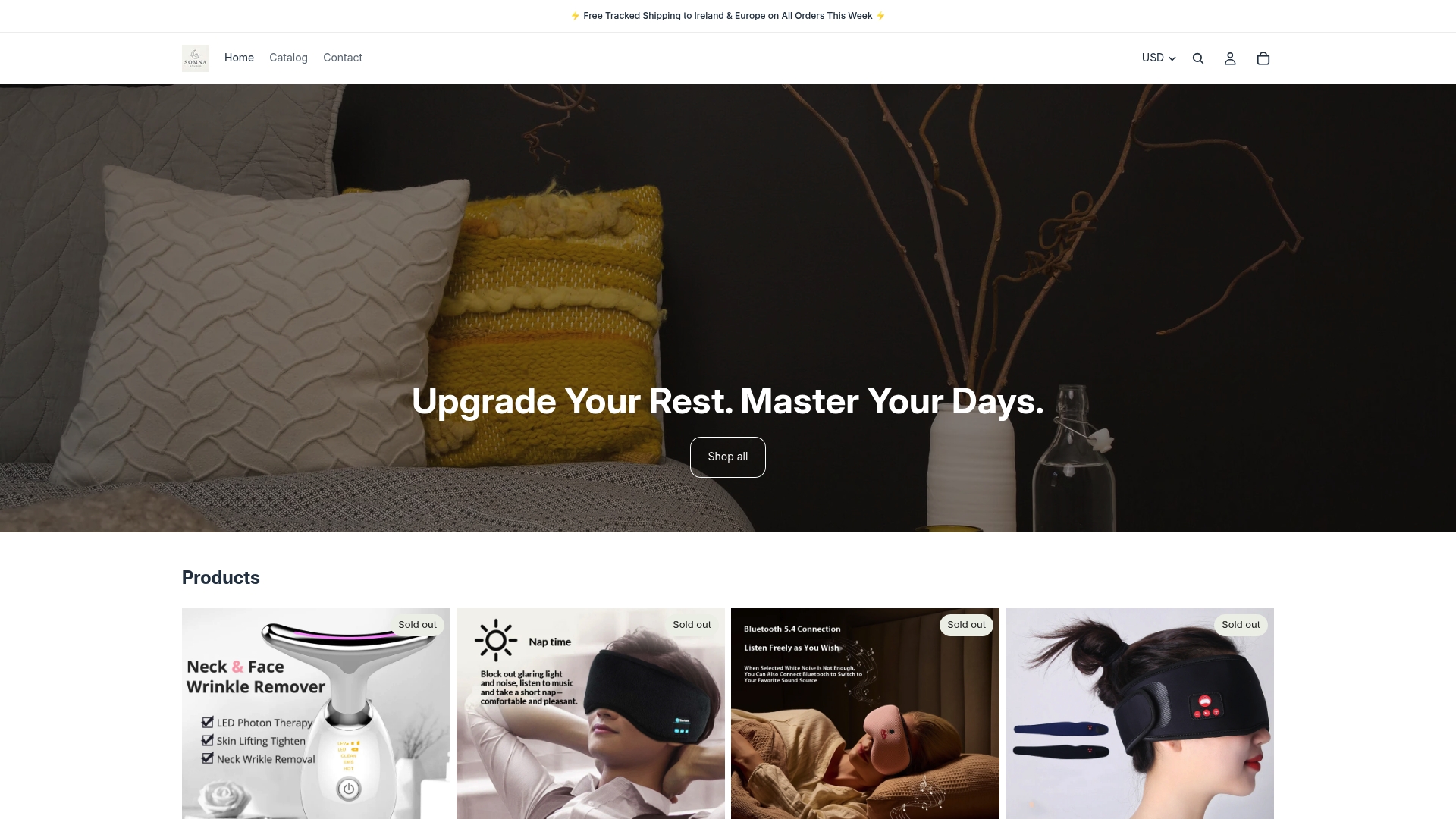
Somnastudioshop designs products specifically for people dealing with sleep disturbances. The SomnaAura Pro Contour White Noise Sound Mask addresses two of the most common environmental disruptors at once: light pollution and ambient noise. It combines a contoured sleep mask with built-in white noise, creating a controlled sensory environment without any effort on your part. The Somna Lift EMS Thermal Neck Contour Device targets neck tension that prevents physical relaxation before sleep. Both products are designed to complement behavioural practices, not replace them.
FAQ
What does sleep hygiene practice mean?
Sleep hygiene practice means applying consistent behavioural and environmental habits that support sound, sufficient sleep. These include fixed wake times, limiting light exposure before bed, avoiding stimulants, and maintaining a cool, dark bedroom.
Is sleep hygiene enough to treat insomnia?
Sleep hygiene alone is not sufficient for chronic insomnia. Systematic reviews show it has modest effects when used in isolation, and clinicians recommend it as a foundation for CBT-I rather than a standalone treatment.
What is the most important sleep hygiene tip?
Maintaining a fixed wake time every day has the strongest evidence base among all sleep hygiene recommendations. It regulates sleep drive and circadian rhythm more effectively than any other single habit.
Does caffeine really affect sleep quality?
Yes. Caffeine has a half-life of 5–7 hours, meaning it continues to suppress slow-wave sleep well into the evening even when consumed in the afternoon. Cutting off caffeine by early afternoon is one of the highest-impact changes you can make.
What is the effort-sleep paradox?
The effort-sleep paradox describes how over-focusing on sleep optimisation creates performance anxiety that actively disrupts sleep. A relaxed, consistent approach to sleep hygiene produces better outcomes than rigid, obsessive tracking.