
Quiet environments boost sleep by lowering cortisol, slowing heart rate, and shifting your nervous system into a restorative state. This is not simply a matter of comfort. As little as 2 minutes of silence reduces cortisol and heart rate enough to trigger a parasympathetic response, the biological state your body needs to fall and stay asleep. If you lie awake at night, or wake feeling unrefreshed, the sound levels in your bedroom may be doing more damage than you realise. Understanding the physiology behind silence and sleep gives you a clear path to fixing it.
Why quiet environments boost sleep: the physiology behind silence
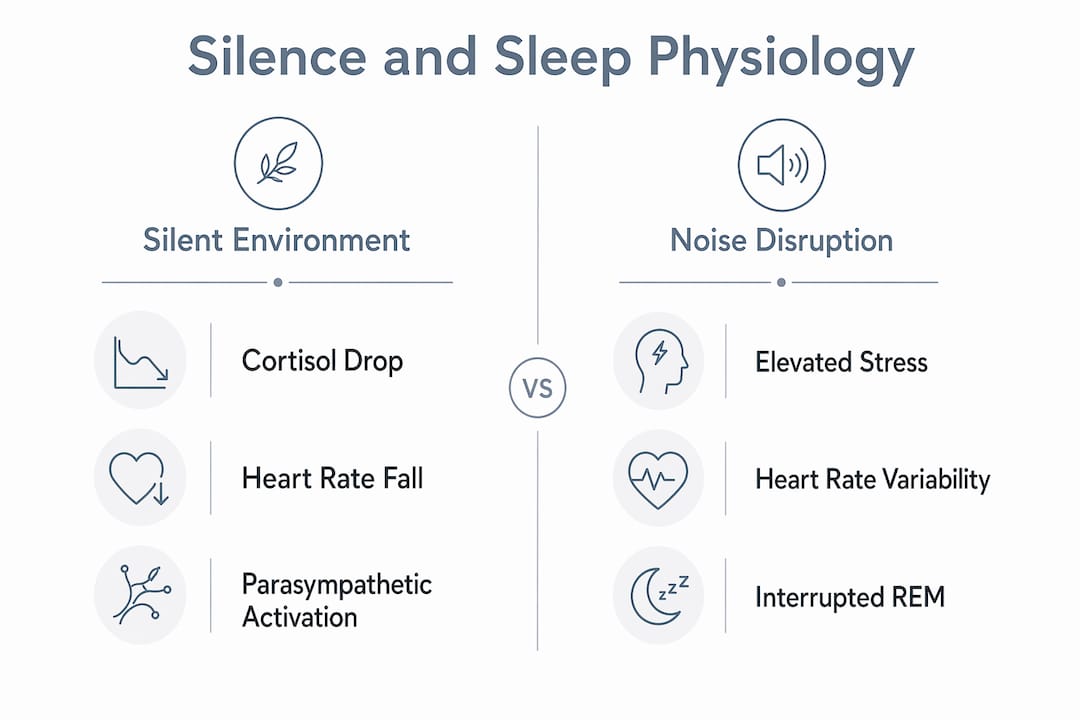
Silence activates the parasympathetic nervous system, the branch responsible for rest, digestion, and recovery. This is the opposite of the fight-or-flight response your body triggers when it detects a threat, including an unexpected sound. Humans evolved predator-detection mechanisms that keep the brain scanning for threatening sounds even during sleep. Silence tells that ancient system it is safe to stand down.
The physiological changes that follow silence exposure are measurable and rapid. Heart rate drops. Cortisol falls. Blood pressure eases. These are not subtle effects. They are the same markers clinicians use to assess recovery and readiness for deep sleep.
| Physiological change | Effect on sleep |
|---|---|
| Cortisol reduction | Lowers arousal threshold, making sleep onset faster |
| Heart rate slowing | Signals safety to the nervous system |
| Parasympathetic activation | Supports entry into deep and REM sleep stages |
| Reduced muscle tension | Eases physical restlessness before sleep |
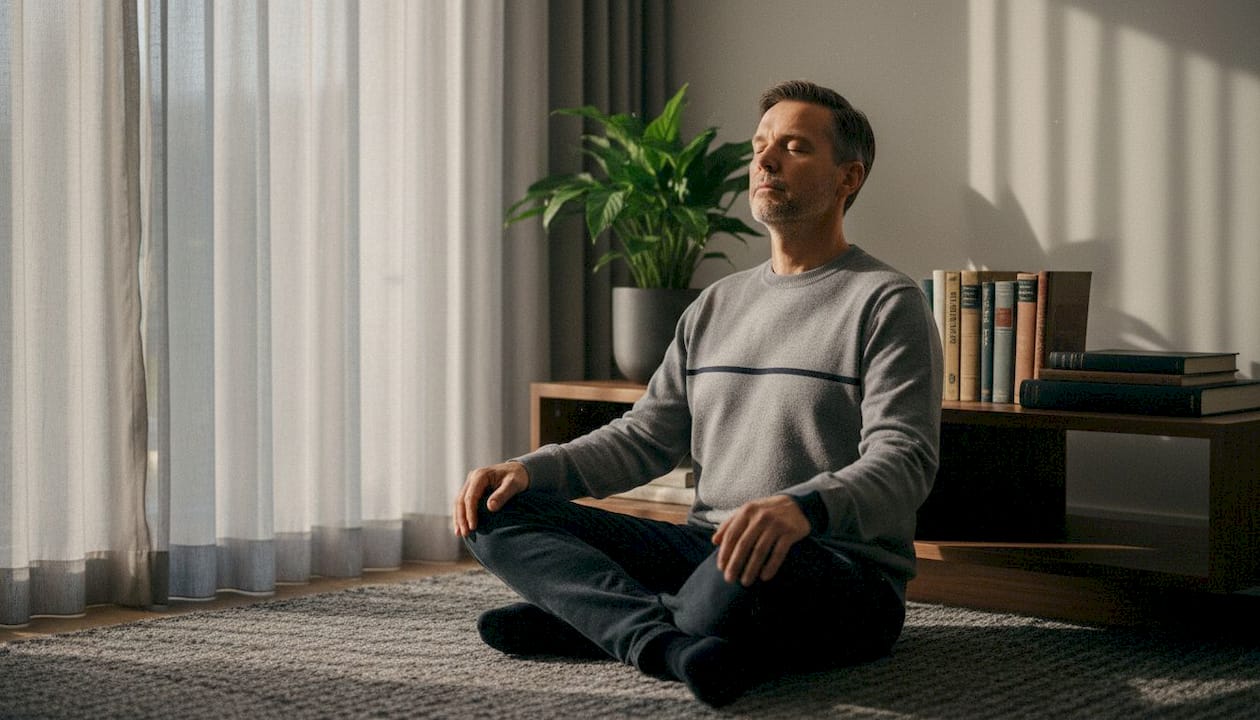
The speed of this response matters. Two minutes is a short window. That means even a brief period of genuine quiet before bed, without a podcast, television, or background music, can meaningfully shift your body toward sleep readiness.
Pro Tip: Switch off all audio at least 10 minutes before you intend to sleep. The silence does not need to feel comfortable immediately. Your nervous system responds before your mind catches up.
How does noise disrupt sleep architecture?
Healthy sleep environments target sound levels below 30 dB(A). That is roughly the level of a quiet library or a whispered conversation. Once sound levels rise consistently above 40 dB(A), the equivalent of a quiet street or a refrigerator hum, physiological sleep disruption begins. That threshold is lower than most people expect.
The most damaging noise is not necessarily the loudest. Intermittent and unpredictable sounds, a car door slamming, a neighbour’s television, or a partner shifting and disturbing a phone notification, trigger cortical arousals. These are brief shifts toward lighter sleep stages that you will not remember in the morning. Noise triggers sleep fragmentation and autonomic stress responses that operate entirely below conscious awareness. You sleep through it. Your body does not.
Common disruptive noise sources in UK bedrooms include:
- Traffic noise from roads and motorways, particularly between midnight and 5AM
- Heating and plumbing systems with irregular clicking or gurgling sounds
- Neighbours through shared walls in flats and terraced houses
- Partner snoring or movement-triggered device alerts
- Early morning deliveries and refuse collection
The phrase “I sleep through anything” is physiologically misleading. Noisy sleep degrades Heart Rate Variability (HRV) and recovery metrics even without conscious wakefulness. HRV is one of the most reliable indicators of how well your body has actually recovered overnight. Low HRV after a noisy night means your nervous system was working, not resting.
Silence versus sound masking: which actually works better?
Sound masking, the use of pink noise, white noise, or ambient audio to cover disruptive sounds, is widely recommended for people who struggle to sleep in silence. The logic is sound: a consistent audio layer prevents the brain from registering sudden changes. The problem is the evidence behind it is more complicated than the marketing suggests.
Pink noise reduces REM sleep by approximately 19 minutes per night. REM sleep is the stage most closely linked to emotional regulation, memory consolidation, and mental recovery. Losing 19 minutes of it nightly is not a trivial trade-off. Sound masking may impede the full restorative benefits of deep and REM sleep even when it successfully aids sleep onset.
Earplugs tell a different story. Earplugs protect REM and deep sleep more effectively than sound machines, preserving the restorative stages that masking audio can erode. Physical sound reduction works with your sleep architecture rather than adding another layer of audio input for your brain to process.
| Method | Sleep onset benefit | REM and deep sleep protection | Dependency risk |
|---|---|---|---|
| Complete silence | High (once habituated) | Highest | None |
| Pink or white noise | Moderate to high | Reduced (REM loss documented) | Moderate |
| Earplugs | High | High | Low |
| Physical room treatment | High | High | None |
Experts recommend physical sound-reduction methods over masking to maintain near-natural sleep architecture. The goal is not to add sound to cover sound. The goal is to reduce the total acoustic load your brain carries through the night.
Pro Tip: If you find silence uncomfortable at first, use earplugs rather than a sound machine. They reduce disruptive noise without introducing a continuous audio signal that your brain must process all night.
You can read more about the science of ambient noise and when it genuinely helps versus when it works against you.
How to create a quieter bedroom for better sleep
Reducing bedroom noise does not require expensive renovation. The most effective changes are physical, low-cost, and produce results within the first night.
- Assess your current noise level. Use a free decibel metre app on your phone to measure your bedroom at 11PM and again at 3AM. If readings exceed 30 dB(A) consistently, you have a measurable problem worth addressing.
- Add mass to walls and windows. Heavy curtains, bookshelves against shared walls, and draught-proofing around window frames all reduce sound transmission. A single layer of heavy lined curtain can reduce external noise by several decibels.
- Reposition your bed. Moving your bed away from shared walls or windows reduces your direct exposure to the loudest sound sources in the room.
- Use earplugs as a first-line tool. Foam earplugs rated at 33 SNR (Single Number Rating) are widely available and reduce ambient noise to near-quiet levels without any audio input.
- Build a pre-sleep silence routine. Turn off all audio devices 15 minutes before bed. Dim lights and reduce conversation. This gradual wind-down signals to your nervous system that the environment is becoming safe for sleep.
- Habituate gradually if silence feels unsettling. Gradually adapting to silence retrains the brain for deep relaxation. Start with 5 minutes of quiet before bed and extend it by 5 minutes each week.
The sound masking guide from Somnastudioshop covers acoustic treatment options in more detail, including decibel targets for different bedroom configurations.
Technology can support quiet environments without adding noise. The SomnaAura Smart Bluetooth Sleep Sound Mask from Somnastudioshop, for example, physically blocks light and ambient sound while offering the option of low-level audio only when needed, rather than running continuously through the night.
Key takeaways
Silence is the most physiologically effective sleep environment because it removes the acoustic triggers that keep your nervous system in a state of low-level alert throughout the night.
| Point | Details |
|---|---|
| Silence activates recovery | Two minutes of quiet lowers cortisol and heart rate, triggering the parasympathetic state needed for sleep. |
| 30 dB(A) is the target | Bedroom sound levels above 40 dB(A) cause measurable sleep fragmentation even without conscious waking. |
| Pink noise reduces REM | Sound masking aids sleep onset but costs approximately 19 minutes of REM sleep per night on average. |
| Earplugs outperform machines | Physical sound reduction preserves REM and deep sleep better than continuous audio masking. |
| Habituation takes time | Gradually extending pre-sleep silence retrains the brain and maximises long-term sleep quality. |
What most people miss about silence and sleep
I have worked with many people who describe themselves as light sleepers or poor sleepers, and the single most common factor I find in their bedrooms is chronic low-level noise they have stopped noticing. A heating system that clicks every 20 minutes. A street that never fully quietens. A partner who leaves the television on a sleep timer. These sounds feel unremarkable when you are awake. During sleep, they are fragmenting your recovery every single night.
The other thing I see constantly is a reliance on sound machines that has quietly become a dependency. People tell me they cannot sleep without their white noise machine. What they are describing is a nervous system that never learned to feel safe in silence. That is not a character trait. It is a habit, and habits can change.
The research on pink noise reducing REM sleep shifted my thinking considerably. I used to be more neutral on sound masking. Now I recommend physical reduction first, always. Earplugs, curtains, repositioning. Then habituation. Combining physical reduction with gradual silence exposure is the most sustainable route I have found. It does not create dependency, it does not cost much, and the sleep quality improvements tend to be lasting rather than conditional on a device being plugged in.
The uncomfortable truth is that most people are sleeping in environments that are measurably too loud, and they have adapted to feeling tired rather than adapted to the noise. Fixing the room is almost always more effective than fixing the person.
— Hadi
Sleep better with Somnastudioshop
Quieting your bedroom is the foundation. What you do in the 30 minutes before bed shapes how quickly your nervous system reaches that restorative state.
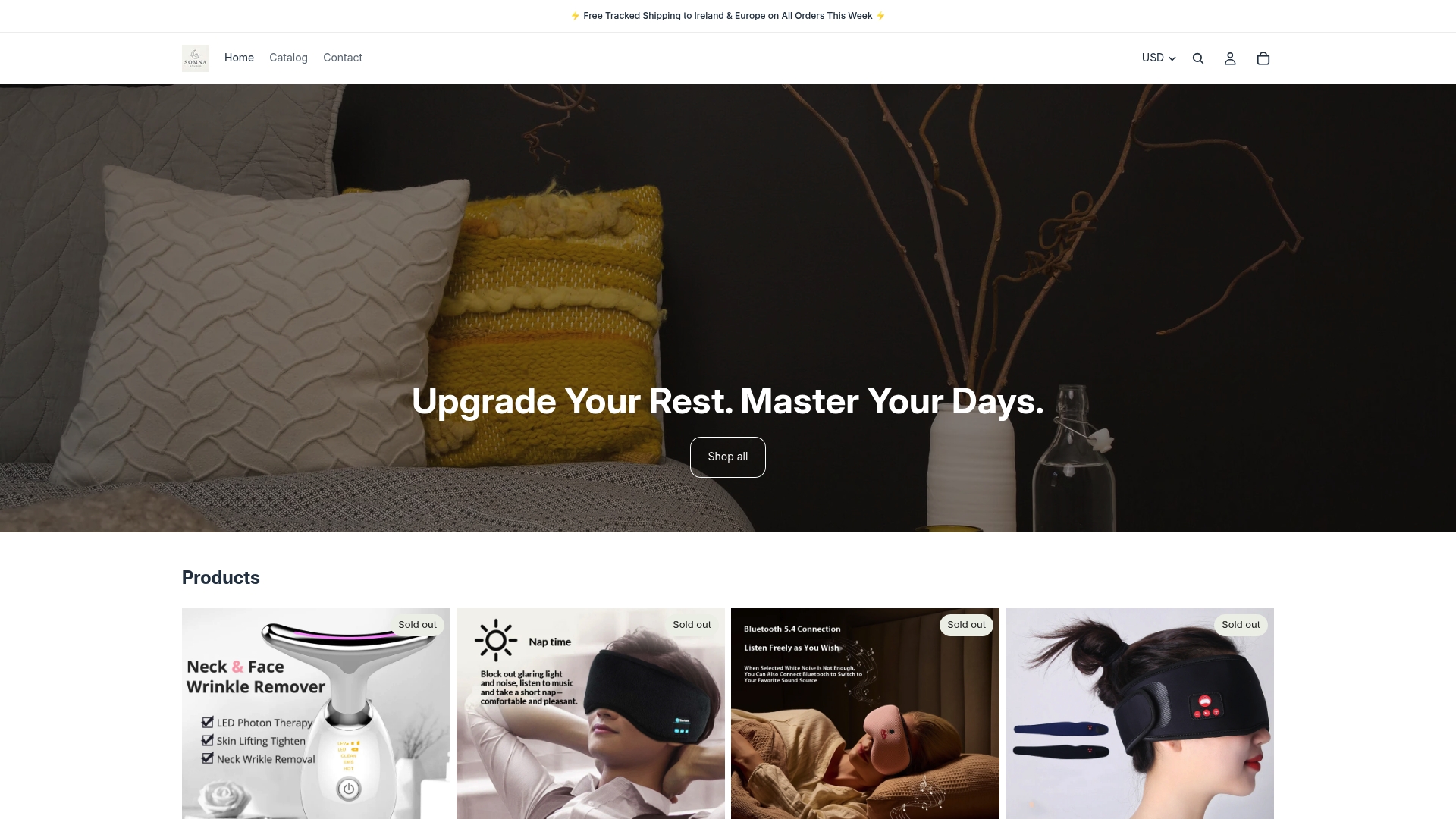
Somnastudioshop’s Somna Lift EMS Thermal Neck Contour Device uses gentle thermal warmth and electrical muscle stimulation to release neck tension before sleep, addressing one of the most common physical barriers to relaxation. For nights when complete silence is not achievable, the SomnaAura Pro Contour White Noise Sound Mask delivers low-level audio directly to the ear while physically blocking ambient light and sound. Both products are designed to complement a quieter sleep environment rather than replace it.
FAQ
Why does silence help you fall asleep faster?
Silence removes the acoustic triggers that keep your brain’s threat-detection system active. Without incoming sound signals to process, cortisol drops and the parasympathetic nervous system takes over, making sleep onset faster and more natural.
What is a safe noise level for sleeping?
Sound levels below 30 dB(A) are considered healthy for sleep. Levels consistently above 40 dB(A) cause physiological disruption, including cortical arousals and reduced Heart Rate Variability, even if you do not consciously wake.
Is pink noise better than silence for sleep?
Pink noise can help anxious sleepers fall asleep faster, but clinical evidence shows it reduces REM sleep by around 19 minutes per night. For most people, physical sound reduction and gradual silence habituation preserves more restorative sleep than continuous audio masking.
Do earplugs actually improve sleep quality?
Yes. Earplugs reduce ambient noise to near-quiet levels without introducing a continuous audio signal. Research shows they preserve REM and deep sleep more effectively than sound machines, making them one of the most cost-effective sleep improvements available.
How long does it take to get used to sleeping in silence?
Most people habituate to silence within two to four weeks of gradual exposure. Starting with 5 minutes of pre-sleep quiet and extending it each week allows the brain to relearn that silence signals safety rather than discomfort.